Finding a lump or hearing the word “tumor” in a scan report can be frightening. The first question most people ask is simple: is it cancer? The answer depends on whether the tumor is benign or malignant.
Understanding the difference between benign and malignant tumors helps you make sense of your reports and ask the right questions. This guide explains what each type means, the symptoms to watch for, common types, and how doctors confirm a diagnosis.
According to ICMR’s National Cancer Registry Programme, India recorded over 14 lakh new cancer cases in 2022. Yet many lumps that people worry about turn out to be benign. A proper check is the only way to know.
What Is a Tumor?
A tumor is an abnormal mass of tissue that forms when cells grow and divide more than they should. Not every tumor is cancer. You can read more about the tumor and cancer difference in our detailed guide.
Doctors group tumors into two main types: benign tumor and malignant tumor. Some growths also sit in between and are called premalignant, which means they may turn into cancer over time.
What Is a Benign Tumor?
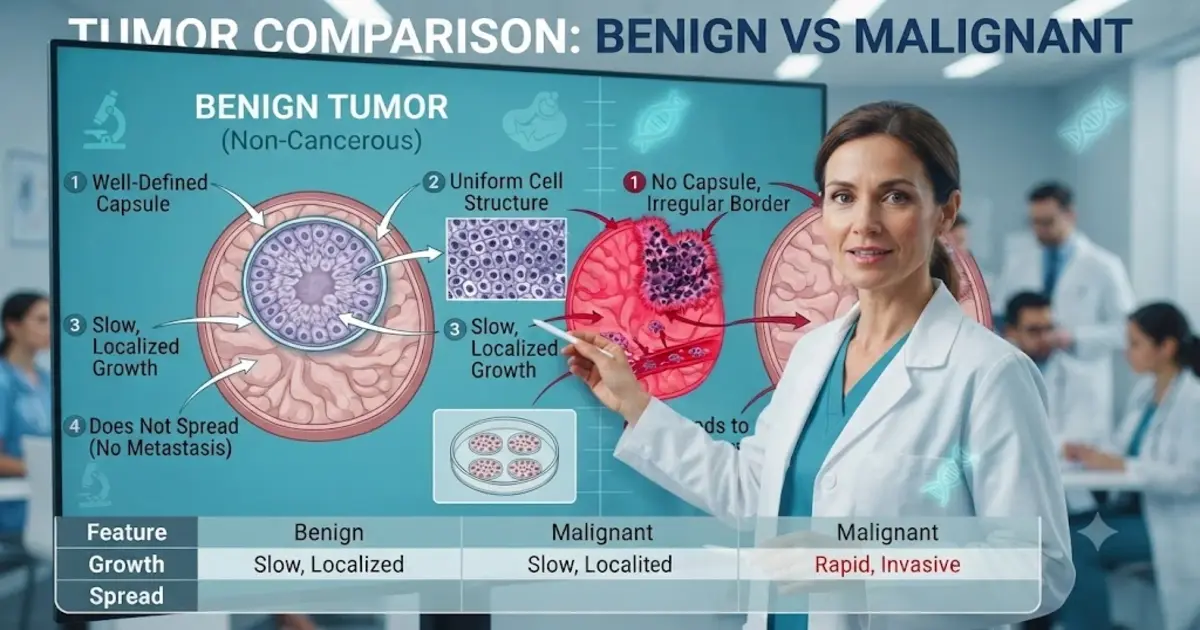
The benign tumor meaning is simple a growth that is not cancer. Its cells look fairly similar to normal cells, grow slowly and stay in one place. A benign tumor does not invade nearby tissue or spread to other parts of the body.
Many benign tumors have a clear border or a thin covering called a capsule, which makes them easier to remove. However, benign does not always mean harmless. A benign tumor in the brain or near a nerve can press on important structures and may still need treatment.
People sometimes use the term “benign cancer”, but this is not medically correct. A benign growth is, by definition, not cancer.
Types of Benign Tumors
Common types of benign tumors include:
- Lipoma: a soft, movable lump of fat under the skin
- Fibroadenoma: a firm, smooth breast lump, common in young women
- Uterine fibroids (leiomyoma): growths in the muscle of the uterus
- Adenoma: a growth in glands, such as the thyroid, pituitary or colon
- Meningioma: a usually benign tumor of the brain’s outer lining
- Haemangioma: a cluster of extra blood vessels, often seen on the skin or liver
- Moles (naevi) and skin papillomas: small, common skin growths
Benign Tumor Symptoms
Many benign tumors cause no symptoms and are found by chance on a scan. When benign tumor symptoms do appear, they depend on the size and location of the growth:
- A painless, slow-growing lump that moves under the skin
- Pressure, discomfort or pain if the tumor presses on nerves or organs
- Headaches, vision changes or seizures with some brain tumors
- Heavy periods or pelvic pain with uterine fibroids
- Hormone-related changes if the tumor affects a gland
What Is a Malignant Tumor?
A malignant tumor is a cancerous growth. Its cells grow out of control, invade nearby tissue and can spread to distant organs through the blood or lymphatic system. This spread is called metastasis.
The malignant cancer definition used by doctors rests on this ability to invade and spread. In simple terms, the malignant cancer meaning is “cancer that can grow into and damage the body beyond where it started.” Malignant cancer needs prompt treatment, and early diagnosis often makes treatment simpler.
Malignant tumors are named after the cells they start in:
- Carcinoma: starts in the lining cells of organs, such as the breast, lung or colon
- Sarcoma: starts in bone, muscle, fat or other connective tissue
- Lymphoma: starts in immune cells within lymph nodes
- Melanoma: starts in pigment-making skin cells
- Brain and spinal cord tumors: start in nerve tissue or its supporting cells
To understand how the two main solid cancer groups differ, see our guide on carcinoma vs sarcoma.
Difference Between Benign and Malignant Tumors
This benign vs malignant tumor comparison sets out the benign tumor and malignant tumor difference across the features doctors check:
| Feature |
Benign Tumor |
Malignant Tumor |
| Is it cancer? |
No |
Yes |
| Growth speed |
Usually slow |
Often fast |
| Borders |
Clear, often inside a capsule |
Irregular, poorly defined |
| Spread to nearby tissue |
Does not invade |
Invades nearby tissue |
| Spread to other organs |
Does not spread |
Can spread (metastasis) |
| Cell appearance |
Close to normal cells |
Abnormal, varied cells |
| Return after removal |
Rare |
Possible, needs follow-up |
| Usual treatment |
Monitoring or surgery |
Surgery, chemotherapy, radiation or other therapies |
The most important difference between benign and malignant tumors is behaviour. A benign tumor and malignant tumor may look similar on a scan, but only one can invade and spread.
Can a Benign Tumor Become Malignant?
Most benign tumors stay benign for life. Some growths, however, can change over time. Certain colon polyps (adenomas), white patches in the mouth (leukoplakia) and abnormal cervical cells can become cancerous if left untreated. This is why doctors often remove or monitor them.
How Doctors Tell the Difference
A scan can raise suspicion, but it cannot always confirm the difference between benign and malignant tumors. Doctors usually combine several tests:
- Physical examination: checks the size, shape, firmness and movement of a lump
- Imaging: ultrasound, mammography, CT, MRI or a PET-CT scan in Mumbai to see the tumor and check for spread
- Biopsy: a small tissue sample examined under a microscope, which is the only way to confirm a diagnosis. Learn about the types of biopsy
- Blood tests: tumor markers and other tests that support, but do not confirm, a diagnosis
If the tumor is malignant, doctors also work out its stage, which guides the treatment plan.
Treatment for Benign and Malignant Tumors
Treatment for benign and malignant tumors differs a great deal.
Benign tumors: many need only regular monitoring. If a tumor causes symptoms, grows or presses on organs, doctors usually remove it with surgery. Once fully removed, most do not return.
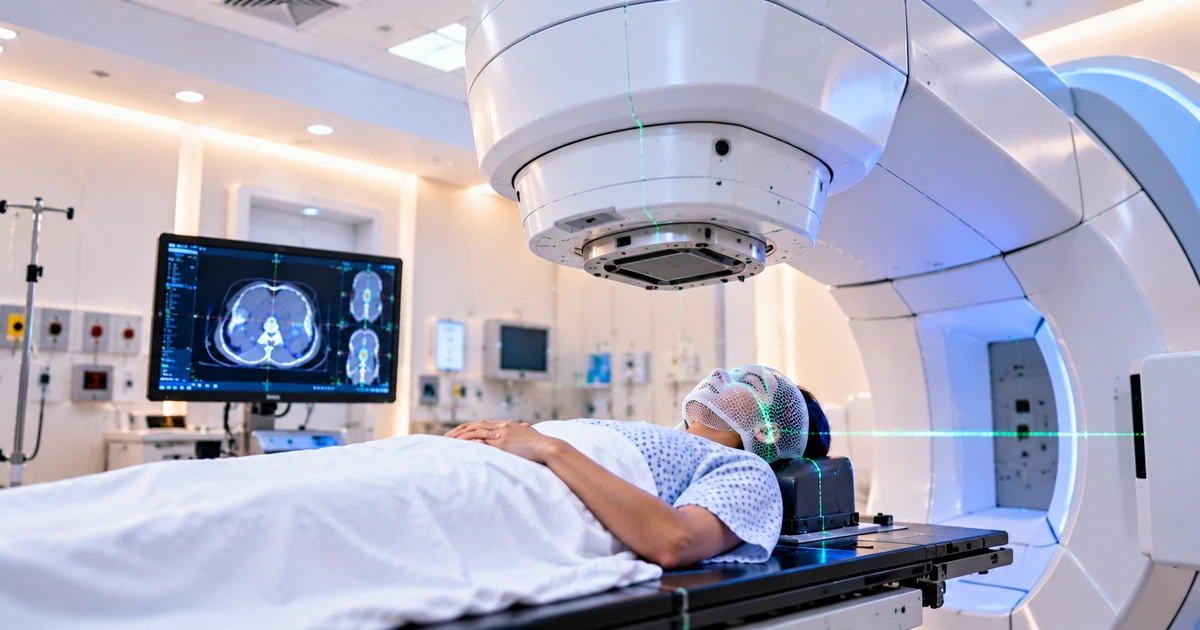
Malignant tumors: treatment depends on the cancer type, stage and your overall health. Your plan may include surgery by a surgical oncologist in Pune, chemotherapy in Pune, radiation therapy in Pune, targeted therapy or immunotherapy. A tumor board of specialists often reviews complex cases together.
Two everyday examples show how this works. A breast lump may be a benign fibroadenoma, but if it is cancer, you will need breast cancer treatment in Mumbai or at a centre near you. Similarly, doctors remove colon polyps early because some can turn into cancer, and confirmed cases move on to colon cancer treatment in Pune.
Free Cancer Treatment Support Through Government Schemes
No hospital in India offers free cancer treatment to everyone as standard. However, government schemes can cover most or all treatment costs for eligible patients diagnosed with a malignant tumor.
- PM-JAY (Ayushman Bharat): cashless cover of up to ₹5 lakh per family per year at empanelled hospitals. Senior citizens aged 70 and above qualify regardless of income.
- MJPJAY: Maharashtra’s state health scheme for eligible resident families
- CGHS: for central government employees, pensioners and their dependants
- ECHS: for ex-servicemen and their dependants
- MPKAY: for Maharashtra police personnel and their families
Onco-Life Cancer Centre supports eligible patients under these schemes. Read more about free cancer treatment options or check the full list of government health insurance schemes. Eligibility rules apply, so confirm your coverage before your visit.
When to See a Doctor About a Lump
See a doctor soon if you notice any of the following:
- A lump that is growing, hard or fixed in place
- A lump that lasts longer than two to three weeks
- A mole that changes in size, shape or colour
- Unexplained weight loss, fever or tiredness
- Bleeding or discharge that has no clear cause
Most lumps are not cancer, but only a proper check can confirm the difference between benign and malignant tumors in your case. Book a doctor’s appointment at Onco-Life Cancer Centre in Pune, Satara, Chiplun or Talegaon. If you already have a biopsy or scan report, you can also request a second opinion.
Medical Disclaimer
This content is for general information only and is not medical advice. Please consult a qualified oncologist for diagnosis and treatment decisions based on your own reports.
Frequently Asked Questions