Choosing a cancer hospital is one of the harder decisions a family makes under time pressure. India has both large national institutes and smaller regional centres, and the right one for you depends on the cancer type, how urgently treatment needs to start, and how far you can realistically travel for repeat visits. This guide compares the hospitals most often searched for as the best cancer hospital in India, explains what actually differs between a government and a private centre, and covers what Onco-Life Cancer Centre – a regional oncology network in Maharashtra – offers as one option among them.
Why the Right Hospital Matters
Families researching a cancer hospital in India are usually weighing the same handful of factors, whichever hospital they end up choosing.
- Treatment breadth. Whether medical, surgical and radiation oncology are available under one roof, or whether you’ll need to be referred elsewhere partway through treatment.
- Accreditation. NABH, NABL or JCI accreditation is a checkable signal of safety and process standards – not a guarantee of outcome, but a baseline worth confirming for any hospital on your shortlist.
- Technology fit for your cancer type. PET-CT availability, the specific radiation platform in use, and whether robotic or minimally invasive surgery is offered all matter more or less depending on diagnosis.
- Cost and scheme access. Whether the hospital accepts state or central schemes such as MJPJAY or Ayushman Bharat, and what a patient without scheme coverage should expect to pay.
- Distance and follow-up. Radiation courses in particular run for several weeks; a hospital two hours away by road is a materially different commitment than one four states away.
There is no single “best” hospital independent of these factors – the right choice depends on which of them matters most for your situation.
Leading Cancer Hospitals in India
The hospitals below are the ones most commonly cited across national cancer care in India, spanning government, non-profit and private models.
| Hospital |
City |
Type |
Known for |
| Tata Memorial Hospital |
Mumbai |
Government |
Founded 1941; one of Asia’s largest dedicated cancer centres by patient volume |
| AIIMS (Dr B.R.A. Institute Rotary Cancer Hospital) |
New Delhi |
Government |
Subsidised treatment, academic and research programme |
| Rajiv Gandhi Cancer Institute & Research Centre |
Delhi |
Non-profit |
NABH/NABL-accredited, JCI-certified; est. 1996 |
| Kidwai Memorial Institute of Oncology |
Bengaluru |
Government |
Regional Cancer Centre for South India; est. 1973 |
| HCG Cancer Centre |
Bengaluru + pan-India |
Private |
Dedicated oncology network, multiple branches |
| Kokilaben Dhirubhai Ambani Hospital |
Mumbai |
Private |
Genetic risk assessment programme, robotic surgery |
| Fortis Memorial Research Institute |
Gurugram |
Private |
International patient division |
| Mazumdar Shaw Cancer Centre (Narayana Health) |
Bengaluru |
Private |
Research collaborations |
| Medicover Cancer Institute |
Hyderabad |
Private |
Day-care chemotherapy services |
Tata Memorial Hospital, Mumbai
Founded in 1941, Tata Memorial is one of the largest dedicated cancer treatment and research centres in Asia by patient volume, operating under the Department of Atomic Energy. It is widely cited as the
biggest cancer hospital in India by capacity, and treats patients under Ayushman Bharat–PM-JAY.
AIIMS, New Delhi
The All India Institute of Medical Sciences’ oncology wing combines subsidised treatment with an academic research programme, and trains oncologists who go on to practise across the country.
Rajiv Gandhi Cancer Institute & Research Centre, Delhi
RGCIRC is a non-profit, NABH- and NABL-accredited, JCI-certified centre established in 1996, known for its bone-marrow-transplant and haematology programmes.
Kidwai Memorial Institute of Oncology, Bengaluru
Established in 1973 by the Government of Karnataka, Kidwai is a Regional Cancer Centre recognised by ICMR, WHO and UICC, and is among the more accessible
govt cancer hospital in India options for patients from South India.
HCG Cancer Centre, Bengaluru and Pan-India
HCG operates as a dedicated oncology-only network across multiple Indian cities, with a consistent clinical protocol across branches.
Kokilaben Dhirubhai Ambani Hospital, Mumbai
Kokilaben combines advanced diagnostics with a structured genetic risk assessment programme – a capability relevant to patients with a family history of breast, ovarian or colorectal cancer.
Fortis Memorial Research Institute, Gurugram
Fortis Gurugram runs a dedicated international patient division alongside its oncology department, within a larger multi-speciality hospital.
Mazumdar Shaw Cancer Centre, Bengaluru
Part of the Narayana Health network, this centre pairs oncology treatment with ongoing research collaborations.
Medicover Cancer Institute, Hyderabad
A newer entrant in southern India’s oncology landscape, offering radiation therapy and day-care
chemotherapy services.
Onco-Life Cancer Centre: What We Offer
Onco-Life Cancer Centre is a regional oncology network with centres in Talegaon, Satara, Chiplun and Wagholi, serving western Maharashtra. Rather than compete on scale with national institutes, it’s a relevant option for patients in this region who want comprehensive oncology care without travelling to Mumbai, Pune or Delhi for every stage of treatment.
- Treatment breadth. Surgical oncology, medical oncology and diagnostic imaging are available across the network’s centres.
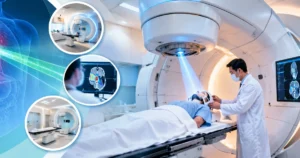
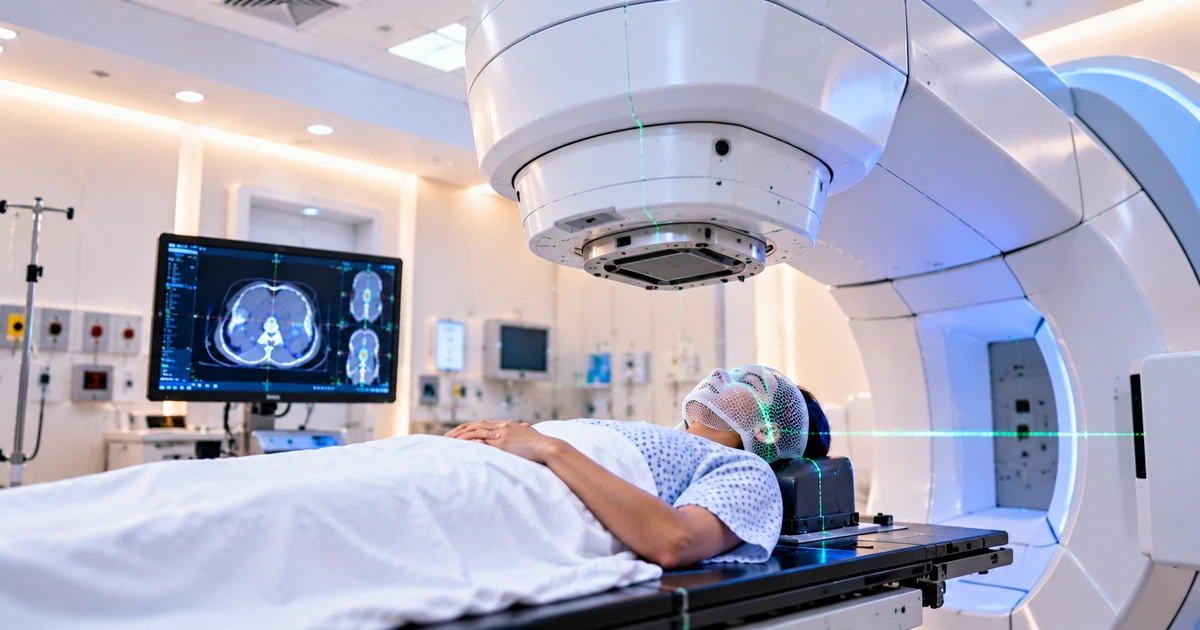
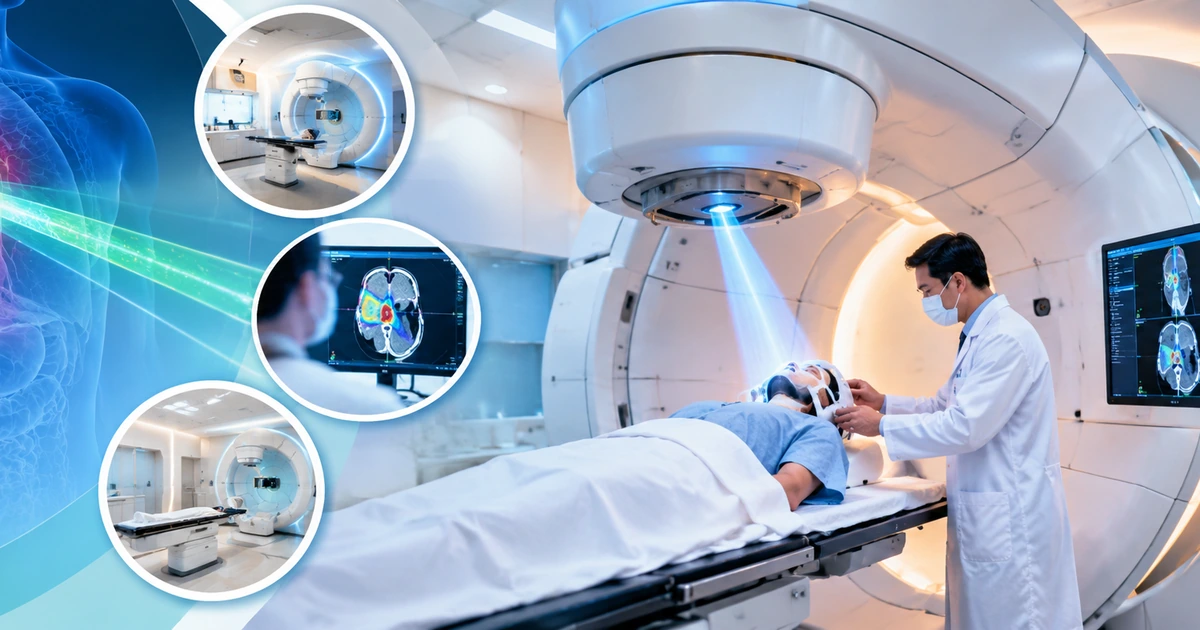
- Radiation technology. The Talegaon centre operates a TomoTherapy Radixact X9 unit.
- Government scheme access. The network accepts MJPJAY and Ayushman Bharat, and publishes transparent billing information.
- Emotional and nutritional support. Counsellors and nutritionists are available alongside clinical treatment.
Government and Subsidised Cancer Care in India
Public and non-profit hospitals – including Tata Memorial, AIIMS and Kidwai – provide subsidised or free treatment through national and state schemes, making advanced cancer care accessible independent of income. In Maharashtra specifically, patients can check eligibility for MJPJAY, Ayushman Bharat (PM-JAY), CGHS, ECHS or the Maharashtra Police Kutumb Arogya Yojana, depending on their eligibility category. Onco-Life Cancer Centre participates in MJPJAY and Ayushman Bharat, alongside the national institutes listed above.
How to Choose the Right Cancer Hospital for You
Four practical questions narrow the decision faster than a general “best hospital” search:
- What is the diagnosis and stage? Some hospitals see far higher volumes of specific cancer types – that experience matters more than overall size.
- How urgently does treatment need to start? Government institutes with high patient volumes can mean longer waits for surgery slots; this is worth asking about directly when you call.
- What will follow-up look like? Radiation courses typically run daily across several weeks – factor in whether that means relocating temporarily or commuting.
- Is scheme coverage or private payment the plan? This narrows the shortlist immediately, since not every private hospital accepts every scheme.
A second opinion from a different hospital’s tumour board is a normal, common step – not a sign of distrust in the first opinion – and several of the hospitals above, including Onco-Life, offer this.
Cost and Access to Cancer Treatment
Cancer treatment cost in India varies mainly with these factors, rather than being a single fixed figure:
- Treatment modality – chemotherapy, surgery and radiation are priced and billed differently, and a patient often needs a combination.
- Stage at diagnosis – earlier-stage treatment is typically shorter and less costly than treatment requiring multiple modalities.
- Government scheme eligibility – MJPJAY, Ayushman Bharat and similar schemes can cover treatment fully or substantially for eligible patients.
- Hospital type – government and non-profit institutes are generally lower-cost than private hospitals, often at the trade-off of longer waiting times.
For patients exploring free or subsidised treatment specifically in this region, see
free cancer treatment in Pune and
free cancer treatment in Mumbai.
What to Expect as a Patient
A first visit typically starts with a consultation and review of existing reports, followed by any additional diagnostic imaging needed to confirm staging. Counsellors and nutritionists are available to support patients through treatment Patients travelling from outside the immediate region can ask about accommodation options nearby when booking.
Planning Your Visit
You do not need a referral to book a consultation at Onco-Life Cancer Centre. To start,
book a doctor appointment online, or call your nearest centre directly using the numbers on the
contact page. Bring existing scan reports, biopsy results and any prior treatment summary to your first visit – this shortens the time to a treatment plan.
Our Cancer Care Team
Onco-Life’s oncology team spans surgical, medical and radiation oncology across its Maharashtra centres. See the full
specialist directory for individual doctor profiles, qualifications and centre assignments, including
oncologists in Pune and
oncologists near Mumbai.
Frequently Asked Questions