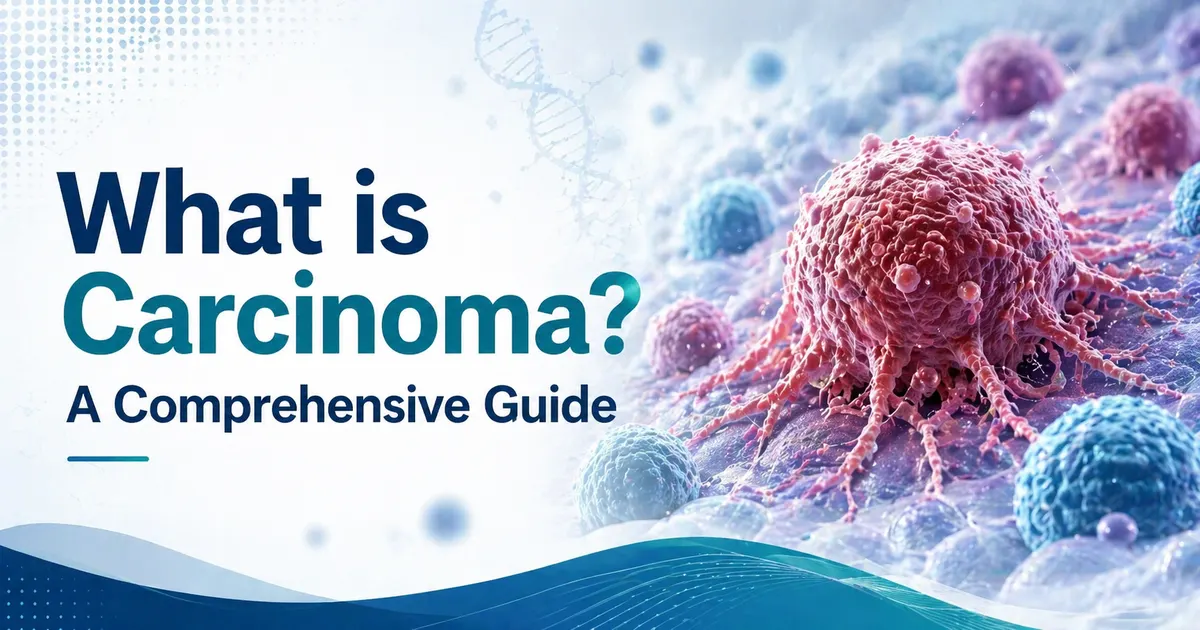
Carcinoma is a type of cancer that starts in epithelial cells, the cells that form your skin and line your organs, glands and internal passages such as the airways and digestive tract. It is the most common group of cancers, making up 80 to 90 percent of all cancer cases [Source: National Cancer Institute, SEER Training Modules]. Most breast, lung, oral, prostate and colorectal cancers are carcinomas.
If you or someone in your family has seen the word carcinoma on a biopsy report, it is natural to feel worried. This guide explains the carcinoma meaning in plain language, the main types, what causes carcinoma, how it is diagnosed and the carcinoma treatment options available at Onco-Life Cancer Centre.
Carcinoma Meaning: How Doctors Define Carcinoma
“To define carcinoma in medical terms, it is a malignant (cancerous) tumour that arises from epithelial tissue. This tissue covers the outer surface of the body and lines hollow organs and glands. Because it is found almost everywhere, carcinoma can develop in many different organs.”
Carcinoma Meaning in Hindi
“कार्सिनोमा का मतलब: कार्सिनोमा एक प्रकार का कैंसर है जो उपकला कोशिकाओं (एपिथेलियल सेल्स) में शुरू होता है। ये वे कोशिकाएँ हैं जो त्वचा बनाती हैं और शरीर के अंगों व ग्रंथियों की अंदरूनी और बाहरी परत बनाती हैं। सरल शब्दों में, कार्सिनोमा का अर्थ है “शरीर की परत बनाने वाली कोशिकाओं का कैंसर”।”
In other words:
Carcinoma means cancer of epithelial (surface or lining) cells.
Other cancers (sarcoma, lymphoma, leukaemia) start from different cell types
“Carcinoma in situ: abnormal cells are present but have not grown beyond the layer where they started. It is also called stage 0 or non-invasive cancer.”
“Invasive carcinoma: the cancer has grown beyond its original layer into nearby tissue.”
“Metastatic carcinoma: cancer cells have travelled through the blood or lymphatic system and formed new tumours in distant organs, such as the liver, lungs, bones or brain.”
The word comes from the Greek ‘karkinos’, meaning crab. The meaning of carcinoma has stayed the same for centuries: cancer of the body’s lining cells.” (This removes the repeated statistic, which now appears once in the intro with its source.
What Is Carcinoma Cancer? How It Differs from Other Cancers
Many people use ‘carcinoma’ and ‘cancer’ as if they mean the same thing, but they are not identical. Cancer is the umbrella term for any disease in which abnormal cells grow without control and can spread. Carcinoma is one specific group within it, and the standard definition of carcinoma used by cancer registries is a malignant tumour of epithelial origin.
|
Term
|
Definition
|
Scope
|
|
Carcinoma
|
Cancer starting in epithelial (surface/organ lining) cells
|
Specific type of cancer
|
|
Cancer
|
“Any disease in which abnormal cells grow without control and can spread (carcinoma, sarcoma, lymphoma, leukaemia and myeloma)”
|
Broad umbrella term
|
Example: ‘All carcinomas are cancers, but not all cancers are carcinomas.’
Types of Carcinoma: The Forms Patients Hear About Most
In short, carcinoma is cancer of the epithelial cells, and its most common types are adenocarcinoma, squamous cell carcinoma, basal cell carcinoma, transitional cell carcinoma, renal cell carcinoma, hepatocellular carcinoma and small cell carcinoma. Each is named after the cell it starts in.
1. Squamous Cell Carcinoma
- Starts in flat, scale-like squamous cells
- Common locations: skin, throat, oesophagus, cervix
- Risk factors: sun exposure, smoking, HPV
2. Adenocarcinoma
- Starts in glandular cells that secrete mucus or other substances
- Common locations: breast, lung, colon, prostate, stomach
- Most common type – accounts for 30-40% of all cancers
3. Basal Cell Carcinoma
- Starts in basal (bottom) cells of skin epidermis
- Most common skin cancer
- Risk factors: sun exposure
4. Small Cell Carcinoma
- Starts in small cells of the lung
- Aggressive and fast-growing
- Strongly associated with smoking
5. Renal Cell Carcinoma
- Starts in kidney (renal) cells
- Risk factors: smoking, hypertension, obesity
Carcinoma Grade and Stage: What Your Report Means
Grade (How Aggressive Is the Cancer?)
- Grade 1 (Low-grade): Slow-growing, well-differentiated
- Grade 2 (Intermediate): Moderate growth rate
- Grade 3 (High-grade): Fast-growing, poorly differentiated, more aggressive
Most carcinomas are staged using the TNM system: Tumour size, lymph Node involvement and Metastasis. The exact definition of each stage differs from one cancer to another, so stage 2 breast cancer is not the same as stage 2 lung cancer. In general:
- Stage 0: carcinoma in situ; abnormal cells have not spread beyond their original layer.
- Stage 1: a small tumour confined to the organ where it started.
- Stages 2 and 3: a larger tumour, growth into nearby tissue, or spread to nearby lymph nodes.
- Stage 4: metastatic carcinoma that has spread to distant organs.
Your treatment plan depends on grade and stage, along with the type and location of the carcinoma, biomarker results and your overall health.
What Causes Carcinoma? Risk Factors
Carcinoma causes are rooted in changes (mutations) in the DNA of epithelial cells that let them grow and divide without the usual controls. A few of these changes are inherited, but most build up over a lifetime through age and exposure to risk factors. Having a risk factor does not mean you will develop carcinoma.
- Tobacco smoke – #1 preventable risk factor
- Sun exposure (UV radiation) – skin carcinomas
- Alcohol consumption – mouth, throat, oesophageal carcinomas
- Infections – HPV (cervical), H. pylori (stomach), Hepatitis B (liver)
- Family history – genetic predisposition
- Obesity – breast, colon, endometrial carcinomas
- Radiation exposure – occupational or medical
- Chemical exposures – asbestos, arsenic, benzene
How Carcinoma Is Diagnosed at Onco-Life
Diagnosis typically involves:
- Physical examination and medical history
- Imaging: X-ray, CT, MRI, ultrasound
- Biopsy: tissue sample examined under microscope
- Blood tests and tumour markers
- Staging scans: PET-CT, bone scan to check for spread
Carcinoma Treatment Options at Onco-Life
Treatment depends on carcinoma type, grade, stage, and patient health:
- Surgery – remove the tumour and nearby tissue
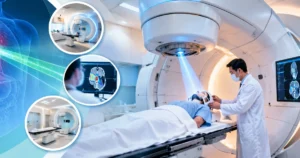
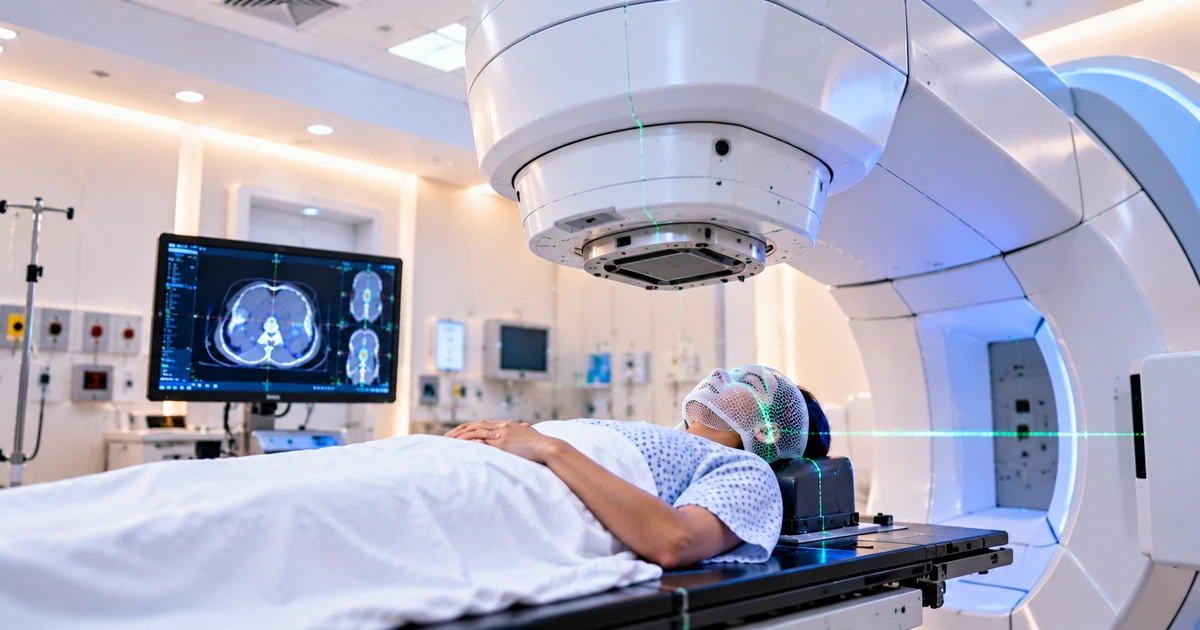
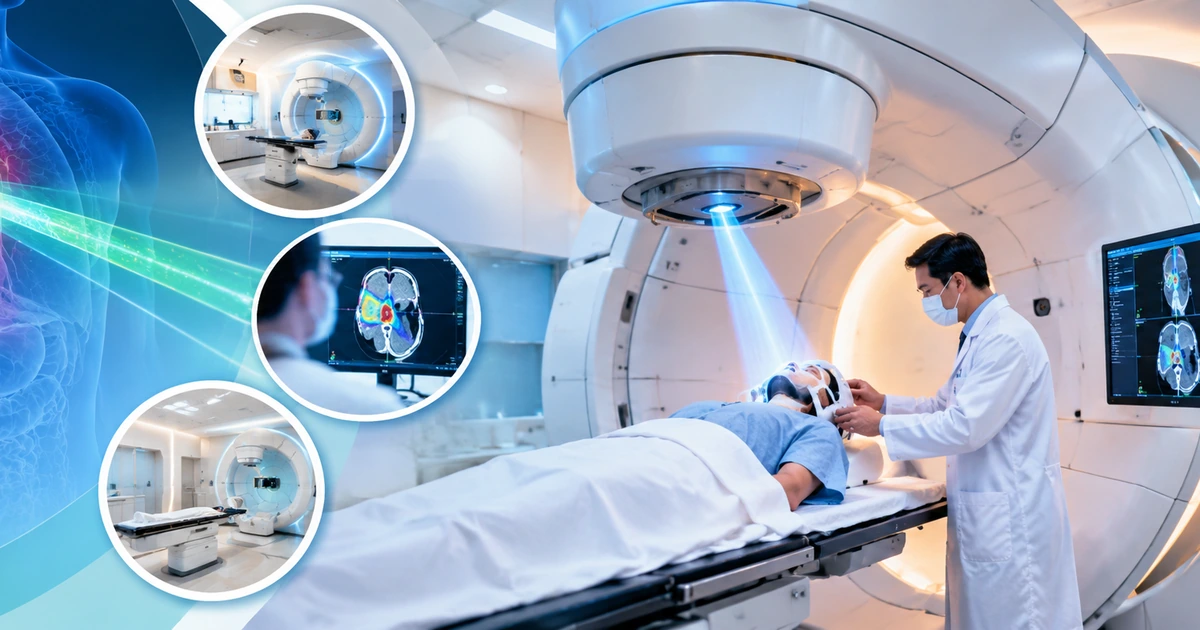
- Radiation therapy – kill cancer cells with high-energy radiation
- Chemotherapy – use drugs to kill or slow cancer cells
- Targeted therapy – drugs that target specific cancer mutations
- Immunotherapy – boost the immune system to fight cancer
- Hormone therapy – block hormones that fuel certain carcinomas
Often, the best results come from combining treatments. A multidisciplinary team reviews each case to create a personalised treatment plan.
DIAGNOSED WITH CARCINOMA?
Diagnosed with Carcinoma? Speak to an Oncologist. Our oncologists can review your reports, explain your diagnosis and discuss the treatment options that suit you. Talegaon and Wagholi: 8128124067 | Satara and Chiplun: 7378958000 | [Book an Appointment] | [Request a Second Opinion]
Book a consultation at Onco-Life Cancer Centre – Talegaon, Satara, Chiplun, or Wagholi
About Onco-Life Cancer Centre
Onco-Life Cancer Centre is a dedicated cancer hospital network in Maharashtra with centres at Talegaon, Wagholi (Pune), Satara and Chiplun. Our hospitals are accredited by the National Accreditation Board for Hospitals and Healthcare Providers (NABH), and we are a member of the National Cancer Grid (NCG). Our teams have treated more than 1,20,000 patients.
“Treatment is available under government health schemes, including Mahatma Jyotirao Phule Jan Arogya Yojana (MJPJAY), Ayushman Bharat (PM-JAY) and the Central Government Health Scheme (CGHS). Eligibility criteria apply; please [verify your eligibility] before visiting.”
Disclaimer
This article is for informational purposes only and is not a substitute for professional medical advice, diagnosis, or treatment. Always seek the guidance of a qualified healthcare provider with any questions regarding a medical condition.
Frequently Asked Questions