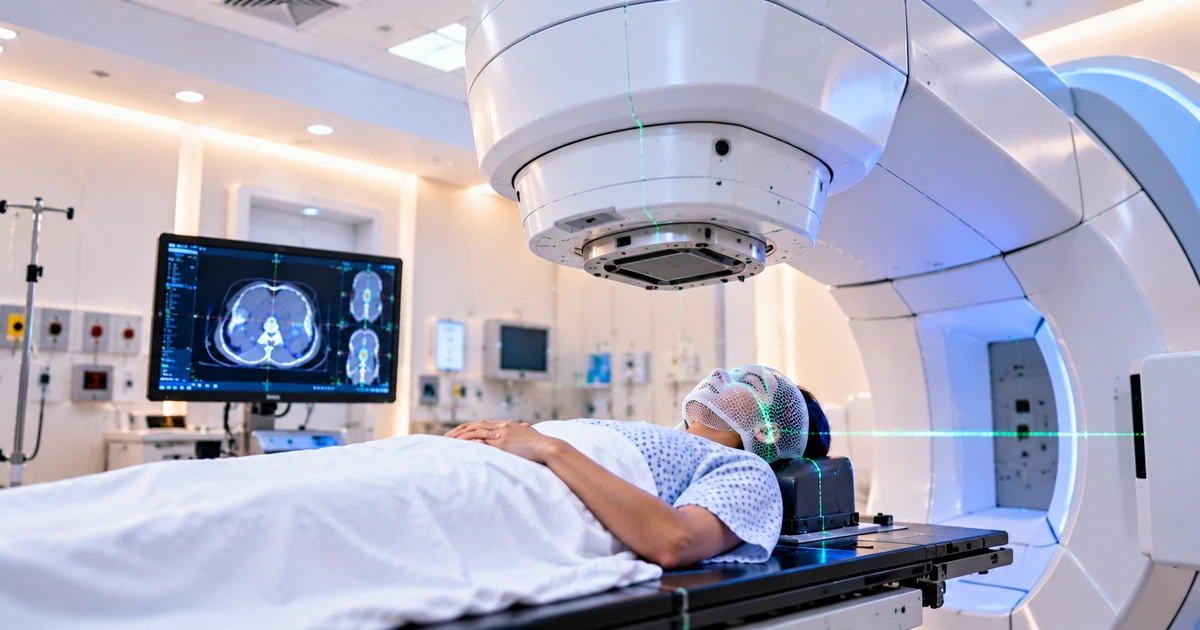
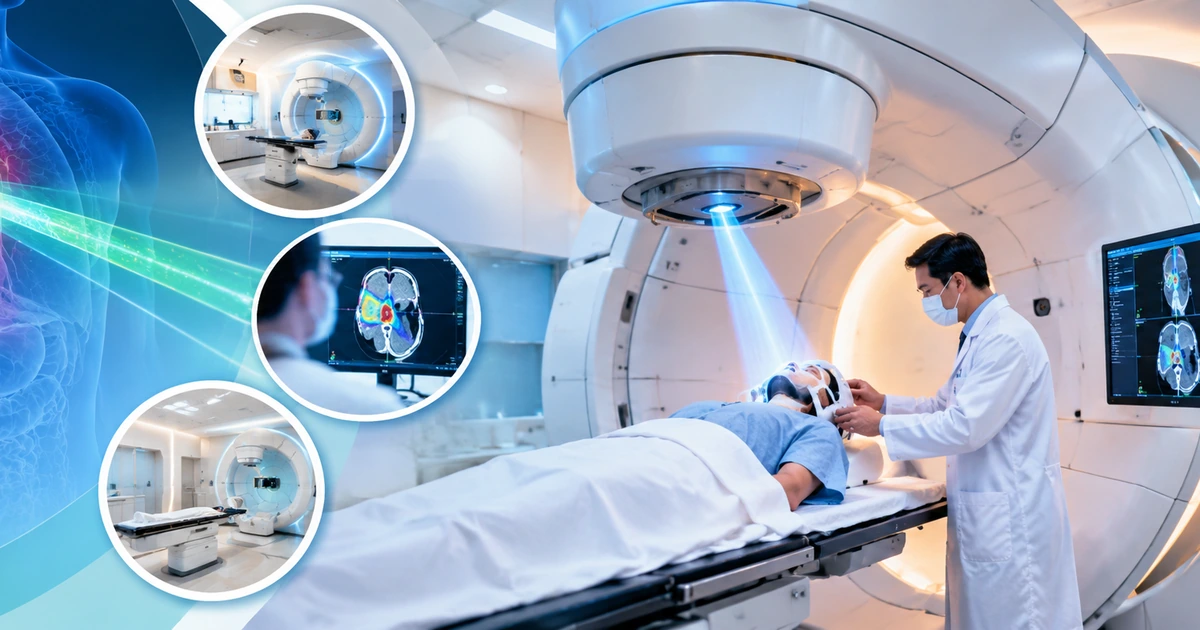
External beam radiation therapy, also called external radiation therapy or EBRT, sends high-energy beams from a machine into the exact area where cancer sits. The machine never touches you. Some patients simply call it cancer beam therapy.
For most patients, radiotherapy external beam treatment is the first type of radiation offered. Radiation has been used against cancer for more than 100 years, and modern imaging has made it far more precise and safer.
What Is External Beam Radiation Therapy (EBRT)? The Everyday Face of Cancer Radiation
External beam radiation therapy, also called external radiation therapy or EBRT, sends high-energy beams from a machine into the exact area where cancer sits. The machine never touches you. Some patients simply call it cancer beam therapy.
For most patients, radiotherapy external beam treatment is the first type of radiation offered. Radiation has been used against cancer for more than 100 years, and modern imaging has made it far more precise and safer.
How EBRT Works: Targeted Beams That Damage Cancer DNA
The beams damage the DNA inside cancer cells so they stop dividing and die. Healthy cells in the path can be affected too, but they repair themselves better. Three kinds of beams are used:
- Photons (X-rays): The most common type, able to reach deep tumours
- Electrons: Shallow beams for skin and surface cancers
- Protons: Beams that stop at the tumour, used in proton therapy
Most treatments are delivered by a linear accelerator (LINAC).
Types of External Beam Radiation Therapy
- 3D conformal radiation therapy (3D-CRT): Shapes several beams to the tumour using a 3D scan
- Intensity-modulated radiation therapy (IMRT): Varies beam strength to spare nearby organs
- Image-guided radiation therapy (IGRT): Uses scans during treatment to track the tumour
- Tomotherapy: Delivers radiation in a spiral as you move through a ring-shaped machine
- Stereotactic radiosurgery (SRS): High-dose, pinpoint treatment for small brain tumours, with no cutting
- Stereotactic body radiation therapy (SBRT): Similar precision for lung, liver or spine tumours
- Intraoperative radiation therapy (IORT): Radiation given during surgery to the tumour bed
What Does EBRT Treat? Cure, Support and Symptom Relief
Doctors use EBRT to destroy cancer, shrink tumours before surgery, clear leftover cells after surgery or chemotherapy, and ease pain from advanced cancer. It is common for breast, lung, prostate, colon, uterine and head and neck cancers, and for some leukaemias and lymphomas.
Internal Radiation vs External Radiation: What Is the Difference?
Choosing how to deliver radiation, external beam or internal source, depends on the cancer’s type, size and location.
| Feature |
External radiation |
Internal radiation |
| Source |
Machine outside the body |
Implant, seeds or liquid inside the body |
| Common name |
EBRT |
Brachytherapy or systemic therapy |
| Radioactive after treatment? |
No |
Sometimes, for a short time |
| Typical use |
Most solid tumours |
Cervical, prostate and thyroid cancers |
Some patients receive both.
Before Treatment: Simulation and Planning
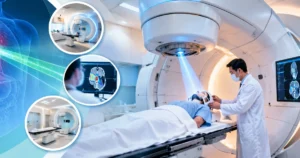
Your first visit is a planning session called simulation, which takes about 30 minutes to two hours. You lie in the treatment position while a CT, MRI or PET scan maps the tumour. Tiny freckle-sized skin marks guide the beams, and a mask or mould may be made to keep you still. Your team then builds a personalised plan over the following days.
Your First Therapy Session: What to Expect
Many patients search “Cleveland Clinic first therapy session what to expect” before they begin. At most centres, every radiation external beam session follows a similar routine:
- You lie in the same position as during simulation, with any supports in place.
- The therapist leaves the room but watches on a monitor and talks with you over an intercom.
- The machine moves quietly around you, aiming beams from different angles.
- You stay still but breathe normally while radiation is given in short bursts.
You will not feel the radiation. You may hear clicking or whirring, and brain treatment can cause flashes of light. Sessions are usually given five days a week for several weeks, and you go home the same day.
What Are the Potential Benefits and Risks of This Treatment?
Benefits:
EBRT can destroy cancer cells, slow or stop tumour growth, lower the chance of cancer returning and ease symptoms such as pain. It is non-invasive, needs no hospital stay and does not make you radioactive.
Risks:
The beams can affect healthy tissue near the tumour, causing short-term side effects. Less often, late effects such as scarring, fertility problems or a small risk of a second cancer appear months or years later, depending on the area treated.
What Are the Side Effects of External Beam Radiation Therapy?
Fatigue is the most common side effect. Others depend on the treated area and may include:
- Skin redness or irritation
- Nausea or loss of appetite
- Hair loss in the treated area
- Trouble swallowing or shortness of breath
- Headaches
Side effects often build gradually because cancer cells take days or weeks to die. Most ease within a few weeks of finishing, though some people need several months to feel fully themselves.
Tips for Recovery and When to Call Your Doctor
Rest often, eat a balanced diet, drink plenty of fluids and cut back on activities when you need to. Call your care team straight away if you have a fever or chills, chest pain, trouble breathing, or side effects that worsen suddenly.
Frequently Asked Questions