

MBBS, DNB (General Surgery), MCh (Surgical Oncology), FMAS, MMAS (HPB)
Assistant Professor, Surgical Oncology – Gujarat Cancer Research Institute (GCRI), Ahmedabad
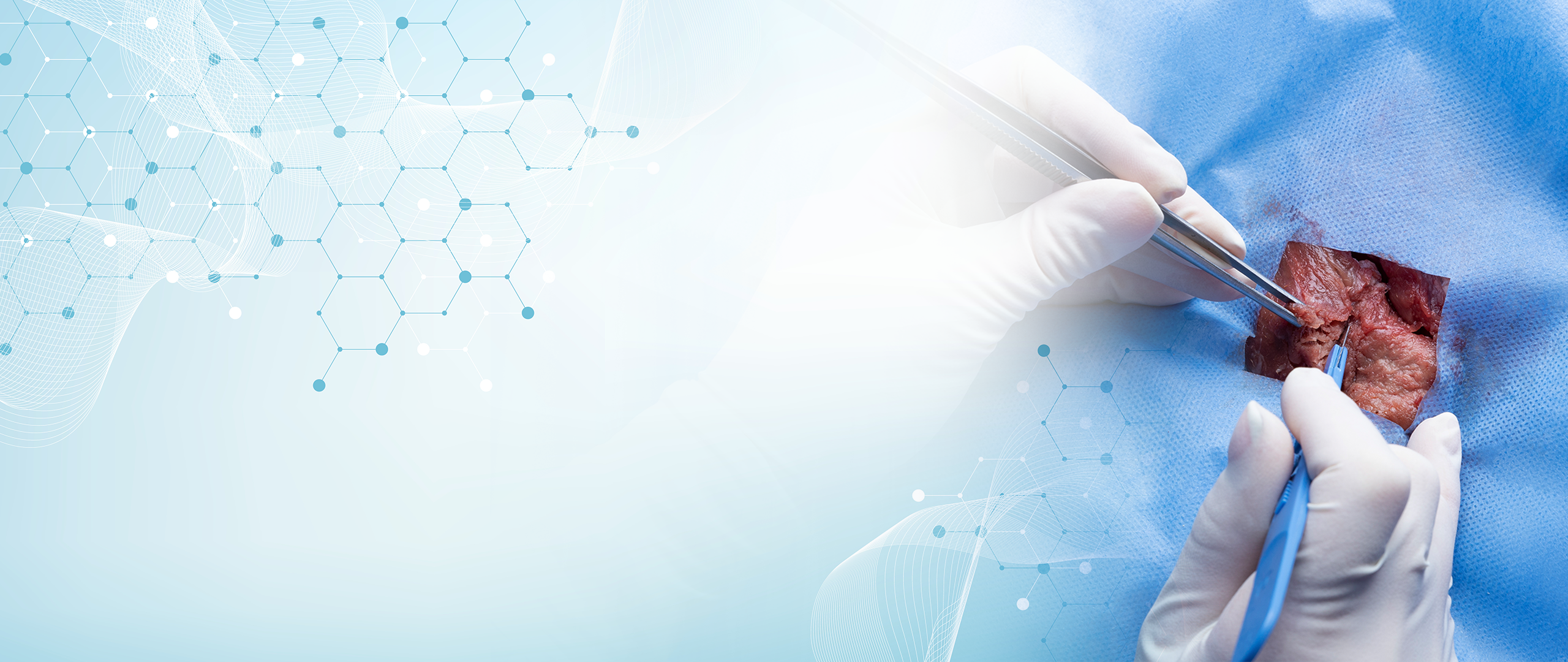
When a doctor says, “We need to do a biopsy,” most people immediately feel anxious. But a biopsy is simply a procedure where a small sample of cells or tissue is taken from the body and examined under a microscope. It is one of the most important tools doctors have to diagnose diseases, especially cancers and blood disorders.
There are many biopsy types, and each has its own purpose, process, and level of invasiveness. Understanding the different types of biopsy – and what actually happens during them – can make the experience less frightening and help you feel more in control of your health decisions.
Why Biopsy Are Performed
Biopsy are not done “just because.” Your doctor recommends a biopsy when they need clear, scientific proof of what is happening inside your body.
Diagnosis
The main reason is to confirm whether a suspicious lump, patch, or lesion is cancerous or non-cancerous. Without tissue, there is no definitive diagnosis.
Staging and Subtype
Many cancers need to be classified into subtypes and stages. Biopsy results tell your team what kind of cancer cells are present and how aggressive they look, which strongly influences treatment plans.
Monitoring Treatment
In some conditions, repeat Biopsy help doctors see how well the treatment is working or whether the disease is changing.
Confirming Non-Cancer Conditions
Biopsy can also diagnose infections, autoimmune diseases, inflammatory conditions, and organ diseases (like liver or kidney problems), not just cancer.
Whether you’re consulting a lung cancer specialist in Pune, a hematologist in Pune, or your local physician, biopsy results are often the foundation for accurate, personalised care.
Key Factors That Determine Which Biopsy Type Is Used
Doctors do not choose a biopsy at random. Several factors help them decide which of the biopsy types will give the best result with the least risk:
- Location of the lesion: Is it on the skin, in a lung, deep in the abdomen, or in the bone marrow?
- Size and accessibility: Can the area be reached with a needle, or is surgery required?
- Patient’s health and risk tolerance: Bleeding risk, heart or lung problems, and overall fitness affect the choice.
- Amount of tissue needed: Some conditions require a tiny sample, while others need a larger “core” of tissue for detailed testing.
Taking all this into account, your doctor will explain which of the different types of biopsy suits your situation best.
Different Types of Biopsy
There are several major biopsy types, and each works a little differently. Let’s look at the most common different types of biopsy and what typically happens during each.
Needle Biopsy
Needle Biopsy are among the most frequently used methods because they are relatively quick and less invasive.
Fine-Needle Aspiration (FNA)
- Uses a very thin, hollow needle (similar to or smaller than a blood test needle).
- The doctor inserts the needle into the suspicious area and gently pulls out cells and fluid into a syringe.
- FNAs are often used for lumps in the neck, thyroid, breast, or lymph nodes.
- The procedure is usually done under local anaesthesia and may be over in a few minutes.
Core Needle Biopsy
- Uses a slightly larger, spring-loaded needle that removes a small cylinder or “core” of tissue.
- Because more tissue is obtained, pathologists can study the structure and architecture of the cells more accurately.
- Often used for breast, liver, or prostate lesions, and for masses in deep organs guided by imaging.
- May be done with local anaesthesia and sometimes mild sedation.
Vacuum-Assisted / Image-Guided Biopsy
- A specialised device uses suction to remove multiple small cores of tissue through a single skin puncture.
- Usually guided by imaging such as ultrasound, CT, or MRI to precisely target the lesion.
- This technique is very useful for small or tricky-to-reach masses, especially in the breast or deep organs.
If your doctor plans further imaging like a PET scan in Pune after the biopsy, it’s usually to understand the full extent of disease and plan the next steps – not because the biopsy “went wrong.”
Endoscopic Biopsy
Sometimes, the suspicious area lies inside a hollow organ like the colon, lungs, or bladder. In these cases, doctors use an endoscope – a thin, flexible tube with a light and camera.
During an endoscopic biopsy:
- The scope is gently passed through a natural opening (mouth, anus, or urethra).
- Small tools passed through the scope take tiny pieces of abnormal tissue.
Common Variants Include:
- Colonoscopy – for polyps or lesions in the large intestine.
- Bronchoscopy – for lung or airway lesions.
- Cystoscopy – for bladder wall abnormalities.
Endoscopic Biopsy are less invasive than open surgery and allow the doctor to both see and sample the lesion in the same sitting.
Surgical Biopsy
In some cases, especially when a lesion is large, difficult to reach, or when previous small Biopsy were inconclusive, a surgical approach is needed.
Incisional Biopsy
- Only a part of the suspicious mass is removed.
- Typically done when the lesion is large and complete removal would be too risky or complex.
Excisional Biopsy
- The entire lump or suspicious area is removed in one go.
- Often chosen for small skin or breast lumps, or certain early-stage lesions.
Surgical Biopsy may be done under local or general anaesthesia depending on the depth and location.
Skin Biopsy
Skin lesions are among the most visible reasons people get worried and ask about biopsy types.
Shave Biopsy
- A thin layer of the lesion is shaved off from the surface using a small blade.
- Usually used for raised lesions or superficial abnormalities.
Punch Biopsy
- A circular tool is twisted into the skin to remove a small, deeper “core” of skin.
- Often used for rashes, pigmented lesions, or suspected inflammatory skin conditions.
Excisional / Incisional Skin Biopsy
- Similar to surgical Biopsy but limited to skin and underlying tissue.
- Used when the entire lesion needs to be removed.
Thanks to local anaesthesia, most skin Biopsy are quick, and you can often go home shortly after the procedure.
Bone Marrow Biopsy
Bone marrow is the soft tissue inside your bones where blood cells are made.
What Happens During the Procedure?
- Usually done from the back of the hip bone (pelvis).
- Involves aspiration and a core biopsy.
- Local anaesthesia is used and sometimes sedation.
A hematologist in Pune or elsewhere is the specialist who typically performs and interprets these Biopsy.
Laparoscopic / Other Scope-Guided Biopsy
When the suspicious area lies deep within the abdomen or chest and cannot be safely reached with a needle from the outside, doctors may use minimally invasive surgery.
- Laparoscopy allows doctors to view organs directly with a camera.
- Tiny instruments are then used to take targeted Biopsy.
- These procedures are less invasive than open surgery and often provide enough tissue for diagnosis.
Liquid Biopsy
One of the newer biopsy types is the liquid biopsy.
Instead of taking a solid piece of tissue, doctors analyse blood (or sometimes other body fluids) for:
- Tumour DNA fragments (circulating tumour DNA)
- Circulating tumour cells
- Other markers of cancer activity
Liquid biopsy is non-invasive and can help in cancer detection, treatment monitoring, and recurrence assessment.
Risks and Considerations
While Biopsy are common and usually safe, they are still medical procedures with some risks.
Possible Risks
- Bleeding and bruising
- Infection
- Pain or discomfort
- Inconclusive results
- Anaesthesia-related risks
What to Expect Before, During, and After a Biopsy
Before the Biopsy
- Medical history review
- Medication assessment
- Consent process
- Fasting instructions if required
During the Biopsy
- Local or general anaesthesia may be used.
- Mild pressure or discomfort is common.
- Tissue samples are collected for testing.
After the Biopsy
- The site is dressed and monitored.
- Wound care instructions are provided.
- Samples are sent to a pathology laboratory.
- Results may take several days.
Conclusion
Biopsy may sound intimidating, but they are one of the most powerful tools modern medicine has for getting clear answers. Understanding the different types of biopsy helps patients better understand the diagnostic process and why a specific procedure has been recommended.
Each of these biopsy types plays a unique role in diagnosis, staging, and treatment planning. With accurate biopsy results, your healthcare team can tailor treatment specifically to your condition.
Questions to Ask Your Healthcare Provider
Before you go in for a biopsy, it’s completely okay – and wise – to ask questions such as:
- Which type of biopsy is right for my situation, and why?
- What are the risks and side-effects of this biopsy in my case?
- How long will the procedure and recovery take?
- When and how will I get the results?
- How will the biopsy results influence my treatment plan?
If you’ve ever undergone a biopsy at a specialised centre or a cancer hospital in Talegaon Dabhade, you already know how much clearer things become once the report arrives.