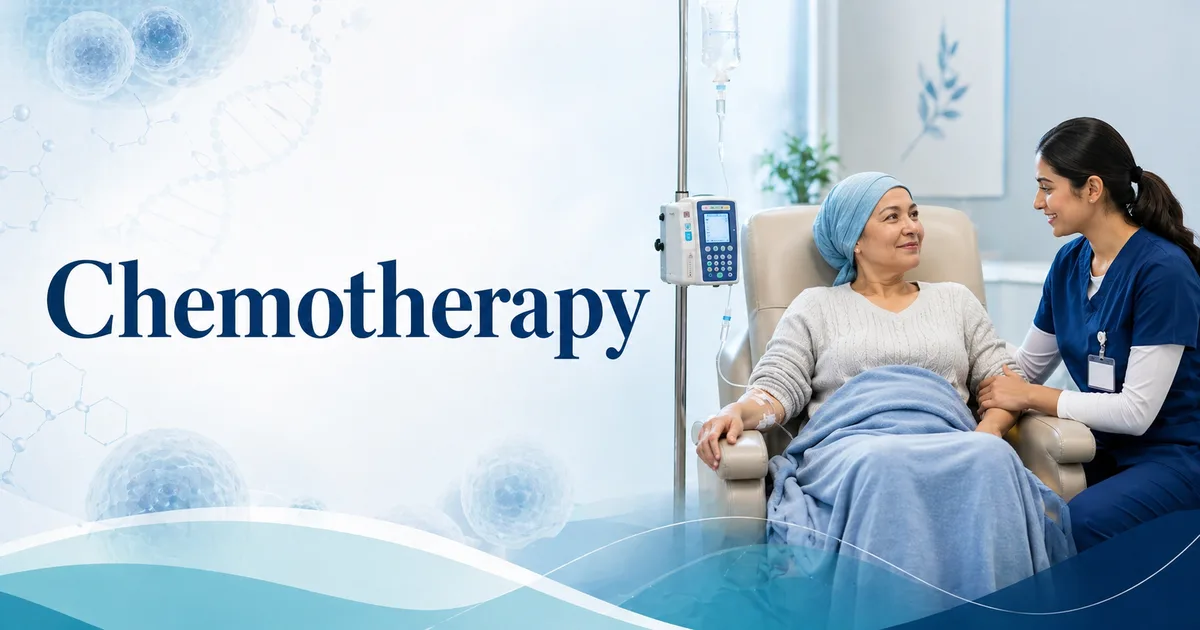
Chemotherapy is a cancer treatment that uses chemical drugs – called cytotoxic agents – to kill cancer cells or prevent them from dividing. Because these drugs travel through the bloodstream, they can reach cancer cells throughout the body, including those that have spread to sites that imaging tests may not detect. This makes chemotherapy a systemic treatment, unlike surgery or radiation, which target cancer in a specific location.
Chemotherapy is used alone or in combination with surgery,
radiation therapy, targeted therapy, or
immunotherapy, depending on the cancer type, stage, and goals of treatment.The word joins ‘chemical’ and ‘therapy’, which is the simple chemotherapy meaning: treating disease with chemical medicines.
What is Chemotherapy? (Definition and Meaning)
Chemotherapy, often shortened to ‘chemo’, is a medical treatment that uses cytotoxic drugs to destroy cancer cells or stop them from reproducing. It is one of the most widely used cancer treatments across a broad range of cancer types and stages.
Kimo Treatment / Kimo Injection – Same as Chemotherapy
In India, chemotherapy is commonly called ‘kimo’, ‘kimo treatment’, or ‘kimo injection’ –phonetic renderings of ‘chemo’. All terms refer to the same treatment: using cytotoxic drugs to kill cancer cells. Whether your doctor has referred to it as chemotherapy or kimo, it is the same procedure. Some patients also spell it as ‘kemo for cancer’, which again means the same chemo treatment.
How Does Chemotherapy Work?
Chemotherapy works by targeting cells that divide rapidly. Cancer cells typically divide much faster than normal cells, making them more vulnerable to cytotoxic drugs. Depending on the drug, chemotherapy can: damage the cancer cell’s DNA to prevent it from copying itself; disrupt the cell cycle at a specific point; or block nutrients a cancer cell needs to grow. The result is programmed cell death, called apoptosis.
Some healthy cells that also divide rapidly – such as hair follicle cells, bone marrow cells, and the digestive tract lining – can be temporarily affected, which explains common side effects. Most of these effects are temporary and resolve after treatment ends.
When is Chemotherapy Used? Goals and Clinical Indications
Chemotherapy is recommended when cancer cells need to be targeted throughout the body. The specific goal determines when and how it is given:
- Curative chemotherapy: given with the intent to eliminate the cancer completely. Used for highly chemosensitive cancers such as leukaemia, lymphoma, and some solid tumours.
- Neoadjuvant chemotherapy: given before surgery or radiation to shrink the tumour and reduce the extent of the operation.
- Adjuvant chemotherapy: given after surgery or radiation to destroy residual cancer cells and reduce the risk of recurrence.
- Palliative chemotherapy: given when a cure is not the primary goal – slows disease spread, relieves symptoms, and improves quality of life.
- Concurrent chemoradiation: chemotherapy given alongside radiation to make cancer cells more sensitive. Used for head and neck, oesophageal, and cervical cancers.
Chemotherapy plans differ for every cancer. For example,
chemotherapy for cervical cancer is often given together with radiation. When the aim is comfort and a better quality of life rather than cure, the
palliative care team works alongside your oncologist.
Types of Chemotherapy: Classification and Drug Classes
Chemotherapy is classified by delivery route, timing relative to other treatments, and drug class. Each of these types still fits the same definition of chemotherapy: medicines that act on dividing cancer cells.
By Route of Delivery
- Systemic chemotherapy (IV or oral): drugs circulate through the bloodstream, reaching cancer cells throughout the body.
- Regional chemotherapy: drugs are delivered to a specific body cavity – e.g., intraperitoneal for abdominal cancers, or intrathecal for CNS cancers.
Common Chemotherapy Drug Classes
- Alkylating agents: damage DNA to prevent cell replication. Examples: cyclophosphamide, cisplatin, carboplatin.
- Antimetabolites: block DNA/RNA synthesis. Examples: methotrexate, 5-fluorouracil (5-FU), gemcitabine.
- Anthracyclines: intercalate into DNA. Examples: doxorubicin, epirubicin.
- Taxanes: prevent cell division by stabilising microtubules. Examples: paclitaxel, docetaxel.
- Topoisomerase inhibitors: block enzymes needed for DNA replication. Examples: irinotecan, etoposide.
Chemotherapy Treatment Pathway: From First Consultation to Follow-Up
At Onco-Life, chemotherapy follows a clear six-step pathway so that every patient knows what comes next. Your exact plan depends on the cancer type, stage, your reports and your overall health. The six steps are:
- Consultation with a medical oncologist
- Diagnosis and staging
- Tumour board plan
- Treatment start (the cycle day flow)
- Monitoring of blood counts, side effects and safety
- Recovery and follow-up
What Happens During Chemotherapy: Step-by-Step
Chemotherapy is a carefully planned, multi-step process overseen by a medical oncologist and a chemotherapy nursing team. Knowing what happens in chemotherapy before your first visit can make the day feel less stressful.
How to Prepare for Chemotherapy
Before starting, your oncologist will confirm blood counts, kidney and liver function, and heart function to ensure you are fit for the regimen. A dental check is important to address any potential infection sources. A PICC line or implanted port may be placed to simplify intravenous access throughout the treatment course.
Before your first cycle, the team also records your vitals and weight, reviews your recent blood tests and checks all current medicines, including supplements and herbal products. You will be asked for consent, given an explanation of the day’s plan and what to do at home, and prescribed supportive medicines such as anti-nausea and gastric protection medicines.
What to Bring on Chemotherapy Day
A little planning makes the day smoother. Keep the following ready:
- Medical file: your chemotherapy plan or doctor notes, papers from previous cycles if you are coming for the second or third cycle, recent blood reports as advised (CBC, LFT, KFT) and any recent scan updates.
- Medicines and allergy details: a list or photos of all current medicines, your allergy history, details of diabetes, blood pressure, heart problems, asthma or any chronic illness, and any supplements, ayurvedic or homeopathy medicines you take.
- Comfort items: a shawl or jacket because day care rooms can feel cool, a water bottle and a light snack if allowed, a phone charger, a book or headphones, and tissues or wet wipes.
- An attendant: one attendant is recommended, especially for the first cycle or if you feel weak after chemotherapy.
Eating, Rest and Infection Safety Before You Arrive
Eat a light meal unless your doctor has advised fasting, which is usually not needed for chemotherapy, and stay hydrated from the previous day. Sleep well the night before, and arrange support in advance so that you do not travel alone for a long distance after treatment. If your doctor has warned you about low immunity, avoid crowded places, and tell the team before you come if you have a fever, cold, cough or recent infection.
IV Cannula, Chemo Port or PICC Line: Which Access Is Used?
Your doctor chooses the safest access based on the drug type, the condition of your veins and the expected duration of treatment. A peripheral IV cannula is a temporary line in the hand or arm and is common for many regimens. A PICC line or chemo port is a more stable long-term option, often advised when veins are difficult, treatment is long, medicines can irritate smaller veins, or frequent blood sampling is expected. Placement, care and warning signs are covered in the chemo port, PICC line and central line section below.
What to Expect During a Chemotherapy Session
Most standard chemotherapy at Onco-Life Cancer Centre is delivered as daycare admission – you come in for the infusion and return home the same day. IV infusions are given through a drip, catheter, or port; oral chemotherapy is taken as tablets at home. Sessions can last from 30 minutes to several hours depending on the regimen. During the session, your vital signs are monitored and a nurse is present throughout.
A typical day in the day care unit follows these steps:
- Registration and check-in: your appointment is confirmed and your file is processed.
- Vitals and symptom check: blood pressure, weight and temperature are recorded, and the team asks about fever, cough, loose motions, mouth sores or burning urine.
- Doctor review: side effects from the last cycle are reviewed and chemotherapy is confirmed for the day.
- Blood test verification: available reports are checked, and same-day blood tests are advised if they are not yet done.
- IV cannula or chemo port access.
- Pre-medication to reduce nausea, acidity and allergic reactions, as required.
- Chemotherapy infusion, given slowly as per protocol while you are monitored.
- Observation, especially during the first cycle or if you have had a reaction before, followed by discharge instructions.
The total time in the day care unit is usually 2 to 8 hours, and some regimens are shorter or longer. Your team will guide you on what to expect for your regimen.
Before you leave, you receive a home medicines plan covering anti-nausea, acidity and pain medicines as prescribed, a short list of what to expect over the next few days, diet and hydration tips, the date of your next review, labs or cycle, and clear instructions on which symptoms need an urgent call or a casualty visit.
Chemotherapy Cycles and Duration
Chemotherapy is given in cycles, with a treatment session followed by a rest period that allows healthy cells to recover. A typical cycle is 2 to 4 weeks. Most treatment courses involve 4 to 8 cycles over several months. Your oncologist will explain your specific schedule.
Treatment usually begins within 10 days of the plan being finalised, depending on pending tests and fitness checks. Many regimens run for 2 to 6 months overall, although the duration varies widely by cancer type and treatment intent. If you are planning your budget, our guide to chemotherapy cost per cycle explains what affects the price.
Monitoring During Chemotherapy: Blood Tests and Dose Decisions
Chemotherapy is a planned course, but each cycle is adjusted to keep you safe. Before every cycle, and sometimes mid-cycle, the team checks your blood counts, kidney and liver tests as advised, your weight and symptoms, and the side effects you had after the previous cycle. Based on these findings, your oncologist decides whether to proceed, delay the cycle, reduce the dose or add supportive injections. These decisions are made for your safety and are a normal part of treatment.
Benefits of Chemotherapy
Chemotherapy’s main benefits are its ability to reach cancer cells anywhere in the body (systemic treatment), its applicability across many cancer types and stages, its ability to shrink tumours before surgery, and its role in reducing recurrence risk after surgery. For advanced cancers, chemotherapy can meaningfully extend life and relieve cancer-related symptoms.
Chemotherapy Side Effects: What to Expect and How They are Managed
Chemotherapy side effects occur because some healthy cells that divide rapidly are temporarily affected. Common side effects include:
- Fatigue: the most common general side effect; usually builds during treatment and improves over weeks after the course ends.
- Nausea and vomiting: manageable with anti-nausea medications (antiemetics); most patients do not experience severe nausea with modern supportive care.
- Hair loss (alopecia): occurs with some but not all chemotherapy drugs; hair normally regrows after treatment ends.
- Increased infection risk (neutropenia): low white blood cell count makes infections more likely; fever above 38°C during chemotherapy requires prompt medical attention.
- Anaemia and fatigue from low red blood cells: managed with dietary support and, in some cases, growth factors or transfusions.
- Mouth sores (mucositis): oral hygiene and specific mouth rinses help prevent and manage this side effect.
The oncology team at Onco-Life Cancer Centre provides supportive care guidance throughout the chemotherapy course to minimise side effect impact on daily life.
Other Side Effects You May Notice
Not everyone gets every side effect, and most are treatable when reported early. Depending on the drugs used, you may also notice constipation or loose motions, taste changes, body ache, acidity and reduced appetite, mouth dryness, tingling or numbness in the hands and feet, or skin and nail changes. Our practical guide on managing chemotherapy side effects covers everyday ways to cope.
When to Go to Casualty Immediately
If you are on chemotherapy or have recently had it, do not wait at home if you have:
- Fever of 38°C (100.4°F) or above, especially after chemotherapy.
- Breathlessness, chest pain or fainting.
- Uncontrolled bleeding, such as vomiting blood, black stools or heavy bleeding.
- Confusion or fits.
- Severe vomiting or diarrhoea with weakness, dizziness or low urine output.
- New painful leg swelling or sudden breathlessness, which may point to a clot.
- New leg weakness with back pain or loss of bladder or bowel control, which can be an urgent nerve or spine concern.
- Sudden swelling of the face or lips with wheezing or tightness in the chest.
When to Call Your Oncology Team the Same Day
- Mouth ulcers so painful that you cannot eat or drink.
- Persistent vomiting despite prescribed medicines.
- Diarrhoea more than 4 to 6 times a day.
- Burning urine, a persistent cough or a worsening sore throat.
- Severe rashes or itching.
- Sudden severe pain that is not relieved by medicines.
Chemotherapy at Onco-Life Cancer Centre, Maharashtra
Onco-Life Cancer Centre delivers chemotherapy at four centres across Maharashtra. Services include daycare and inpatient chemotherapy, oral chemotherapy monitoring, PICC line and port services, and concurrent chemoradiation with TomoTherapy at Talegaon. Every chemotherapy regimen is reviewed by the Virtual Tumour Board before commencement.
You can start with a consultation at the centre closest to you: chemotherapy in Pune, medical oncology in Talegaon, medical oncology in Satara or medical oncology in Chiplun.
Chemotherapy Under Government Health Schemes
Onco-Life Cancer Centre is empanelled with MJPJAY, Ayushman Bharat (PM-JAY), and CGHS. Eligible patients may access chemotherapy, supportive care medications, and related diagnostics on a cashless basis. Eligibility criteria apply. Contact the Onco-Life TPA desk before your visit to confirm your coverage.
Book a Chemotherapy Consultation at Onco-Life Cancer Centre | Talegaon / Wagholi: 8128124067 | Satara: 7769004343 | Chiplun: 7378958000
Conclusion
Chemotherapy uses cytotoxic drugs to destroy cancer cells or stop them dividing throughout the body. Key points:
- Chemotherapy is systemic – drugs reach cancer cells everywhere in the body via the bloodstream.
- It is used with curative, adjuvant, neoadjuvant, or palliative intent, depending on stage and treatment goals.
- Drug types include alkylating agents, antimetabolites, anthracyclines, taxanes, and topoisomerase inhibitors.
- Treatment is given in cycles over weeks to months; most standard regimens at Onco-Life are delivered as daycare.
- Common side effects – fatigue, nausea, hair loss, low blood counts – are temporary and managed with supportive care.
- Eligible patients in Maharashtra can access chemotherapy under MJPJAY, PM-JAY, or CGHS at Onco-Life Cancer Centre.
- Care follows a six-step pathway: consultation, diagnosis and staging, tumour board planning, treatment, monitoring, and follow-up.
- A chemo port or PICC line may be advised when veins are difficult or treatment is long, and the site needs careful daily care.
- Fever, breathlessness, bleeding or confusion during chemotherapy need immediate medical attention.
Frequently Asked Questions