Onco Life Hospitals

TomoTherapy Radiation for Cancer Treatment

TomoTherapy Radiation for Cancer Treatment

TomoTherapy is one of the most advanced ways to deliver radiation therapy for cancer. It combines CT imaging, treatment planning, patient positioning, and radiation delivery into a single integrated system, so radiation can be shaped precisely around a tumour while sparing surrounding healthy tissue.

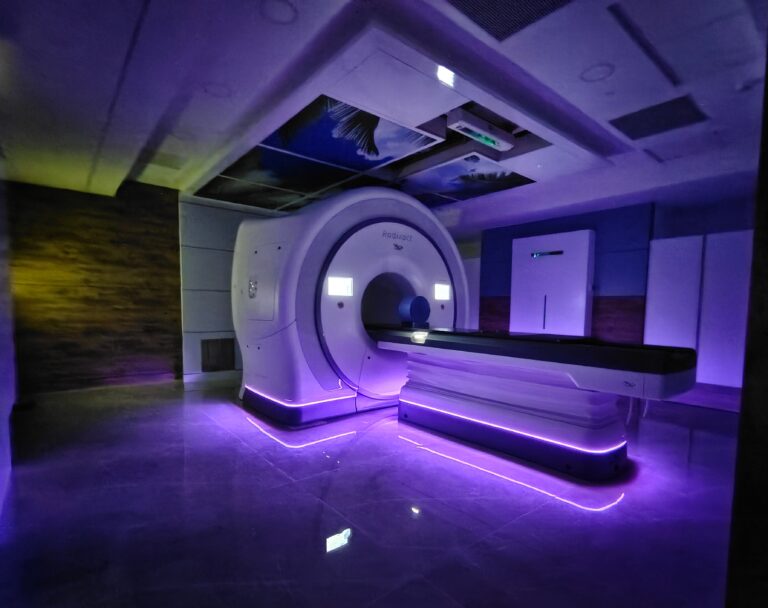
Onco-Life Cancer Centre’s Talegaon unit houses the TomoTherapy Radixact system with Synchrony motion tracking, offering patients in Pune, Talegaon, Chakan, Pimpri-Chinchwad, and across Maharashtra access to a high-precision radiation platform close to home.

TomoTherapy Radiation for Cancer Treatment

TomoTherapy is a form of intensity-modulated radiation therapy (IMRT) delivered on a machine that looks similar to a CT scanner. Instead of firing radiation from a few fixed angles, the machine rotates around the patient in a helical pattern, delivering thousands of small radiation beams shaped to match the exact 3D outline of the tumour. 

Every treatment session starts with a fresh CT image taken on the same machine. This means radiation is planned and delivered on the anatomy as it is that day, not as it was a week ago. That is what makes TomoTherapy image-guided in the truest sense.

How TomoTherapy Works

TomoTherapy combines three functions in one system:
  • CT imaging, to see the exact position of the tumour and surrounding organs on treatment day
  • Treatment planning, where the radiation oncologist and medical physicist shape the dose to the tumour and set safety limits for nearby healthy tissue
  • Helical radiation delivery, where the machine rotates continuously around the patient, delivering radiation slice by slice with sub-millimetre precision
Because everything is integrated in one system, plan changes can be made day by day if the tumour shrinks, if the patient loses weight, or if the position of an internal organ shifts.

Cancers Treated with TomoTherapy

TomoTherapy is used to treat a wide range of cancers, particularly those where tumour shape is complex or the tumour sits close to critical organs. These include:
  • Head and neck cancers
  • Breast cancer
  • Lung cancer
  • Prostate cancer
  • Gynaecological cancers, including cervical and endometrial
  • Gastrointestinal cancers
  • Brain tumours and pituitary tumours
  • Spinal cord tumours
  • Sarcomas
  • Selected paediatric cancers
  • Cancers that have returned in previously irradiated areas (re-irradiation, in carefully selected cases)
  • Multiple tumour sites in a single session 
Your radiation oncologist will decide whether TomoTherapy is the most appropriate option for you, based on cancer type, stage, prior treatments, and the location of the tumour.

Benefits of TomoTherapy Compared to Conventional Radiation

  • Precision: Sub-millimetre accuracy in shaping the radiation dose around complex tumours
  • Daily image guidance: A fresh CT is taken before every session, so treatment adjusts to changes in the tumour and body
  • Better healthy tissue sparing: Reduced dose to nearby organs such as the heart, lungs, spinal cord, salivary glands, and rectum, depending on the site
  • Ability to treat multiple targets in one session: Useful when cancer has spread to more than one area
  • Non-invasive: No incisions or hospital admission for the treatment itself; sessions are given as daycare
  • Fewer side effects in many cases: Because less healthy tissue receives radiation, patients often tolerate treatment better
TomoTherapy does not replace surgery or chemotherapy but works alongside them. It is one of several radiation options; the choice depends on the specific cancer, stage, and clinical goal.

TomoTherapy Radixact with Synchrony at Onco-Life Talegaon

Onco-Life Cancer Centre, Talegaon houses the TomoTherapy Radixact system with Synchrony real-time motion tracking. Synchrony continuously monitors and adjusts for the natural movement of internal organs during treatment, such as the movement of a lung tumour with each breath, so the radiation beam follows the tumour rather than radiating a larger area to compensate. 

This is particularly valuable for: 

  • Lung cancer, where breathing moves the tumour
  • Liver and pancreatic cancers, where organ motion is significant
  • Prostate cancer, where the target can shift between and during sessions

Who Is Suitable for TomoTherapy?

TomoTherapy may be recommended if:
  • The tumour has a complex shape that wraps around a critical organ
  • The area to be treated is close to sensitive structures such as the spinal cord, heart, or optic nerves
  • The patient needs radiation to multiple sites in one treatment plan
  • The patient has had prior radiation and requires careful re-treatment
  • The tumour moves with breathing or organ motion, and motion tracking will improve accuracy
Not every cancer needs TomoTherapy. Your radiation oncologist will discuss whether TomoTherapy or another modality (such as VMAT, SBRT, or brachytherapy) is the best fit.

The Treatment Process Step by Step

Step 1: Consultation The radiation oncologist reviews your diagnosis, imaging, biopsy reports, and prior treatments, then discusses whether TomoTherapy is right for you. 

Step 2: Simulation A planning CT scan is taken in the exact position you will lie in for treatment. Immobilisation devices such as masks or supports are custom-made for you. 

Step 3: Treatment Planning The radiation oncologist, medical physicist, and dosimetrist design a personalised plan. This may take a few days to a week.

Step 4: Plan Review The plan is checked for accuracy and safety before any radiation is delivered.  

Step 5: Daily Treatment Sessions Most patients receive treatment five days a week, over three to eight weeks. Each session takes about 15 to 30 minutes on the machine, but the actual radiation delivery is only a few minutes. A CT scan is done at the start of every session to confirm the tumour position. 

Step 6: On-Treatment Reviews The radiation oncology team meets with you weekly to check on side effects, weight, and general wellbeing, and to adjust supportive care. 

Step 7: Completion and Follow-up After the final session, you will be scheduled for follow-up scans and clinical reviews. Recovery from side effects usually happens over the following weeks. 

Possible Side Effects

Side effects depend on the area being treated. Common ones include:
  • Skin redness or irritation over the treated area
  • Fatigue, which often builds through treatment
  • Mouth ulcers, dry mouth, or difficulty swallowing (with head and neck radiation)
  • Cough or breathlessness (with chest radiation)
  • Nausea or bowel changes (with abdominal or pelvic radiation)
  • Urinary symptoms (with pelvic radiation)
Most side effects settle in the weeks after treatment ends. Report any new or worsening symptoms to the radiation team early, so they can be managed.

TomoTherapy Cost in India

The cost of a full TomoTherapy course depends on:
  • Cancer type and treatment area
  • Number of fractions (sessions) prescribed
  • Whether motion tracking (Synchrony) is used
  • Whether treatment is combined with chemotherapy or other therapies
A full course typically ranges from approximately ₹2,50,000 to ₹6,50,000 or more in India. This may be reduced significantly through:
  • Mahatma Jyotirao Phule Jan Arogya Yojana (MJPJAY) – Maharashtra state scheme
  • Ayushman Bharat (PM-JAY) – national scheme
  • CGHS – for central government employees
  • Private health insurance, subject to policy terms
  • GIPSA cashless insurance for empanelled insurers
Onco-Life is empanelled under MJPJAY, PM-JAY, and CGHS. Eligibility criteria apply; please check government scheme eligibility and speak with the billing coordinator before starting treatment.

TomoTherapy at Onco-Life: Location, Team, and Support

TomoTherapy is delivered at: 

Onco-Life Cancer Centre, Talegaon General Hospital Campus, Talegaon-Chakan Road, Yashwant Nagar, Talegaon Dabhade, Maharashtra 410506 Phone: 8128124067 | 8128123067 

Talegaon is approximately 35 to 40 kilometres from central Pune and easily accessible from Pimpri-Chinchwad, Chakan, Hinjewadi, Wakad, and Mumbai via the Mumbai-Pune Expressway. Patients from across Maharashtra and neighbouring states travel to Talegaon for TomoTherapy. 

Onco-Life’s radiation oncology team is supported by medical physicists, radiation technologists, dosimetrists, and nursing staff, and works closely with surgical oncologists, medical oncologists, and nuclear medicine through the Virtual Tumour Board

Book a TomoTherapy Consultation

To discuss whether TomoTherapy is appropriate for your cancer, please Book a Doctor Appointment or request a Second Opinion. Our coordinators will confirm required reports and consultation timings, and guide you through the next steps.

DISCLAIMER

This content is for informational purposes only and does not constitute medical advice. The signs, diagnosis, and treatment of brain tumours vary from person to person. Please consult a qualified doctor or oncologist for diagnosis and treatment decisions.

Frequently Asked Questions

TomoTherapy Radiation for Cancer Treatment

Is TomoTherapy painful?

No. Radiation delivery itself is painless, similar to a CT scan. Some patients feel skin irritation or fatigue after several sessions.

How long does a TomoTherapy course last?

Most courses run for three to eight weeks, with daily sessions from Monday to Friday. Each session takes 15 to 30 minutes in total.

Is TomoTherapy better than IMRT or VMAT?

Each has strengths. TomoTherapy excels for complex-shape tumours and multi-site treatment. Your radiation oncologist will recommend the best option for you.

Can TomoTherapy treat multiple tumours at once?

Yes. TomoTherapy can plan and deliver radiation to more than one site in a single session, which is useful in some metastatic cases.

How much does TomoTherapy cost in India?

A full course generally ranges from ₹2,50,000 to ₹6,50,000. MJPJAY, PM-JAY, and CGHS may cover eligible patients.

Is TomoTherapy covered under Ayushman Bharat or MJPJAY at Onco-Life?

Onco-Life Talegaon is empanelled under MJPJAY, PM-JAY, and CGHS. Coverage depends on eligibility and clinical indication; please verify before starting.

Where is TomoTherapy available at Onco-Life?

TomoTherapy is offered at the Onco-Life Cancer Centre, Talegaon (Pune region). Patients from other Onco-Life centres are referred here for treatment when needed.

Do I need to be admitted for TomoTherapy?

No. TomoTherapy is a daycare treatment. You come in for each session, and go home the same day.

TGH-Onco Life Cancer Centre – Talegaon