Commando surgery is one of the main treatments for advanced oral cancer. This guide explains what the operation involves, who needs it, how reconstruction works and what recovery looks like.
Oral cancer is among the most common cancers in India, largely because of tobacco and areca nut use. GLOBOCAN 2022 estimates recorded over 1.4 lakh new lip and oral cavity cancer cases in the country. When found early,
oral cancer can often be treated with smaller surgery.
What Is Commando Surgery?
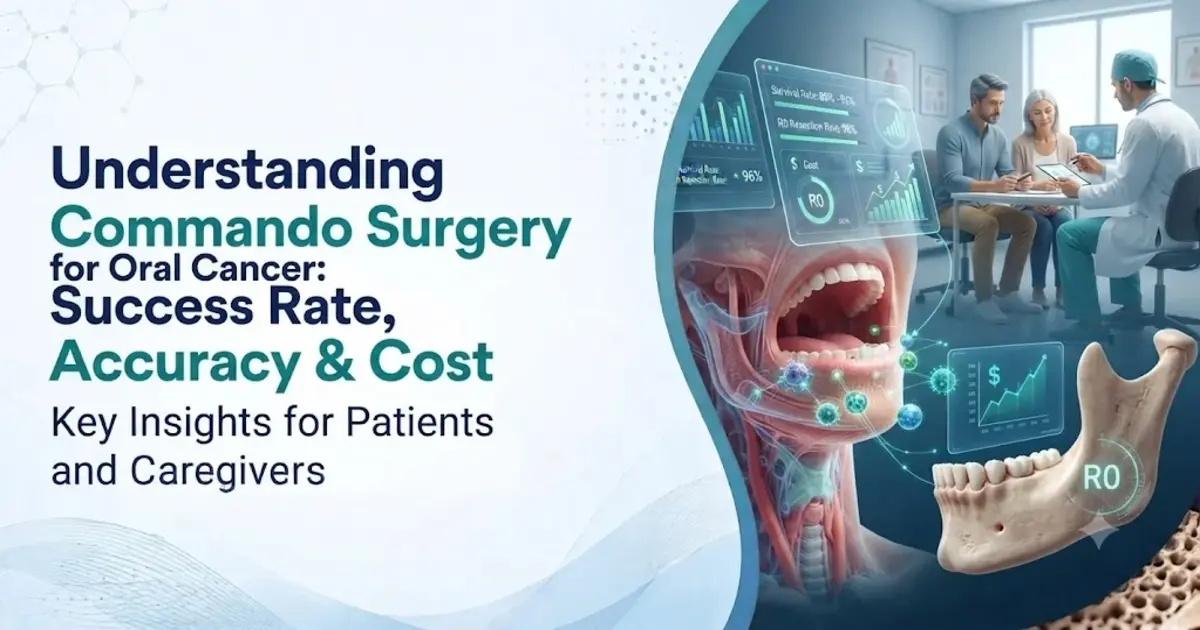
Commando surgery is a major oral cancer surgery that removes a mouth tumor along with nearby tissue in one procedure. The name comes from “COMbined MAndibulectomy and Neck Dissection Operation”. It is also called a commando operation or composite resection.
The operation usually has three parts:
- Removal of the tumor: the cancer is removed with a margin of healthy tissue around it
- Removal of part of the jawbone (mandibulectomy): done when the cancer is close to or has entered the lower jaw
- Neck dissection: removal of lymph nodes in the neck, where oral cancer often spreads first
In most cases, surgeons rebuild the removed area in the same operation. This helps restore eating, speech and facial shape.
When Is a Commando Operation Needed?
Your surgeon may recommend a commando operation when oral cancer:
- Has grown into or is very close to the jawbone
- Affects the lower gums, floor of the mouth, tongue or inner cheek (buccal mucosa)
- Has spread to lymph nodes in the neck
- Has come back after earlier treatment
Before surgery, doctors confirm the cancer with a biopsy and check its spread using CT, MRI or a
PET-CT scan in Mumbai. You can read more about the
types of biopsy used in diagnosis. An
oral cancer specialist in Pune will then plan the extent of surgery.
Commando surgery is done under general anaesthesia and usually takes several hours. A head and neck surgical oncologist leads the operation, often working with a reconstructive surgeon.
- Tracheostomy: a small, temporary breathing opening is made in the neck because swelling after surgery can block the airway
- Tumor and jaw removal: the cancer is removed along with the affected part of the jaw
- Neck dissection: lymph nodes on one or both sides of the neck are removed and sent for testing
- Reconstruction: the gap is filled with tissue taken from another part of the body
- Feeding tube: a thin tube through the nose (nasogastric tube) provides nutrition while the mouth heals
Reconstruction After Commando Surgery
Reconstruction is a key part of modern oral cancer surgery. The choice depends on the size and site of the defect:
- Free flaps: tissue with its own blood vessels is moved from the leg (fibula), forearm or thigh and connected to vessels in the neck. A fibula flap can rebuild the jawbone
- Regional flaps: tissue from nearby areas, such as the chest muscle (pectoralis major flap), is rotated to cover the defect
- Dental rehabilitation: some patients can later receive dental implants or prostheses to improve chewing
Onco-Life’s oral and maxillofacial unit works with the surgical team on jaw and dental rehabilitation.
Recovery After Commando Surgery
Recovery takes time, and every patient heals at a different pace. Here is what many patients can expect:
- Hospital stay: usually around one to two weeks, depending on the extent of surgery and reconstruction
- Breathing: the tracheostomy tube is usually removed once swelling settles
- Eating: most patients start with tube feeding, then move to liquids and soft foods as healing allows
- Speech and swallowing: a therapist helps you relearn these skills
- Wound care: drains in the neck are removed within a few days, and stitches heal over the following weeks
- Shoulder exercises: these help if neck dissection affects the nerve that moves the shoulder
Our guide to
recovery after cancer surgery shares more practical tips for patients and families.
Treatment After Surgery
The removed tissue is examined to check the margins and lymph nodes. If there is a higher risk of the cancer returning, your team may advise
radiation therapy in Pune, sometimes combined with
chemotherapy in Pune. This usually starts within about six weeks of surgery. Learn more about
radiation for head and neck cancer.
Risks and Possible Complications
Like any major operation, commando surgery carries risks. Your surgical team will explain these before you consent:
- Bleeding or infection at the surgery site
- Partial or complete failure of a free flap, which may need another operation
- Difficulty with speech, chewing or swallowing, often improving with therapy
- Changes in facial appearance
- Numbness of the lip, chin or neck
- Shoulder weakness after neck dissection
- Chest infection, especially in people who smoke
Stopping tobacco, smoking and alcohol before surgery lowers these risks and supports healing. Regular follow-up visits help detect any recurrence early.
Free Cancer Treatment Support Through Government Schemes
No hospital in India offers free cancer treatment to everyone as standard. However, government schemes can cover most or all costs of oral cancer surgery and follow-up treatment for eligible patients.
- PM-JAY (Ayushman Bharat): cashless cover of up to ₹5 lakh per family per year at empanelled hospitals. Senior citizens aged 70 and above qualify regardless of income.
- MJPJAY: Maharashtra’s state health scheme for eligible resident families
- CGHS: for central government employees, pensioners and their dependants
- ECHS: for ex-servicemen and their dependants
- MPKAY: for Maharashtra police personnel and their families
Onco-Life Cancer Centre supports eligible patients under these schemes. Read more about
free cancer treatment options or check the full list of
government health insurance schemes. The total cost of surgery depends on the extent of resection and type of reconstruction, so ask for an itemised estimate and confirm your coverage before admission.
Consult an Oral Cancer Specialist
Commando surgery is a major step, but with careful planning and rehabilitation, many patients return to eating, speaking and daily life. The right team makes a real difference.
If you live in Mumbai, you can learn about
oral cancer treatment in Mumbai, or visit a
mouth cancer specialist in Pune.
Book a doctor’s appointment at Onco-Life Cancer Centre in Pune, Satara, Chiplun or Talegaon, or request a
second opinion on your surgical plan.
Medical Disclaimer
This content is for general information only and is not medical advice. Surgical plans, recovery times and risks differ for each patient. Please consult a qualified head and neck surgical oncologist for decisions about your treatment.
Frequently Asked Questions (FAQs)