Bleeding after menopause is easy to dismiss as “just hormones”. Yet it is the most common warning sign of uterine cancer, and noticing it early can make treatment far simpler.
Uterine cancer is one of the most treatable gynaecological cancers when found at an early stage. This guide explains uterine cancer symptoms, what causes the disease, who is at risk, and the treatment options available.
What Is Uterine Cancer?
Uterine cancer starts in the uterus, or womb, the organ where a baby grows during pregnancy. There are two main types:
- Endometrial cancer: starts in the inner lining of the uterus (endometrium) and makes up the vast majority of cases
- Uterine sarcoma: a rare, often faster-growing cancer that starts in the muscle or supporting tissue of the uterus
Uterine cancer is different from cervical cancer, which starts in the lower, narrow part of the uterus. For an overview of other cancers that affect women, see our guide to types of cancer in women.
What Are the Symptoms of Uterine Cancer?
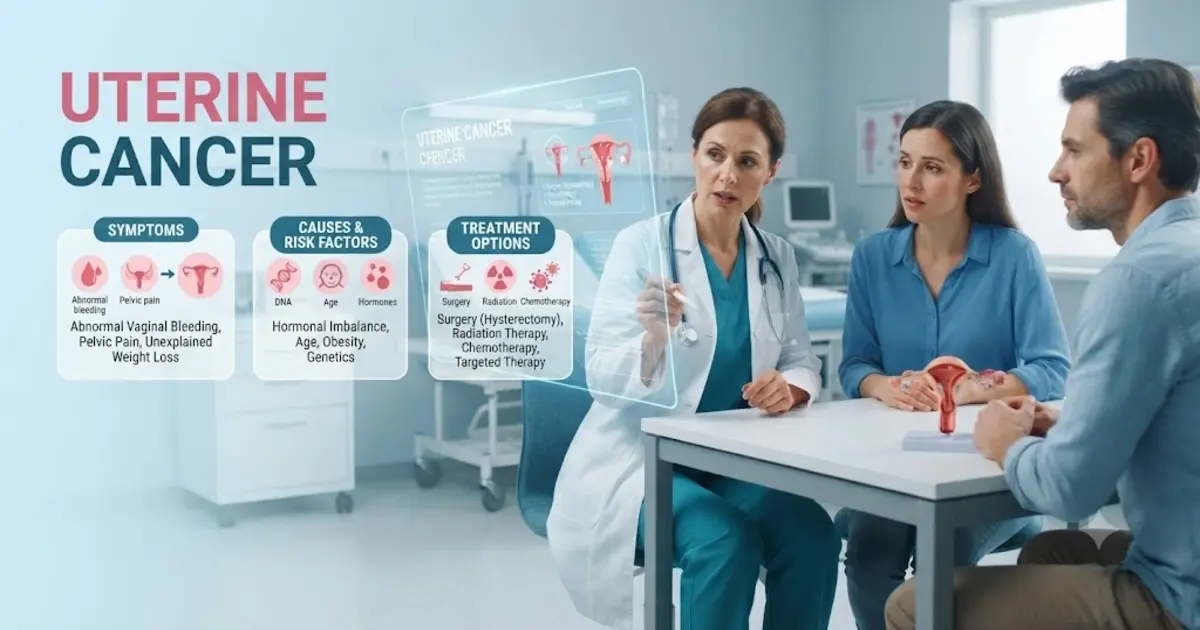
If you are asking “what are the symptoms of uterine cancer?”, the most important answer is abnormal vaginal bleeding. Most women with endometrial cancer notice unusual bleeding early, which is why it is often caught at a treatable stage.
Common uterus cancer symptoms include:
- Bleeding after menopause: any bleeding or spotting, even once, needs a check
- Bleeding between periods: or periods that become heavier or longer, especially after age 40
- Unusual discharge: watery, pink or foul-smelling vaginal discharge
- Pelvic pain or pressure: a dull ache or a feeling of fullness in the lower belly
- Pain during sex or while passing urine
- Unexplained weight loss or tiredness, usually in later stages
These uterine cancer symptoms can also be caused by fibroids, polyps, infections or hormone changes. Still, bleeding after menopause should never be ignored. Pelvic pain and bloating can also point to ovarian problems; read about ovarian cancer symptoms.
Causes and Risk Factors of Uterine Cancer
Uterine cancer develops when cells in the uterus start to grow out of control. Many cases are linked to long-term exposure to the hormone oestrogen without enough progesterone to balance it. Risk factors include:
- Age: most cases occur after menopause
- Excess body weight: fat tissue produces extra oestrogen
- Diabetes and high blood pressure
- Polycystic ovary syndrome (PCOS): can cause irregular ovulation and hormone imbalance
- Early periods or late menopause: more years of oestrogen exposure
- Never having been pregnant
- Oestrogen-only hormone therapy after menopause, without progesterone
- Tamoxifen use for breast cancer, which slightly raises risk
- Lynch syndrome: an inherited condition that raises the risk of uterine and bowel cancer. Learn about genetic testing for hereditary cancer
Keeping a healthy weight, staying active and managing diabetes can lower your risk. If you have several risk factors, stay alert to uterine cancer symptoms and report them early.
How Uterine Cancer Is Diagnosed
If you have uterus cancer symptoms, your doctor may recommend:
- Pelvic examination: to check the uterus and nearby organs
- Transvaginal ultrasound: measures the thickness of the uterine lining
- Endometrial biopsy: a small tissue sample taken from the lining, often in the clinic. Read about the types of biopsy
- Hysteroscopy: a thin camera is used to look inside the uterus and take samples
- Imaging: MRI, CT or a PET-CT scan in Mumbai to check whether the cancer has spread
A Pap smear is used to screen for cervical cancer, but it is not a reliable test for uterine cancer.
Treatment Options for Uterine Cancer
Treatment depends on the type, stage and grade of the cancer, and on your overall health. A team of specialists plans the best approach for you.
Surgery
Surgery is the main treatment for most women. It usually involves removing the uterus and cervix (hysterectomy), along with both ovaries and fallopian tubes. Nearby lymph nodes may be checked. Many operations can be done through small cuts using laparoscopic surgery, which often means a faster recovery. A surgical oncologist in Pune can explain the options.
Radiation Therapy
Radiation may be given after surgery to lower the chance of the cancer returning. It can be delivered from outside the body or from inside the vagina using brachytherapy. Learn about radiation therapy in Pune.
Chemotherapy, Hormone Therapy and Immunotherapy
Chemotherapy in Pune may be used for advanced or returning cancer. Hormone therapy with progesterone-based medicines can help some women, including younger women with very early cancer who wish to preserve fertility. For certain tumor types, immunotherapy in Pune and targeted drugs offer further options.
Outlook for Uterine Cancer
Because early uterine cancer symptoms are often noticed quickly, most women are diagnosed at an early stage. According to the American Cancer Society, the 5-year relative survival rate is about 95% when endometrial cancer is found before it spreads. Regular follow-up after treatment helps detect any recurrence early.
Free Cancer Treatment Support Through Government Schemes
No hospital in India offers free cancer treatment to everyone as standard. However, government schemes can cover most or all uterine cancer treatment costs for eligible women.
- PM-JAY (Ayushman Bharat): cashless cover of up to ₹5 lakh per family per year at empanelled hospitals. Senior citizens aged 70 and above qualify regardless of income.
- MJPJAY: Maharashtra’s state health scheme for eligible resident families
- CGHS: for central government employees, pensioners and their dependants
- ECHS: for ex-servicemen and their dependants
- MPKAY: for Maharashtra police personnel and their families
Onco-Life Cancer Centre supports eligible patients under these schemes. Read more about free cancer treatment options or check the full list of government health insurance schemes. Eligibility rules apply, so confirm your coverage before your visit.
Talk to a Gynaecologic Cancer Specialist
If you notice any uterine cancer symptoms, especially bleeding after menopause, please do not wait. An early check can bring peace of mind or allow treatment to start at the right time.
Book a doctor’s appointment at Onco-Life Cancer Centre in Pune, Satara, Chiplun or Talegaon. If you already have a report, you can request a second opinion.
Medical Disclaimer
This content is for general information only and is not medical advice. The symptoms described can have causes other than cancer. Please consult a qualified gynaecologist or oncologist for diagnosis and treatment.
Frequently Asked Questions