How Big Is the Cancer Problem in India?
Key data from ICMR-NCRP and the World Health Organization (WHO):
- India recorded an estimated 14.6 lakh new cancer cases in 2022.
- The lifetime risk of developing cancer in India is approximately 10.6 percent, or about 1 in 9 people.
- Breast cancer is the most common cancer among Indian women.
- Oral cancer is the most common cancer among Indian men, largely due to tobacco use.
- Cervical cancer remains one of the top three cancers in Indian women, though largely preventable.
These numbers point to a growing but preventable burden, if awareness, screening, and lifestyle changes are strengthened.
How Cancer Develops
Cancer begins when the normal system of cell growth and repair breaks down. Every day, the body’s cells grow, divide, and are replaced. When DNA in a cell is damaged, built-in mechanisms usually repair the damage or safely destroy the faulty cell.
Sometimes those safeguards fail. The damaged cell keeps dividing, ignores instructions to stop, hides from the immune system, and forms a mass called a tumour. Some tumour cells can invade nearby tissue and spread to distant organs, which is what makes advanced cancer difficult to treat.
DNA damage can come from many sources: tobacco, alcohol, certain viruses, radiation, some chemicals, hormonal factors, and inherited gene mutations. In most people, cancer is the result of many small events over years, not a single cause.
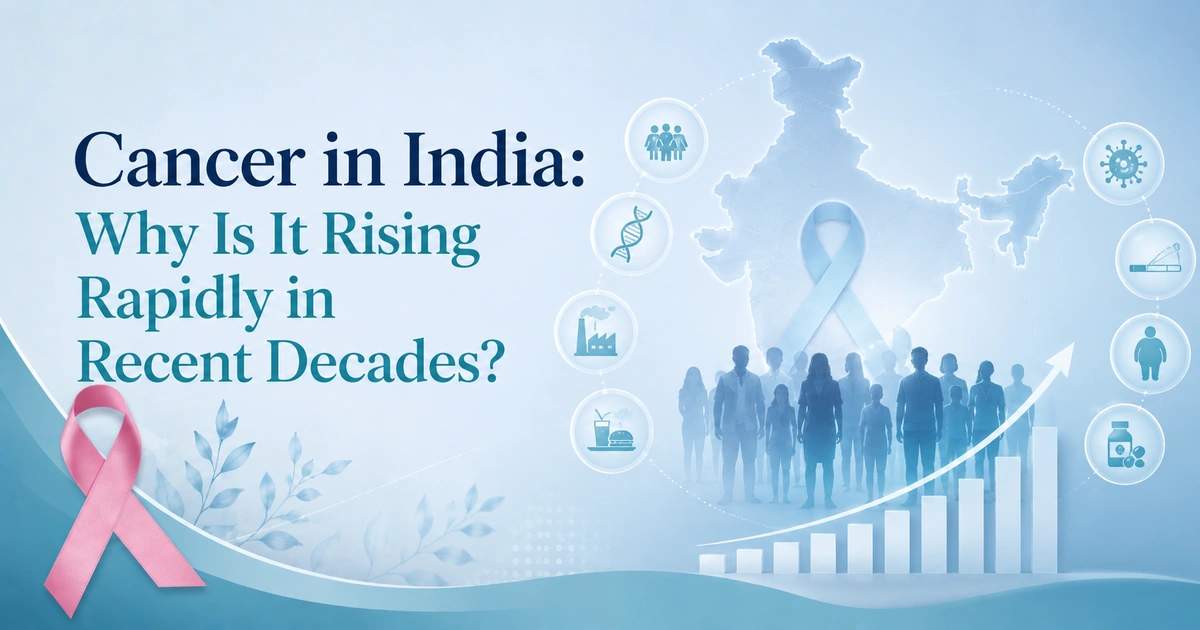
Why Are Cancer Cases Rising So Rapidly in India?
Tobacco and areca nut use Tobacco, in both smoking and smokeless (chewing) forms, is the single largest driver of cancer in India. It is directly linked to oral, lung, throat, oesophageal, and bladder cancers. Areca nut (supari) and gutkha add to the burden of oral cancer.
Changing lifestyles and diet Rapid urbanisation, processed food, sugar-heavy diets, low fibre intake, and reduced physical activity have all increased. Obesity is now a recognised risk factor for at least 13 different cancers, including breast, colon, endometrial, kidney, and liver cancers.
Ageing population India’s population is living longer. Because most cancers become more common with age, an ageing population automatically means more cancer cases.
Environmental exposures Air pollution in Indian cities, indoor smoke from biomass cooking fuels, pesticide exposure in farming areas, and workplace chemical exposure all contribute. Air pollution is now classified as a Group 1 carcinogen by the WHO.
Alcohol consumption Rising alcohol use is linked to cancers of the mouth, throat, oesophagus, liver, colon, and breast.
Chronic infections Some viruses cause cancer directly. Human papillomavirus (HPV) causes almost all cervical cancers, Hepatitis B and C cause a large share of liver cancer, and Helicobacter pylori infection is linked to stomach cancer. These are especially important in India because vaccination and treatment gaps still exist.
Better diagnosis and awareness Some of the “rise” reflects improved detection. More people now seek medical care earlier, screening is more available, and imaging and pathology have improved. Cancers that would once have gone unrecorded are now being diagnosed.
Late presentation Many patients in India still reach the hospital only when cancer is advanced. Later diagnosis makes treatment harder and increases the overall disease burden.
The Most Common Cancers in India Today
Based on ICMR-NCRP and Globocan data, the leading cancers in India include:
- In women: breast cancer, cervical cancer, ovarian cancer, oral cancer, and lung cancer.
- In men: oral cancer, lung cancer, prostate cancer, stomach cancer, and colorectal cancer.
- In children: leukaemia, brain and spinal cord tumours, and lymphomas.
Onco-Life sees patients from across Maharashtra with each of these cancers, and its multidisciplinary team plans treatment through the Virtual Tumour Board.
Are Younger People Really Getting Cancer More Often?
Yes, in specific cancer types. A rising number of Indians under 45 are being diagnosed with colorectal, breast, thyroid, and head and neck cancers. Contributing factors include:
- Early tobacco and alcohol exposure
- Obesity and metabolic changes
- Delayed childbirth and hormonal factors (for breast cancer)
- Increased genetic testing revealing hereditary risk earlier
- HPV-related head and neck cancers in younger adults
Younger patients often present at more advanced stages because cancer is not suspected at their age. Awareness and early evaluation of persistent symptoms are essential.
Practical Ways to Lower Your Cancer Risk
Not every cancer can be prevented, but many can. Research suggests that 30 to 50 percent of cancers can be reduced by modifying lifestyle and environmental exposures (Source: World Health Organization). Key steps include:
Avoid tobacco completely This includes cigarettes, bidis, hookah, chewing tobacco, gutkha, and pan masala. There is no safe form.
Limit alcohol The safest amount is none. If you drink, keep it minimal and infrequent.
Eat well Prioritise fresh vegetables, fruits, whole grains, legumes, and small amounts of good-quality protein. Reduce processed meat, refined sugar, deep-fried foods, and ultra-processed snacks.
Stay active Aim for at least 150 minutes of moderate activity a week, such as brisk walking, cycling, or yoga. Reduce prolonged sitting.
Maintaining a healthy weight Obesity increases the risk of many cancers. A balanced diet and regular activity are the safest route.
Protect against sun and pollution Use sunscreen for prolonged sun exposure. Reduce indoor smoke from biomass fuels by using cleaner cooking methods where possible.
Get vaccinated HPV vaccination protects against cervical, anal, and some head and neck cancers. Hepatitis B vaccination protects against a major cause of liver cancer.
Practise safe sex and avoid sharing needles This lowers risk of HPV, Hepatitis B, and Hepatitis C infections.
Follow occupational safety rules If you work with chemicals, radiation, asbestos, or dust, use protective equipment and follow workplace safety guidelines.
Cancer Screening Recommendations by Age
Screening finds cancer early, when treatment works best. General guidance for the Indian population:
For women
- Breast self-awareness from early adulthood; clinical breast examination every one to three years from age 25 to 39, then annually from 40
- Mammogram every one to two years from age 40 to 50 onwards, based on personal risk
- Cervical screening (Pap smear or HPV test) from age 30, every three to five years
- HPV vaccination for girls aged 9 to 14 (a single dose is now recommended in many programmes)
For men
- Awareness of oral changes; dental check-up every six to twelve months, especially for tobacco users
- Prostate-specific antigen (PSA) discussion with a doctor from age 50, or earlier if family history is present
For everyone
- Colonoscopy screening from age 45 to 50, or earlier with family history
- Skin check for new moles, lesions, or non-healing ulcers
- HPV vaccination through the recommended age range
- Hepatitis B vaccination if not already done in childhood
Your family history and personal risk factors may change the recommended schedule. A one-time Cancer Risk Assessment can help you understand what applies to you.
Vaccinations That Prevent Cancer
Two vaccines are recognised worldwide for cancer prevention:
- HPV vaccine: Prevents most cervical cancers, and reduces the risk of anal, vulvar, penile, and some head and neck cancers.
- Hepatitis B vaccine: Prevents chronic Hepatitis B infection, a major cause of liver cancer in India.
Both are safe, effective, and available in India. Speak to your family doctor about vaccination if you or your children have not received these vaccines.
Access to Cancer Care and Government Schemes
Rising cancer numbers also mean more Indian families are facing treatment costs. Government schemes can significantly reduce or eliminate treatment expenses for eligible patients:
- Mahatma Jyotirao Phule Jan Arogya Yojana (MJPJAY) – Maharashtra state scheme
- Ayushman Bharat (PM-JAY) – national scheme
- Central Government Health Scheme (CGHS) – for central government employees and pensioners
- Health Minister’s Cancer Patient Fund (HMCPF) under Rashtriya Arogya Nidhi – for financially disadvantaged patients
Onco-Life is empanelled under MJPJAY, PM-JAY, and CGHS. Eligibility criteria apply; please check government scheme eligibility before your visit.
Care and Support at Onco-Life
At Onco-Life Cancer Centre, care is built around three principles: expert diagnosis, personalised treatment, and long-term support. Services include:
Onco-Life operates centres at Pune, Chiplun, Satara, and Talegaon Dabhade.
To speak with a cancer specialist about your symptoms, screening options, or a diagnosis, please Book a Doctor Appointment or request a Second Opinion.
DISCLAIMER
This content is for informational purposes only and does not constitute medical advice. The signs, diagnosis, and treatment of brain tumours vary from person to person. Please consult a qualified doctor or oncologist for diagnosis and treatment decisions.
Frequently Asked Questions