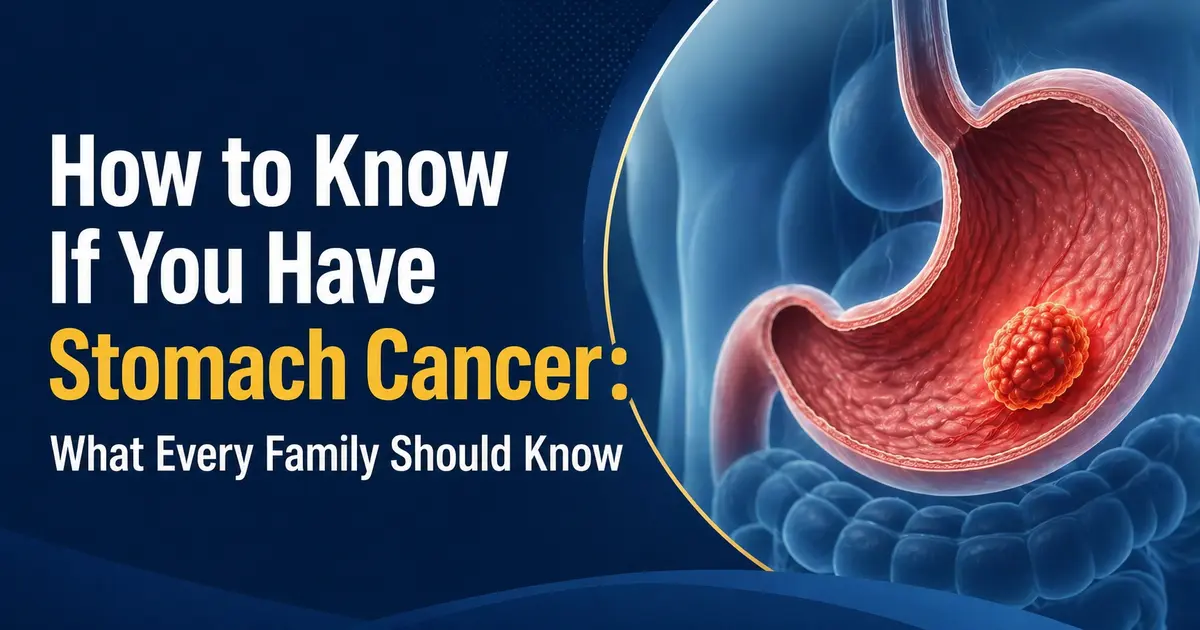
Stomach cancer symptoms are often mild and non-specific in the early stages, which is why many people attribute them to acidity, stress, or a passing digestive problem. Persistent discomfort after meals, unexplained weight loss, or blood in the stool, however, are signs that deserve prompt medical attention.
Stomach cancer, also called gastric cancer, can develop gradually over several years. When identified early, treatment options are wider and outcomes are generally more favourable.
This guide is written for patients, families, and caregivers who want to understand the warning signs and know when to consult an oncologist.
What Is Stomach Cancer? (Gastric Cancer Overview)
Stomach cancer, or gastric cancer, occurs when cells in the lining of the stomach multiply abnormally and form a tumour. It develops gradually and is more commonly diagnosed in men and in adults over the age of 55. [Source: Requires Clinical Team Verification]
The most common type is adenocarcinoma, which begins in the glandular cells lining the inner wall of the stomach. Less common types include lymphoma, gastrointestinal stromal tumours (GISTs), and neuroendocrine tumours (NETs). Note: the term ‘carcinoid tumours’ used on the existing page is outdated per the current WHO classification and has been replaced.
Why Stomach Cancer Symptoms Are Often Overlooked
Stomach cancer is sometimes described as a ‘silent’ cancer because its early symptoms closely resemble those of common digestive conditions such as acid reflux, gastritis, or irritable bowel syndrome. This overlap often leads to delayed medical consultation.
In India, a significant proportion of stomach cancer cases are diagnosed at an advanced stage, when the cancer may have spread beyond the stomach.
Early Warning Signs of Stomach Cancer
If any of the following symptoms persist for more than two weeks, consult a doctor. These signs do not confirm a diagnosis of stomach cancer, but they warrant a medical evaluation.
- Persistent heartburn or indigestion: a burning sensation that does not respond to standard antacid treatment.
- Feeling full quickly after small meals: a sense of fullness in the upper abdomen even after a modest amount of food.
- Loss of appetite: a noticeable and unexplained decrease in interest in food.
- Unexplained weight loss: losing weight without a change in diet or physical activity.
- Nausea or vomiting: particularly if vomit contains blood or resembles coffee grounds.
- Dark or tarry stools: may indicate bleeding in the stomach or upper digestive tract.
- Persistent fatigue: anaemia caused by internal bleeding can produce ongoing tiredness and weakness.
- Abdominal pain or discomfort: persistent pain in the upper abdomen, particularly after meals.
- A lump or swelling in the abdomen: this may be felt in more advanced cases.
If you notice any of these symptoms, do not dismiss them. An early consultation can significantly influence the course of care.
Stomach Cancer Symptoms in Women
Stomach cancer symptoms in women are broadly similar to those in men, but women may initially attribute them to menstrual discomfort, hormonal fluctuation, or stress-related digestive problems. This can delay consultation.
Symptoms that women should not dismiss include:
- Persistent bloating or abdominal fullness that does not resolve with dietary changes.
- Ongoing nausea, particularly after meals or in the morning, unrelated to pregnancy.
- Unexplained loss of appetite or early satiety (feeling full after very small meals).
- Unusual fatigue or weakness, which may indicate anaemia from occult gastrointestinal bleeding.
- Pelvic or lower abdominal pain that does not follow the usual pattern of menstrual discomfort.
If these symptoms are persistent, recurring, or worsening, seek medical advice. Do not assume they are hormonal or stress-related without a clinical evaluation.
Stomach Cancer Symptoms in Men
Men are statistically more likely to develop stomach cancer than women and tend to be diagnosed at a later stage. This is partly because men are less likely to seek medical attention for persistent but non-severe symptoms such as indigestion or appetite changes.
Symptoms that men should not ignore include:
- Persistent indigestion or heartburn that does not improve with antacids.
- A noticeable reduction in appetite or an early sensation of fullness after small meals.
- Dark, tarry, or blood-streaked stools.
- Unexplained weight loss of 4 kg or more over one to two months.
- Persistent upper abdominal pain, particularly after eating.
- Ongoing fatigue that is out of proportion to daily activity.
Onco-Life Cancer Centre offers rapid-access Surgical Oncology consultations at Talegaon, Wagholi, Satara, and Chiplun.
How Symptoms May Vary by Stage
Stomach cancer symptoms often change in nature and severity as the disease progresses.
Stage 1 and Stage 2
Symptoms are often absent or very mild. Occasional indigestion, a slight decrease in appetite, or mild discomfort after meals may occur. These are easily attributed to other conditions, which is why early-stage stomach cancer is rarely detected without targeted investigation.
Stage 3
Symptoms become more noticeable. Significant weight loss, persistent nausea, and upper abdominal pain after meals are more common. Difficulty swallowing may occur if the tumour is near the junction of the stomach and oesophagus.
Stage 4
Advanced stomach cancer may cause severe weight loss, a visible abdominal lump, jaundice if the liver is involved, ascites (fluid accumulation in the abdomen), and severe pain. Anaemia and profound fatigue are common.
Risk Factors for Stomach Cancer
There is no single cause of stomach cancer. The following risk factors are associated with a higher likelihood of developing the disease:
- H. pylori infection: this common stomach bacterium can cause chronic inflammation which, over time, may progress to cancer. It is the most significant modifiable risk factor.
- Age and gender: stomach cancer is most commonly diagnosed in adults over 55 and is approximately twice as common in men as in women.
- Diet: regular consumption of heavily salted, smoked, or processed foods and a low intake of fresh fruit and vegetables is associated with a higher risk.
- Family history: individuals with a first-degree relative diagnosed with stomach cancer have a higher risk.
- Tobacco and alcohol use: smoking damages the stomach lining and heavy alcohol consumption is an independent risk factor.
- Obesity: excess body weight, particularly around the abdomen, is linked to a higher risk of gastric cardia cancer.
- Previous stomach surgery or chronic gastritis: long-standing gastritis or prior gastric operations may increase risk over time.
How Stomach Cancer Is Diagnosed
If a doctor suspects stomach cancer based on symptoms and clinical examination, the following investigations may be arranged:
- Upper gastrointestinal endoscopy: a thin, flexible tube with a camera is passed through the mouth into the stomach, allowing the specialist to examine the lining and take a biopsy from any suspicious area.
- Biopsy and histopathology: the tissue sample is examined under a microscope to confirm whether cancer cells are present and to determine the cancer type.
- CT scan (Computed Tomography): used to assess the extent of the tumour and check whether it has spread to nearby lymph nodes or other organs.
- PET-CT scan (Positron Emission Tomography – Computed Tomography): provides additional staging information. Onco-Life Cancer Centre offers PET-CT scanning at its Talegaon centre.
- Endoscopic ultrasound (EUS): determines how deeply the tumour has penetrated the stomach wall.
- Barium swallow X-ray: a contrast study used to evaluate the upper digestive tract when endoscopy is not immediately available.
- Blood tests: including a full blood count to check for anaemia, and tumour marker tests such as CEA and CA 19-9.
Stomach Cancer Treatment at Onco-Life Cancer Centre
Stomach cancer treatment at Onco-Life Cancer Centre is planned through a multidisciplinary approach involving surgical oncologists, medical oncologists, radiation oncologists, pathologists, radiologists, and nutrition specialists. Treatment depends on the cancer type, stage, and the patient’s overall health.
- Surgery: the primary curative treatment for early or locally advanced stomach cancer. Options include a partial gastrectomy (removal of the affected portion of the stomach) or a total gastrectomy (removal of the entire stomach), combined with removal of nearby lymph nodes.
- Chemotherapy: used before surgery (neoadjuvant chemotherapy) to reduce the size of the tumour, or after surgery (adjuvant chemotherapy) to reduce the risk of recurrence. Onco-Life Cancer Centre offers daycare chemotherapy for eligible patients.
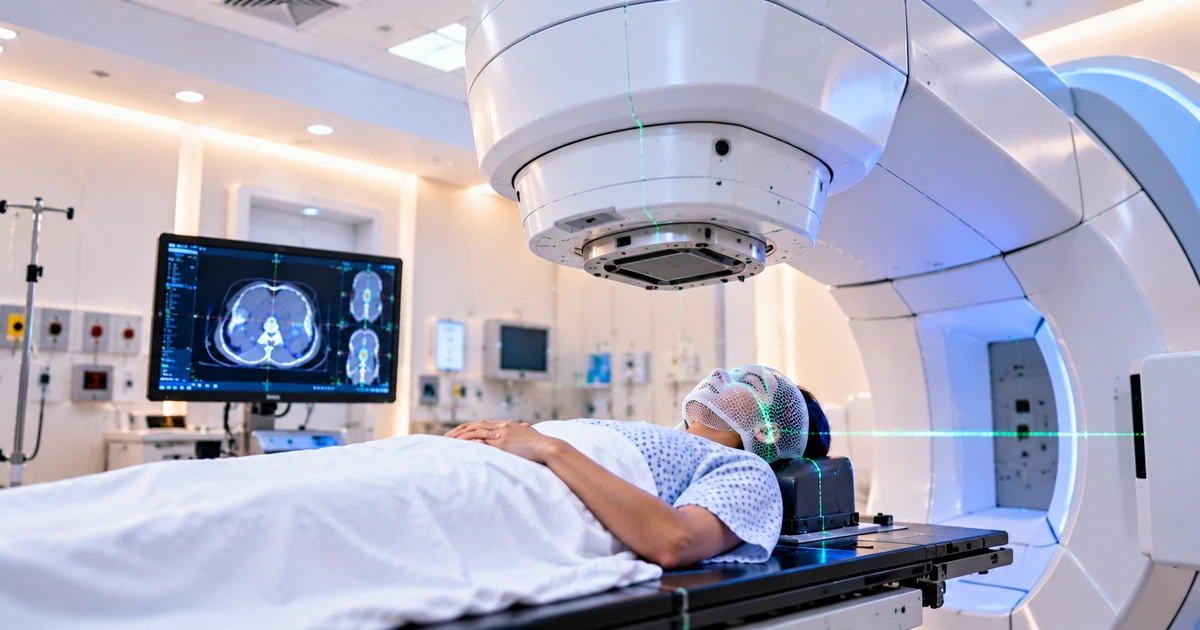
- Radiation therapy: used alongside chemotherapy to target residual cancer cells after surgery. Onco-Life’s Talegaon centre offers IMRT (Intensity-Modulated Radiation Therapy) and TomoTherapy (Radixact X9).
- Targeted therapy: for HER2-positive tumours, targeted agents such as trastuzumab may be included in the treatment plan.
- Immunotherapy: for advanced gastric cancer, checkpoint inhibitor therapy may be considered, assessed case by case by the multidisciplinary team.
- Palliative care: for patients with advanced disease, Onco-Life’s palliative care programme focuses on pain management, nutritional support, and quality of life.
All treatment plans at Onco-Life Cancer Centre are reviewed through a Virtual Tumour Board – a panel of specialists who meet to discuss complex cases and agree on the most appropriate course of action.
Reducing Your Risk of Stomach Cancer
While stomach cancer cannot always be prevented, the following steps can reduce the risk:
- Treat H. pylori infection: if diagnosed with this bacterial infection, complete the prescribed antibiotic course.
- Maintain a diet rich in fresh fruits and vegetables, and low in salt and processed foods.
- Avoid smoked, pickled, and ultra-processed foods.
- Stop smoking: tobacco use is a modifiable risk factor for gastric cancer.
- Limit alcohol consumption.
- Maintain a healthy weight through a balanced diet and regular physical activity.
- Attend regular surveillance if at high risk: individuals with a strong family history, genetic conditions such as hereditary diffuse gastric cancer (HDGC), or chronic atrophic gastritis should discuss surveillance endoscopy with an oncologist.
Early Detection at Onco-Life Cancer Centre
Onco-Life Cancer Centre provides a complete pathway for stomach cancer evaluation and treatment across four centres in Maharashtra.
Talegaon (Pune District)
Located on the Talegaon-Chakan Road, Yashwant Nagar, Talegaon Dabhade – approximately 35 km from Pune city centre. The Talegaon centre is the flagship technology hub and offers TomoTherapy Radixact X9, PET-CT scanning, upper gastrointestinal endoscopy, and in-house pathology.
Wagholi (Pune)
A second access point for Pune-region patients, offering surgical oncology, medical oncology, and diagnostic services.
Satara, Maharashtra
The founder’s original centre, offering full oncology services including surgical, medical, and radiation oncology.
Chiplun, Ratnagiri District
The Konkan region access point, serving patients from Ratnagiri and surrounding coastal districts.
Onco-Life Cancer Centre holds three National Accreditation Board for Hospitals and Healthcare Providers (NABH) accreditations and is a member of the National Cancer Grid (NCG), led by Tata Memorial Centre.
Cancer Treatment Under Government Health Schemes
Stomach cancer treatment at Onco-Life Cancer Centre is covered under the following government health schemes, subject to eligibility criteria. Patients are advised to verify eligibility before visiting.
Mahatma Jyotiba Phule Jan Arogya Yojana (MJPJAY)
Maharashtra residents holding a valid ration card (yellow, orange, white, Antyodaya, or Annapurna) may be eligible for cashless cancer treatment up to Rs. 5 lakh per family per year. This covers surgery, chemotherapy, and radiation therapy for stomach cancer.
Ayushman Bharat (PM-JAY)
Covers eligible families across India for a range of oncology procedures including stomach cancer surgery and treatment.
CGHS (Central Government Health Scheme)
Available to central government employees and pensioners for cancer treatment at Onco-Life Cancer Centre.
To verify your eligibility, call +91 81281 24067 (Talegaon and Wagholi) or +91 77690 04343 (Satara) before your visit. Eligibility criteria apply; please confirm your entitlement before arriving for treatment.
When to See a Doctor for Stomach Cancer Symptoms
Consult a doctor promptly if you or a family member notices any of the following:
- Persistent or worsening heartburn, indigestion, or bloating lasting more than two weeks.
- Loss of appetite or a feeling of fullness after very small meals.
- Vomiting blood, or vomit that resembles coffee grounds.
- Black, tarry, or blood-tinged stools.
- Unexplained weight loss of more than 4 kg over a short period.
- Persistent fatigue or weakness without an obvious cause.
These symptoms do not necessarily indicate cancer. However, a clinical evaluation is the only way to be certain. An early consultation is always preferable to delayed action.
Conclusion
Stomach cancer is most treatable when identified early. Recognising the early warning signs, understanding who is at risk, and knowing when to seek medical advice can make a meaningful difference in outcomes. Onco-Life Cancer Centre provides a complete pathway for evaluation and treatment – from endoscopy and PET-CT scanning to surgery, chemotherapy, and radiation therapy – supported by a multidisciplinary team and three NABH accreditations.