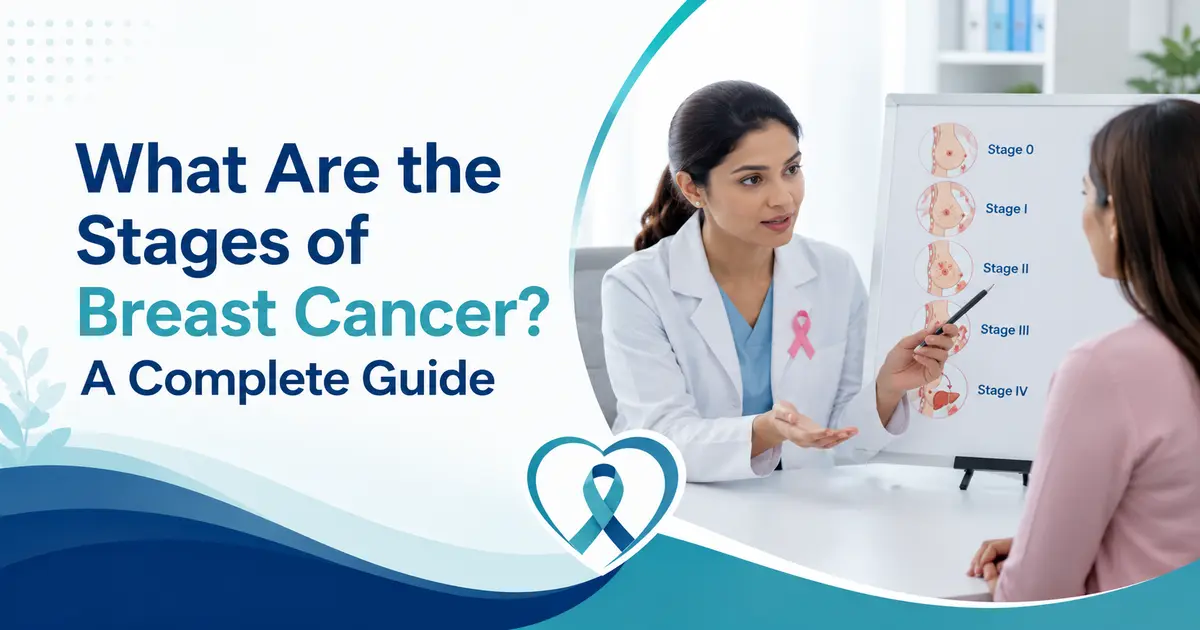
Breast cancer stages describe how far the cancer has grown and whether it has spread from the breast to other parts of the body. The stages run from Stage 0, where abnormal cells are still contained inside the milk duct, to Stage 4, where cancer has reached distant organs. Knowing the stage helps your oncologist plan the right treatment and explain what to expect.
If you or someone you love has just been diagnosed, this guide explains each stage in plain language, how doctors work out the stage, and the treatment and financial support available. At Onco-Life Cancer Centre, a team of specialists will help you understand your options at every step.
Understanding Breast Cancer Stages
The stage of the disease tells your care team three things: the size of the tumour, whether nearby lymph nodes are affected, and whether the cancer has spread to distant organs. Two people with the same diagnosis can need very different treatment depending on their stage.
The five breast cancer stages help your care team recommend a plan suited to you. Staging is done after tests such as scans and a biopsy, alongside the type of breast cancer and your general health.
The TNM System: How the Stage Is Decided
Doctors around the world use the TNM system to describe breast cancer stages. Each letter stands for one part of the picture:
- T (Tumour): The size of the tumour and whether it has grown into nearby tissue.
- N (Nodes): Whether the cancer has reached the lymph nodes near the breast and underarm.
- M (Metastasis): Whether the cancer has spread to distant parts of the body.
Modern staging also considers the tumour grade and its receptor status, such as oestrogen receptor (ER), progesterone receptor (PR), and HER2. These details help predict how the cancer may behave and which treatments are likely to help.
Breast Cancer Types and Stages
Understanding breast cancer types and stages together gives a fuller picture of the diagnosis. Breast cancer may be non-invasive, meaning it is still inside the duct or lobule, or invasive, meaning it has spread into surrounding breast tissue.
The most common form begins in the milk ducts and is called ductal carcinoma. Some start in the milk-producing lobules and are called lobular carcinoma. Cancers are also grouped by receptor status as hormone receptor positive, HER2-positive, or triple-negative. Inflammatory breast cancer is a less common, faster-growing type that is often found at a more advanced stage. Our dedicated breast cancer team reviews the type and stage together before planning treatment.
The 5 Stages of Breast Cancer
So what are the stages of breast cancer? There are five main stages, numbered 0 to 4, and each one guides treatment differently.
- Stage 0 (Non-Invasive)
Stage 0 usually refers to ductal carcinoma in situ (DCIS). The abnormal cells are found only in the lining of the milk duct and have not spread into nearby breast tissue. This is the earliest and most treatable stage, and it is often found on a routine mammogram before any symptoms appear.
- Stage 1 (Early Invasive)
At Stage 1, the cancer has become invasive but is still small, usually 2 cm or less. It has either not reached the lymph nodes or is present in only tiny amounts. Early-stage breast cancer often responds well to treatment.
- Stage 2 (Localised)
In Stage 2, the tumour is larger, often between 2 cm and 5 cm, and may have spread to a few nearby lymph nodes. The cancer is still contained within the breast and underarm area.
- Stage 3 (Locally Advanced)
At Stage 3, the cancer has spread to several lymph nodes, or it has grown into the chest wall or the skin of the breast, but it has not reached distant organs. Inflammatory breast cancer is often grouped here. Treatment usually combines more than one approach.
- Stage 4 (Advanced or Metastatic)
Stage 4 means the cancer has spread beyond the breast and nearby nodes to distant parts of the body, such as the bones, liver, lungs, or brain. While Stage 4 breast cancer is usually not curable, treatment can help manage the disease, ease symptoms, and support quality of life, sometimes for a long time. Outcomes depend on many individual factors.
How Breast Cancer Stages Are Diagnosed
Working out the correct stage needs more than one test. Your doctor may recommend some or all of the following:
- A clinical breast examination
- Mammography and breast ultrasound (sonography)
- A breast MRI, in some cases
- A biopsy to confirm the cancer and its type
- Hormone receptor and HER2 testing on the biopsy sample
- Imaging such as a PET-CT scan, bone scan, or CT scan to check whether the cancer has spread
A PET-CT (Positron Emission Tomography, Computed Tomography) scan helps doctors see whether cancer has reached other parts of the body, which is important for accurate staging.
Treatment Options by Stage
There is no single treatment that suits everyone. Your oncologist will recommend a plan based on your stage, the type of cancer, and your overall health. Breast cancer treatment options include:
- Surgery: Removing the tumour through a lumpectomy or mastectomy, guided by our surgical oncology team.
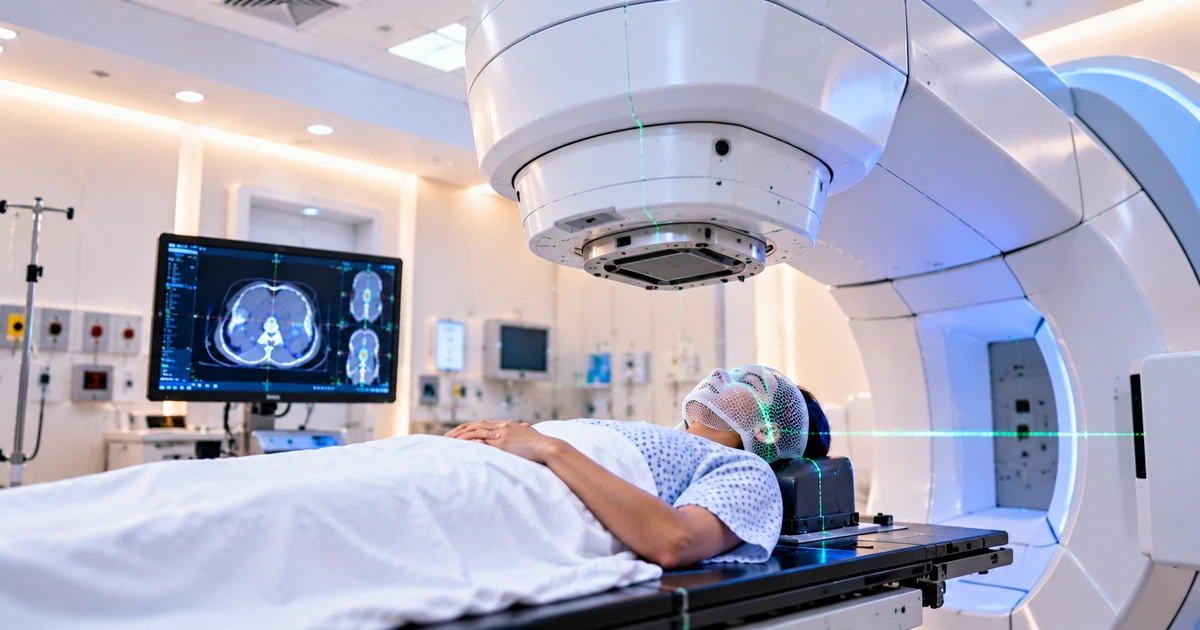
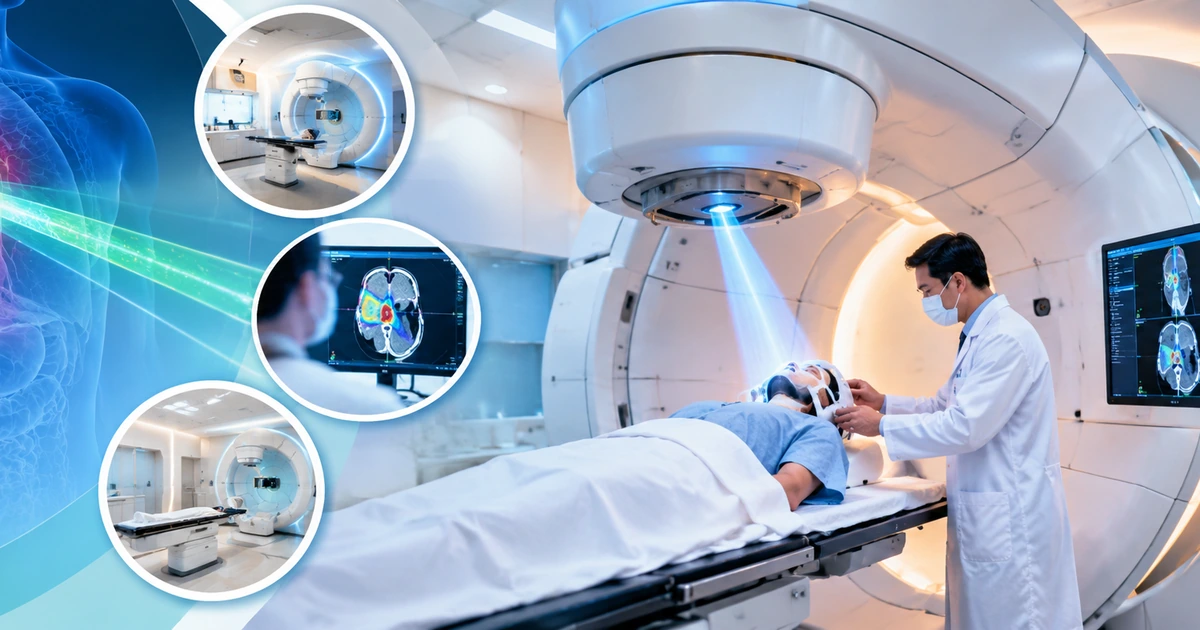
- Radiation therapy: Targeted radiation to destroy remaining cancer cells, delivered by our radiation oncology team.
- Chemotherapy: Medicines that treat cancer throughout the body, given before or after surgery through our medical oncology service.
- Targeted and hormone therapy: Treatments matched to the receptor status of the cancer.
For a fuller explanation of each option, see our guide to the different types of breast cancer treatments.
Treatment across the different breast cancer stages varies widely. Early stages are often managed with surgery and, where needed, radiation or hormone therapy. Later stages usually need a combination of these treatments. At every stage, the aim is care suited to your situation.
Financial Support: Government Schemes for Cancer Treatment
A cancer diagnosis brings worry about cost as well as health. No hospital provides cancer treatment completely free from its own funds, which is why many families search for free cancer treatment. What makes low-cost or cashless treatment possible is government health insurance schemes that cover eligible patients.
- Mahatma Jyotirao Phule Jan Arogya Yojana (MJPJAY): A Maharashtra scheme offering cashless treatment for eligible families at empanelled hospitals.
- Ayushman Bharat (PM-JAY): A national scheme that covers many cancer treatments for eligible families.
- Central Government Health Scheme (CGHS): For serving and retired central government employees and their dependents.
Whether you qualify depends on your income, family details, and documents. Eligibility criteria apply; please verify your eligibility before visiting the hospital. Onco-Life Cancer Centre is empanelled under government schemes including MJPJAY and PM-JAY [confirm current empanelment], and our insurance desk can help you check your coverage.
When to See a Specialist
Any new breast lump, a change in shape or size, skin dimpling, or unusual nipple discharge should be checked by a doctor without delay. Most breast changes are not cancer, but early assessment gives you the widest range of treatment choices.
If you have been diagnosed elsewhere and want to be sure of your stage and plan, our specialists can review your reports and offer a second opinion. Patients travelling from the Mumbai region can start by consulting our cancer specialists near Mumbai.
Medical Disclaimer
This content is for informational purposes only and does not constitute medical advice. Breast cancer stages and treatment vary from person to person. Please consult a qualified oncologist for diagnosis and treatment decisions.
Book a Consultation
If you or a loved one has been diagnosed with breast cancer, our specialists can help you understand your stage and your options. Book a consultation with our oncologists or request a second opinion today.
Frequently Asked Questions