Radiation therapy is one of the three primary cancer treatments (alongside surgery and chemotherapy). Modern radiation therapy includes multiple advanced types: IMRT, IGRT, VMAT, SBRT, proton therapy, TomoTherapy, and brachytherapy. This guide explains how each works, when it’s used, and what patients can expect.
Approximately 50% of cancer patients receive radiation therapy at some point during treatment. Understanding the different types helps patients make informed decisions about their care.
What Is Radiation Therapy?
Radiation therapy uses high-energy beams (X-rays, protons, or gamma rays) to kill cancer cells. The radiation damages cancer cell DNA, preventing them from growing and dividing. Normal cells nearby are also affected but typically recover better than cancer cells.
Goal: Destroy all cancer cells while minimising damage to surrounding healthy tissue.
All Types of Radiation Therapy Explained
| Type | What It Is | Best For / Key Benefits |
| IMRT | Intensity-Modulated Radiation Therapy | Adjusts beam intensity to match tumour shape – reduces side effects, most common type |
| IGRT | Image-Guided Radiation Therapy | Uses imaging during treatment to adjust positioning – increases accuracy |
| VMAT | Volumetric Modulated Arc Therapy | Rotating beam delivers dose while moving around patient – faster, less time on table |
| SBRT | Stereotactic Body Radiation Therapy | High-dose, few sessions – small tumours, spine metastasis, early-stage lung cancer |
| 3D CRT | 3D Conformal Radiation Therapy | Older than IMRT – less precise but still effective for many tumours |
| Proton Therapy | Proton beam instead of X-rays | Stops at target – minimal exit dose – brain, eye, paediatric cancers |
| TomoTherapy | Helical tomotherapy with Synchrony | Spiral beam, real-time tracking – highest precision, specialty centres only |
| Brachytherapy | Internal radiation (seeds placed inside) | High dose concentrated at site – gynaecological, prostate, breast cancers |
| Intraop RT | Radiation during surgery | Single high dose to tumour bed after resection – head & neck, pancreatic, colorectal |
| Whole Brain RT | Radiation to entire brain | Prophylactic for metastatic disease – prevents brain metastasis |
| Total Body RT | Radiation to entire body | Pre-bone marrow transplant conditioning |
| Palliative RT | Pain & symptom relief | Bone metastasis pain, brain metastasis, spinal cord compression |
External Beam Radiation Therapy (EBRT): The Most Common Type
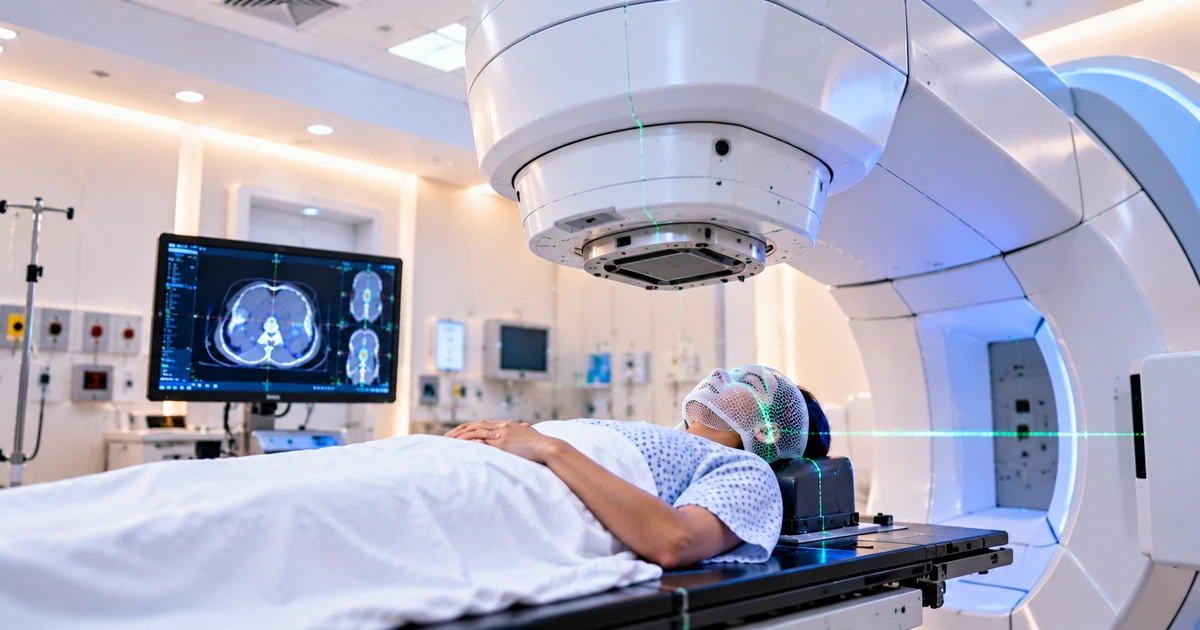
The vast majority of radiation therapy patients (approximately 80%) receive external beam radiation, where beams are delivered from a machine outside the body.
IMRT (Intensity-Modulated Radiation Therapy)
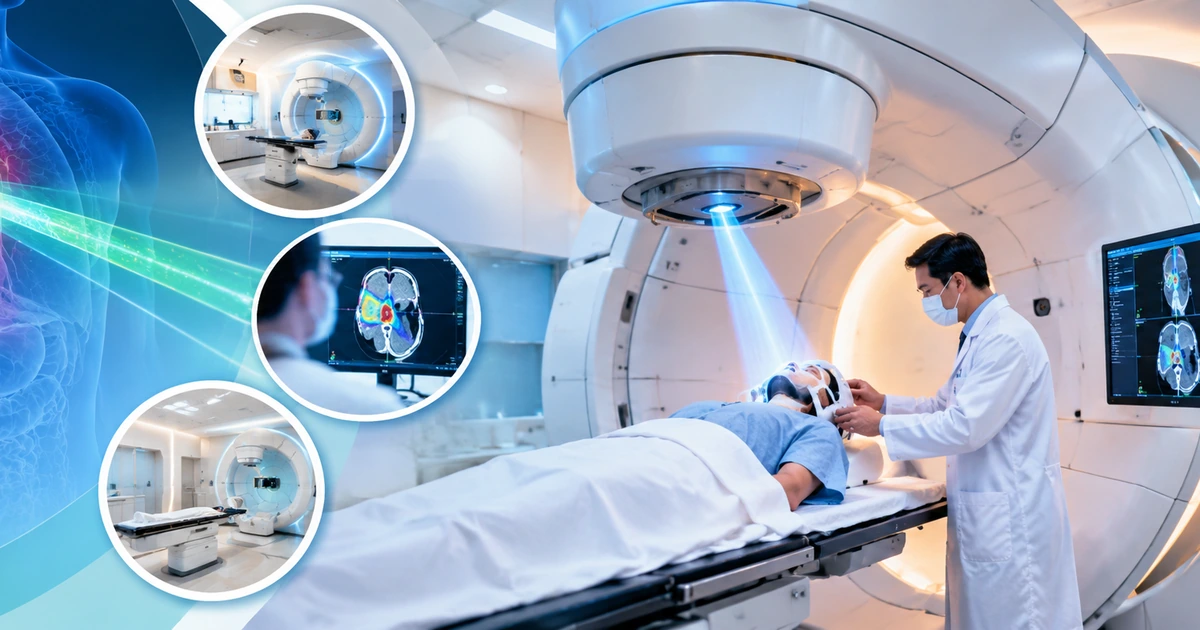
IMRT is the modern standard. Multiple small beams of varying intensities target the tumour from different angles, conforming precisely to its shape while sparing nearby organs.
- Advantages: Higher tumour dose, lower dose to healthy tissues
- Commonly used for: Head & neck, breast, prostate, lung cancers
- Sessions: Typically 25-35 daily treatments (Monday-Friday) over 5-7 weeks
IGRT (Image-Guided Radiation Therapy)
- IGRT uses imaging (CT, ultrasound) taken just before treatment to verify patient positioning and tumour location. Adjustments are made in real-time to ensure accuracy.
- Advantage: Accounts for internal movement and setup variations
- Most modern centres combine IMRT with IGRT
VMAT (Volumetric Modulated Arc Therapy)
VMAT rotates around the patient while delivering radiation, conforming the dose to the tumour shape. Treatment time is typically shorter than IMRT (5-10 minutes vs 20-30 minutes).
Advantage: Fast, reduces patient movement, lower dose to surrounding tissues
SBRT (Stereotactic Body Radiation Therapy)
SBRT is a specialised form of radiation that delivers very high doses to small tumours in very few sessions (typically 3-5 days). It requires extreme precision.
Best for: Small lung tumours, brain metastasis, spine tumours, early-stage pancreatic
Advantage: Very few sessions, high local control
Particle Therapy: Proton & Heavy Ion Therapy
Particle therapy uses protons or heavy ions instead of X-rays. Unlike X-rays, particles release most of their energy at a specific depth (Bragg peak), minimising exit dose.
Proton Therapy
- Delivers dose precisely to target with minimal exit radiation
- Best for: Brain tumours, eye cancers, paediatric cancers (growing tissues more sensitive)
- Limitation: Fewer centres worldwide, higher cost
Brachytherapy: Internal Radiation Therapy
Brachytherapy places radioactive sources directly inside or adjacent to the tumour, delivering high doses locally while sparing distant tissues.
Types:
- Low Dose Rate (LDR): Sources stay in place for hours/days – requires hospitalisation
- High Dose Rate (HDR): Sources in place for minutes – outpatient procedure
- Seed Implantation: Permanent seeds left in place (prostate cancer)
- Best for: Gynaecological (cervix, uterine), prostate, breast, skin cancers
Radiation Therapy Side Effects & Management
Side effects depend on radiation type, dose, location, and individual factors. Most are temporary and manageable.
Common Short-Term Side Effects:
- Fatigue (most common)
- Skin irritation (redness, peeling)
- Nausea and diarrhoea (abdominal/pelvic radiation)
- Hair loss (if radiation targets scalp)
Long-Term Side Effects (Rare):
- Secondary cancer (years later, very rare)
- Fibrosis (scarring of tissues)
- Organ dysfunction
Modern radiation techniques minimise long-term side effects by protecting nearby organs and delivering precise doses.
Radiation Therapy at Onco-Life Cancer Centre
Onco-Life offers comprehensive radiation therapy services with the technology at all four centres.
Available Technologies:
- TomoTherapy Radixact X9 (Talegaon): Helical tomotherapy with real-time tracking – precision radiation
- IMRT, IGRT, VMAT: Modern external beam modalities
- Brachytherapy: High-dose rate for gynaecological and other cancers
- SBRT: Stereotactic body radiation for small tumours
- Expert team: Head of Radiation Oncology Dr. Gaurav Jaswal with 20+ years of experience
CONSIDERING RADIATION THERAPY?
Our expert radiation oncology team will evaluate whether radiation is right for you and determine the best type and approach.
Schedule your radiation oncology consultation at Onco-Life – Talegaon, Satara, Chiplun, or Wagholi
About Onco-Life Cancer Centre
Onco-Life Cancer Centre is Maharashtra’s largest dedicated oncology hospital network with three NABH accreditations and NCG membership. We have treated over 1,20,000 patients and offer comprehensive radiation oncology services including advanced technologies like TomoTherapy Radixact X9.
Our Radiation Oncology Department is led by experienced specialists who deliver all modern radiation therapy modalities with precision and compassion across four centres.
DISCLAIMER
This article is for informational purposes only and is not a substitute for professional medical advice, diagnosis, or treatment. Always seek the guidance of a qualified healthcare provider with any questions regarding a medical condition.
Medically reviewed by Dr. Jyoti Mehta, M.D. (Physician), M.D. (Radiation Oncology), FICO, Consultant, Clinical and Radiation Oncologist, Onco-Life Cancer Centre. Last reviewed: May 2026.