

MBBS, DNB (General Surgery), DNB (Surgical Oncology)
Senior Consultant – Surgical Oncologist (Breast & Gynecologic Focus)
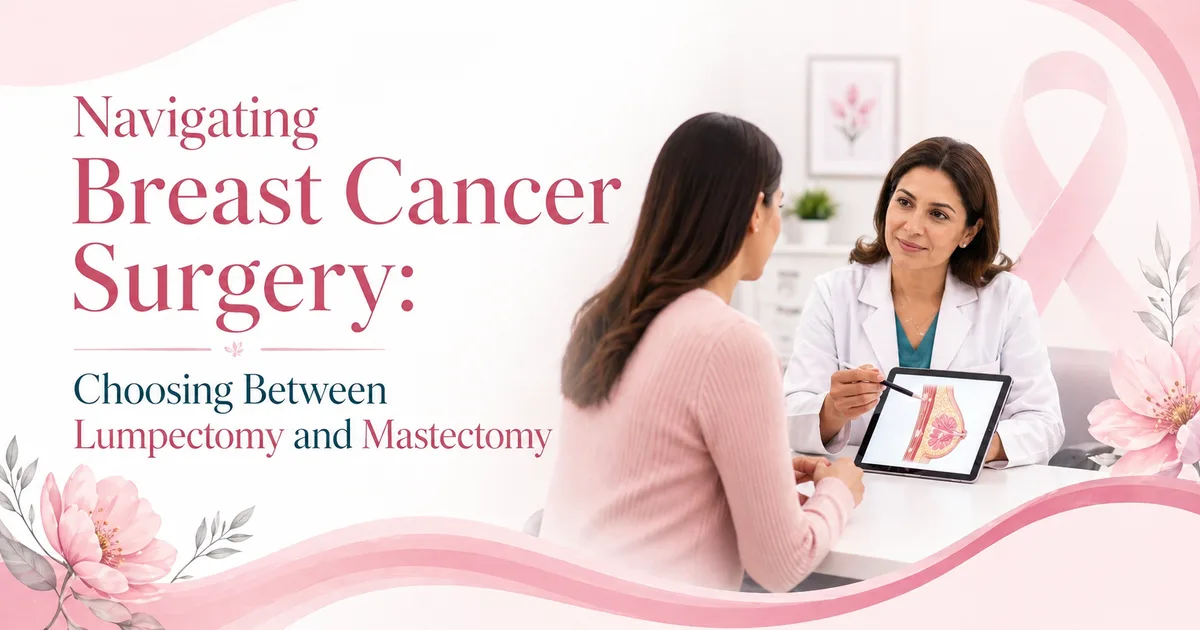
Surgery is the most common form of treatment for breast cancer, so it helps to learn as much as you can before your own procedure. Thanks to early detection and advances in treatment, a large number of women now recover successfully and go on to live long, fulfilling lives after surgery. At Onco-Life Hospitals, a cancer treatment hospital in Pune, experienced breast surgeons guide you from diagnosis through recovery.
Understanding Lumpectomy and Mastectomy
Lumpectomy, sometimes referred to as partial mastectomy or breast-conserving surgery, involves removing the tumor along with a portion of the surrounding healthy tissue, leaving the breast mostly intact. This approach is usually appropriate in the early stages of breast cancer, when the tumor is localized and small relative to breast size. In contrast, Mastectomy involves the total removal of the breast tissue. This can be either a simple mastectomy, which involves removal of the breast tissue without the lymph nodes, or a modified radical mastectomy, which includes removal of the breast tissue and some lymph nodes under the arm.
Also Read : Key Breast Cancer Symptoms and Why Early Detection Matters
Factors Influencing the Choice
The decision between a lumpectomy and mastectomy is influenced by various factors, such as –
- Cancer Stage and Size: An important factor in choosing the best surgical strategy is the tumor’s size in relation to the breast and if the cancer has progressed to the lymph nodes or elsewhere.
- Patient Preference: When choosing between complete breast removal and breast conservation, the patient’s comfort level and preferences should be taken into account. While for some patients, lowering the chance of recurrence is the most important, others may prioritise maintaining breast appearance.
- Cosmetic Considerations: It is important to consider the impact of breast surgery on breast appearance. Current advancements in reconstructive surgery offers better post-mastectomy outcomes for women. On the other hand, lumpectomy causes less visible changes to breast appearance and shape.
- Medical Considerations: One surgical procedure may be more preferable over another depending on the features of the tumor and specific medical problems of the patient. The decision-making process can also be influenced by variables such as tumor location, genetic mutations (e.g., BRCA1, BRCA2), and the presence of multiple tumors.
Recovery and Follow-up: There are differences between lumpectomy and mastectomy in terms of recovery period and aftercare. Depending on the disease stage, mastectomy often involves a lengthier recovery period and may require additional treatments like radiation therapy.
Also Read : Breast Cancer & Early Stage Detection: Onco-Life Cancer Centre
Role of a Breast Surgeon
Choosing the right breast surgeon is paramount in navigating this decision-making process. Onco-Life Cancer Center understands this and is home to some of the best breast surgeons in Pune who can guide patients through their individualized breast cancer treatment journey.
Our breast surgeons are adept at not only performing surgical procedures with precision but also at providing comprehensive pre-operative counselling and post-operative care. They collaborate closely with oncologists, radiologists, and reconstructive surgeons to ensure a holistic approach to breast cancer treatment.
The Decision-making Process
Making the choice between a lumpectomy and mastectomy is usually a shared decision involving the patient and the healthcare team. This includes –
- Educational Counselling: The patient should be provided with all the information required to simplify the decision making process, including information on surgical options, their risks, benefits, and potential outcomes.
- Personalized Assessment: Individual patient factors such as medical history, lifestyle preferences and psychological considerations should be made
- Supportive Care: It is important that is patient is given emotional and psychological support throughout the decision-making process and beyond, given the impact of a breast cancer diagnosis on mental well-being.
Patients who want added reassurance can also take a second opinion for surgical oncology before finalising their decision.
Also Read : Different Types Of Breast Cancer Treatments
Life After Breast Cancer Surgery
Recovery goes more smoothly when you follow a few simple do’s and don’ts. For advice that applies to every cancer operation, read our recovery tips after cancer surgery.
Wound Care and Bathing
- Keep the incision made by your breast surgeon clean and dry for one week after surgery.
- Bathing is fine as long as the incision area stays dry, so you may need sponge baths instead of showers for some time.
- Avoid swimming pools during the first weeks after surgery.
Rest, Activity and Clothing
- Rest for a few days before you return to work or any strenuous activity.
- Do not smoke, as it harms your body’s ability to heal after surgery.
- Avoid uncomfortable clothing such as an underwire bra. Wear a soft, supportive bra recommended by your doctor for the first few weeks.
- Avoid heavy lifting and strenuous upper body exercises after the operation.
Medication, Diet and Sleep
- Take your medications regularly, as prescribed.
- Exercise your shoulders and arms gently, as advised by your care team.
- Eat well and limit foods high in saturated fat, such as red meat, ice cream and butter.
- Sleep on your back, as most breast surgeons recommend, to reduce the risk of painful stretching and pulling of the chest muscles.
With quality care, breast cancer survivors can look forward to long and satisfying lives after surgery. Our guide to life after breast cancer treatment covers follow-up care and healthy habits for the months ahead.
Conclusion
Navigating breast cancer surgery involves making a deeply personal decision that balances medical considerations with individual preferences and circumstances. Whether opting for breast-conserving surgery like lumpectomy or choosing mastectomy, patients can rely on the expertise of dedicated breast surgeons to guide them through every step of their journey toward recovery and healing.
At Onco-Life Cancer Center, where medical expertise meets compassionate care, patients can find solace in knowing that their journey through breast cancer surgery is supported by professionals dedicated to their well-being and recovery.For more information, visit our website or contact us to schedule a consultation.