What is Pathology?
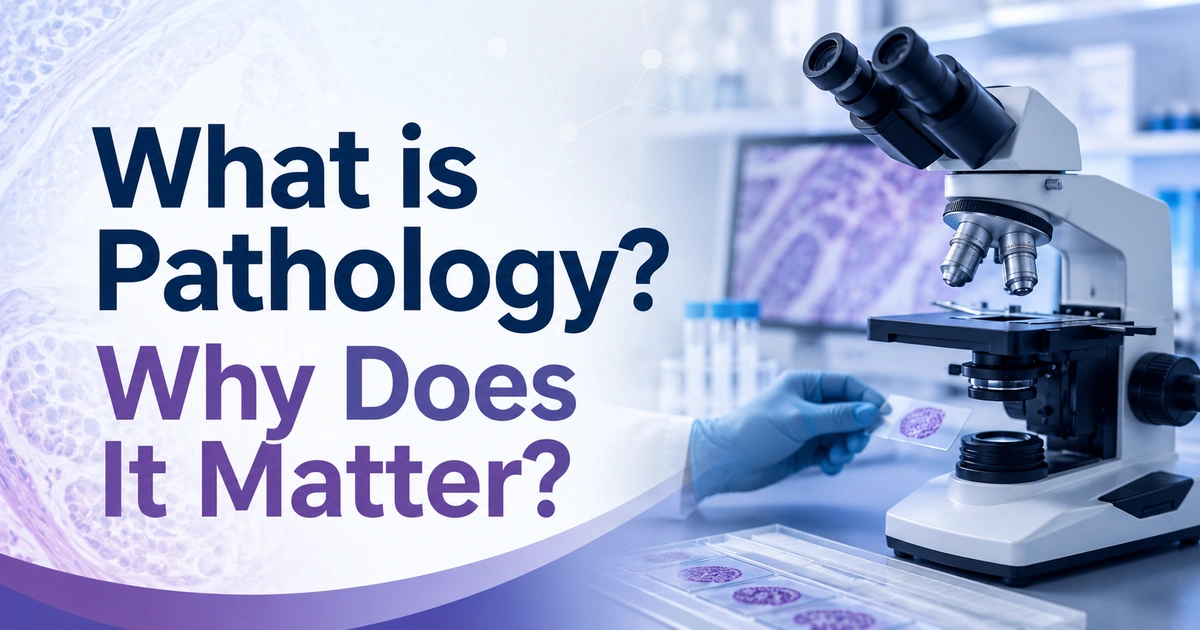
Pathology is the study of disease – its causes, development, and effects on the body’s cells, tissues, and organs. The word comes from the Greek ‘pathos’ (suffering/disease) and ‘logos’ (study). Pathology meaning in medicine: it is the diagnostic science that uses laboratory analysis of tissue, blood, and body fluids to determine what disease a patient has, how severe it is, and what has caused it.
Pathology is the study of disease in its broadest sense – from the cellular changes of cancer to the inflammatory processes of infection and the genetic basis of inherited conditions. Every clinical diagnosis in modern medicine is ultimately grounded in a pathological assessment. At Onco-Life Cancer Centre, pathology is the starting point of every cancer treatment plan.
Pathology Meaning: Hindi | Telugu | Tamil | Bengali
Hindi: पैथोलॉजी बीमारियों का अध्ययन है – रक्त और ऊतकों की जांच द्वारा निदान। [bilingual check required]
Telugu: పాథాలజీ అంటే వ్యాధుల అధ్యయనం – రక్తం మరియు కణజాలాన్ని పరీక్షించి నిర్ధారించడం. [bilingual check required]
Tamil: நோயியல் என்பது நோய்களின் ஆய்வு – திசுக்களை ஆராய்ந்து நோய் கண்டறிதல். [bilingual check required]
Bengali: প্যাথলজি হল রোগের অধ্যয়ন – টিস্যু পরীক্ষার মাধ্যমে রোগ নির্ণয়। [bilingual check required]
|
Why is Pathology Important?
Pathology is important because it provides the only confirmed diagnosis of most serious diseases. In cancer care, the importance of pathology cannot be overstated:
- Pathology confirms the cancer diagnosis – no treatment begins without a tissue biopsy confirmed by a pathologist.
- Pathology determines cancer grade and stage – how aggressive the cancer appears and how far it has spread.
- Pathology guides treatment selection – molecular markers from IHC and genomic testing determine whether hormone therapy, targeted therapy, or immunotherapy will be effective.
- Pathology monitors treatment response – follow-up biopsies and liquid biopsies assess whether the cancer is responding to treatment.
- Pathology underpins cancer screening – cervical smears (Pap tests) and other screening programmes are pathology-based.
Types of Pathology: Branches and Specialisations
Pathology is a broad field with several major branches:
Anatomical Pathology (Histopathology): examination of tissue samples under the microscope – the standard method for cancer diagnosis from biopsy.
Clinical Pathology: analysis of body fluids including blood, urine, and cerebrospinal fluid. Includes haematology, clinical biochemistry, and microbiology.
Cytopathology: study of individual cells, used in cancer screening (Pap smears) and fine needle aspiration biopsies.
Molecular and Genomic Pathology: DNA and RNA analysis to identify genetic mutations for precision oncology treatment.
Specialized Oncology Pathology at Onco-Life Cancer Centre
In cancer care, pathology extends far beyond identifying cancer or not cancer. Modern oncology pathology determines the molecular signature of every tumour to guide individualised treatment.
Pathology vs Oncology: What is the Difference?
Pathology is the diagnostic science – the pathologist determines what disease the patient has. Oncology is the treatment science – the oncologist designs and delivers the cancer treatment. The pathologist diagnoses; the oncologist treats. At Onco-Life, both specialties collaborate in the Tumour Board to align diagnosis and treatment for every patient.
How to Read Your Pathology Report: Key Terms for Cancer Patients
A pathology report confirms the cancer diagnosis and contains terms that guide treatment decisions:
Histological type: the specific cancer cell type identified (e.g., squamous cell carcinoma, adenocarcinoma).
Grade (1 to 3): how different cancer cells look from normal cells. Grade 1 = well-differentiated; Grade 3 = poorly differentiated (more aggressive).
Margins: whether cancer cells were present at the edge of removed tissue. ‘Clear margins’ means all visible cancer was removed.
Lymph node status: whether cancer cells were found in removed lymph nodes – indicates early spread.
Receptor status (breast cancer): oestrogen (ER), progesterone (PR), and HER2/neu status – determines eligibility for hormone or targeted therapy.
Pathology Services at Onco-Life Cancer Centre, Maharashtra
Onco-Life Cancer Centre provides a full range of pathology services across its Maharashtra locations: histopathology, cytopathology (FNAC, Pap smear), immunohistochemistry (IHC), molecular and genomic pathology (NGS), digital pathology, and haematology.
|
For Pathology Enquiries | Talegaon / Wagholi: 8128124067 | Satara: 7769004343 | Chiplun: 7378958000
|
Disclaimer: The information on this page is for general health education only and does not constitute medical advice. Pathology diagnoses are individual to each patient’s specific sample and clinical context. If you have questions about your pathology report, please consult your treating oncologist. Individual outcomes vary.
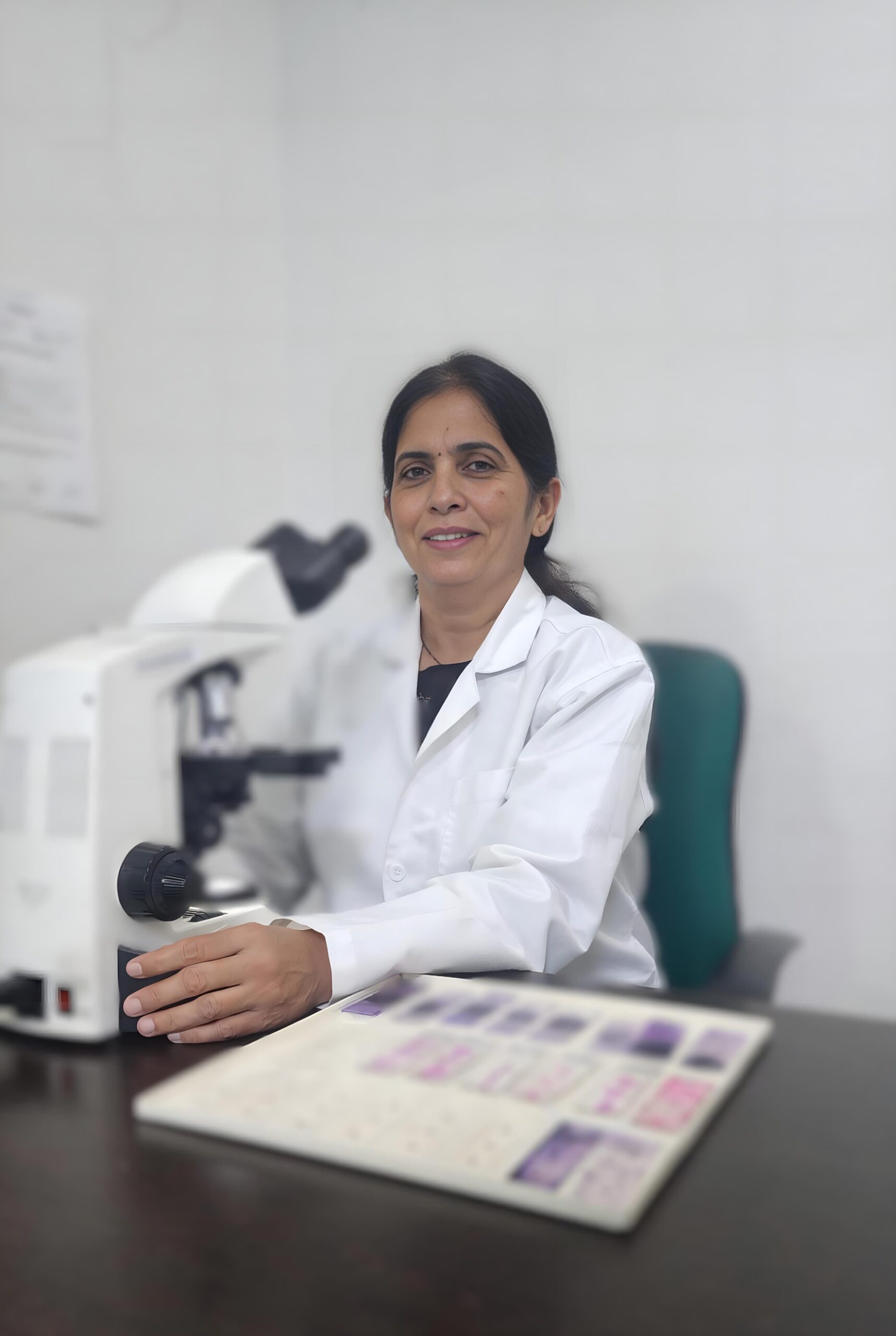
Medically reviewed by Dr. Vandana Patil, MBBS MD (Pathology), Onco-Life Cancer Centre. Last reviewed: May 2026.