Introduction
Understanding blood cancer causes is one of the most important steps toward awareness, early detection, and informed medical decision-making.
A common question people ask is: what is the reason for blood cancer, and could it happen to me or someone in my family?
While researchers have not yet identified a single definitive answer, multiple genetic, environmental, and lifestyle-related factors are known to increase the risk.
This guide explores the blood cancer reasons that science currently recognises — from inherited gene mutations to workplace chemical exposure — and explains when and why you should seek medical advice. We draw only on evidence-based research so you can make confident, informed decisions. [1]
What Is Blood Cancer?
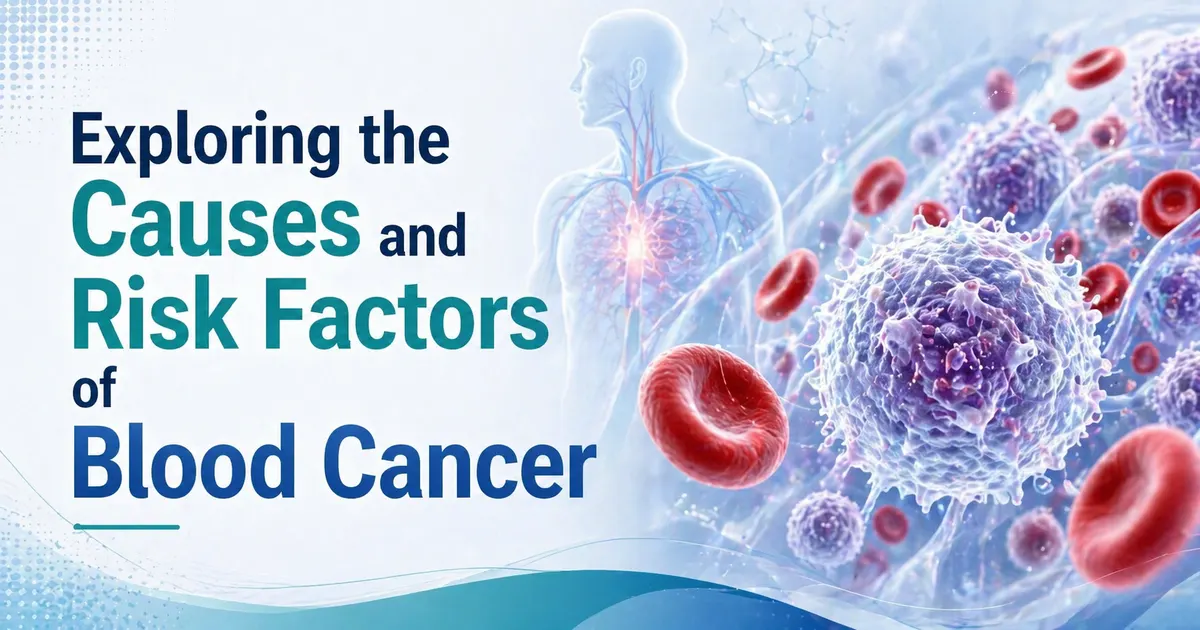
Blood cancers (haematologic malignancies) occur when genetic mutations disrupt normal blood cell development in the bone marrow.
Understanding how blood cancer happens begins here: these mutations cause abnormal cells to multiply uncontrollably, crowding out healthy blood cells. [1]
Major Types of Blood Cancer
- Leukemia — affects the blood and bone marrow directly
- Lymphoma — develops in the lymphatic system
- Multiple Myeloma — begins in plasma cells within the bone marrow
All three types interfere with the production or function of red blood cells, white blood cells, or platelets. This may result in:
- Fatigue
- Recurrent infections
- Bleeding tendencies [2]
Primary Causes of Blood Cancer: Genetic Factors
The most consistently identified cause of blood cancer is genetic mutation — either inherited or acquired during a person’s lifetime.
So, is blood cancer genetic? In many cases, yes — at least in part. [3]
Is Blood Cancer Hereditary?
Certain inherited conditions significantly increase risk:
- Down syndrome
- Fanconi anaemia
- Li-Fraumeni syndrome
Additionally, premalignant conditions such as MGUS (Monoclonal Gammopathy of Undetermined Significance) can progress to multiple myeloma in some individuals. [4]
While inheriting a mutation does not guarantee blood cancer, it increases susceptibility.
Read Also : How Blood Cancer Affects the Body: Symptoms, and Treatment
How Blood Cancer Occurs: The Biological Process
Blood cancer typically begins when DNA inside a bone marrow stem cell becomes damaged or mutated.
This can occur due to:
- Inherited gene faults
- Radiation exposure
- Chemical exposure
- Viral infections
- Random errors during cell replication
Once a critical gene is affected, the cell may:
- Grow uncontrollably
- Avoid natural cell death
Over time, abnormal cells accumulate and crowd out healthy cells responsible for:
- Fighting infections
- Carrying oxygen
- Controlling bleeding
This explains how blood cancer develops in practice. [3]
Environmental Exposures
Radiation
High-dose exposure to ionising radiation is a well-established cause, particularly for acute myeloid leukaemia (AML). [5]
Chemicals
Long-term exposure to benzene (common in petrochemical industries) is strongly linked to blood cancer, especially AML. [6]
Certain pesticides and industrial chemicals may also increase lymphoma risk. [7]
Smoking
Smoking is a recognised risk factor for AML due to carcinogens that damage bone marrow DNA. [8]
Lifestyle-Associated Factors
Lifestyle alone does not directly cause blood cancer, but it can increase susceptibility when combined with other risks:
- Obesity — linked to higher risk of multiple myeloma and some leukaemias [9]
- Poor diet and inactivity — contribute to overall cancer risk
- Excessive alcohol — increases general cancer risk (not a primary cause)
Causes of Blood Cancer in Female
The causes in female patients are largely similar to the general population. However, some additional considerations include:
- Hormonal and reproductive factors (still under research)
- Higher prevalence of autoimmune diseases (linked to lymphoma risk)
- Increased risk of secondary blood cancers after prior chemotherapy or radiation [5][10]
Women with a family history or prior cancer treatment should consider discussing screening options with a specialist.
Risk Factors That Influence Blood Cancer Development
Age, Gender, and Family History
- Risk increases significantly after age 60 [1]
- Some blood cancers are more common in men [2]
- Family history slightly increases risk [3]
Medical Conditions and Immunity
- Weakened immune system (HIV, autoimmune disorders)
- Long-term immunosuppressive therapy
- Previous chemotherapy or radiation [5][10]
Viral Infections
- Epstein–Barr Virus (EBV) — linked to lymphomas [11]
- HTLV-1 — causes adult T-cell leukaemia/lymphoma [12]
- HIV — increases lymphoma risk due to immune suppression [10]
How Environment and Lifestyle Influence Risk
Blood cancer often develops due to a combination of factors:
- Smoking → AML risk
- Workplace chemicals → benzene, pesticides
- Obesity → multiple myeloma risk
- Radiation exposure → leukaemia risk
Early Detection and Risk Reduction
Why Early Detection Matters
There is no universal screening test, but early evaluation of symptoms improves outcomes.
Watch for:
- Persistent fatigue
- Frequent infections
- Unusual bruising
- Unexplained weight loss [2]
Ways to Reduce Risk
- Maintain a healthy weight
- Avoid smoking
- Limit alcohol consumption
- Reduce exposure to chemicals and radiation
- Use protective gear in high-risk workplaces
- Follow regular medical check-ups if at risk
Read Also : The Basics Of Hematology & Common Blood Disorders
Specialists & Consultation
Early diagnosis starts with consulting an experienced oncologist.
If you experience persistent symptoms, timely medical advice can significantly improve outcomes.
Conclusion
Blood cancer causes are multifactorial — involving genetic changes, environmental exposures, immune system factors, and lifestyle influences.
Understanding these factors helps individuals make informed health decisions and seek timely medical care.
While not all cases are preventable, awareness and early detection play a crucial role in improving outcomes. [1]
DISCLAIMER
This article is for informational purposes only and is not a substitute for professional medical advice, diagnosis, or treatment. Always seek the guidance of a qualified healthcare provider with any questions regarding a medical condition.
References
Frequently Asked Questions (FAQs)