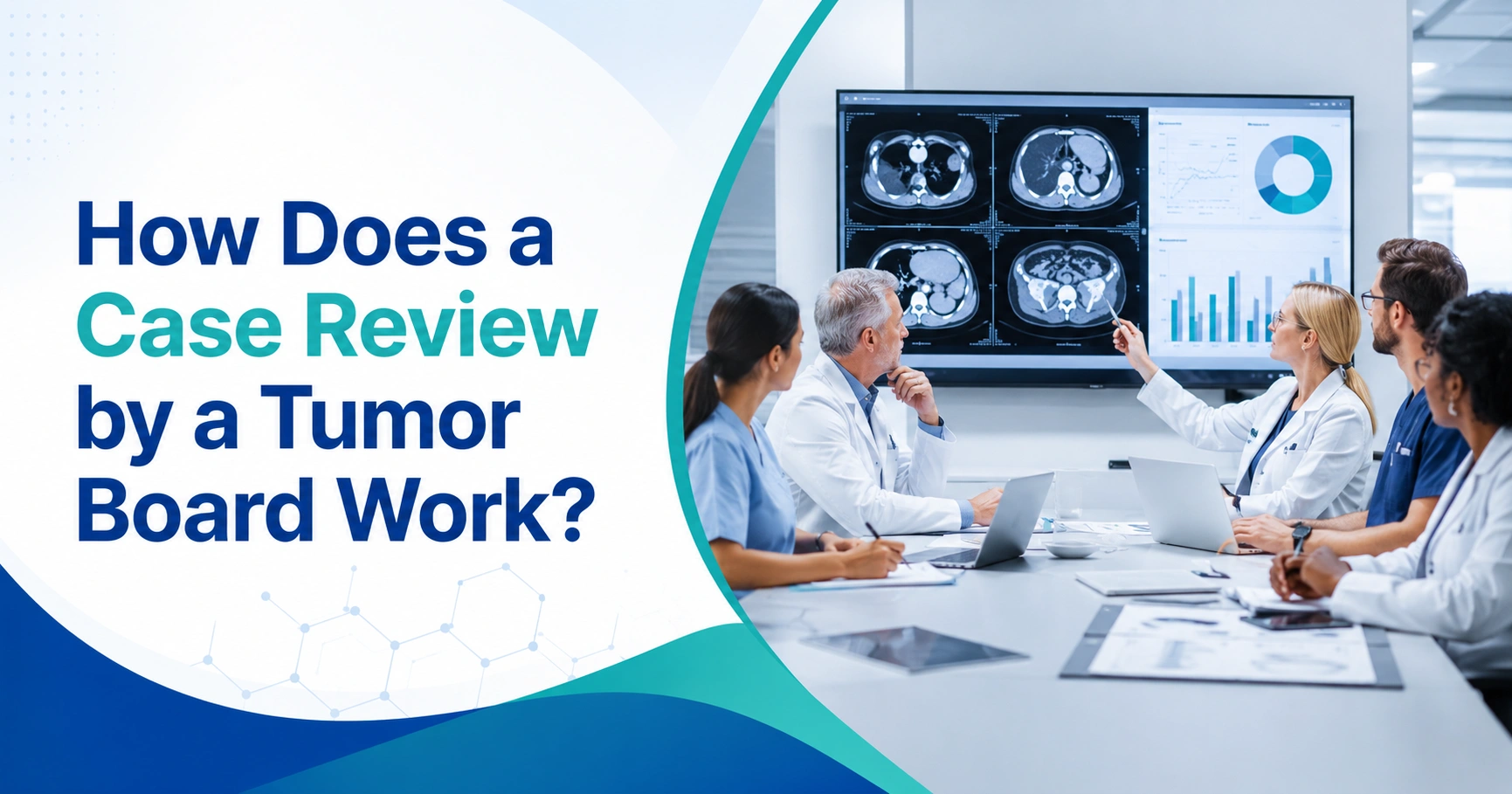
A Tumor Board (TB), or Multidisciplinary Team (MDT) meeting, is a crucial component of modern, high-quality cancer care. It is a structured review meeting comprised of specialized cancer doctors and multidisciplinary health care specialists who gather to discuss and analyze specific patient cases. The fundamental objective of a TB case review is to decide as a collective group on the optimal, evidence-based treatment plan for a patient [1].
This collaborative approach ensures that treatment decisions benefit from the shared expertise of multiple disciplines, leading to consensus on the best course of action.
The Multidisciplinary Approach to Cancer Care
Tumor Boards represent the highest standard of multidisciplinary care. The team composition for a TB case review is dynamic and depends on the patient’s specific
cancer type and site.
TB discussions are typically reserved for cases that present unique challenges, such as:
- Rare Cancer Types: For tumors where standard treatment protocols may not be well-established.
- Complicated Cases: Cases involving advanced disease, multiple comorbidities, or unclear imaging findings.
- Suboptimal Treatment Response: When initial cancer treatment is not yielding the expected clinical results, requiring a change in strategy.
- Complex Surgical Cases: To determine the best surgical margins, timing, and sequence of treatments (neoadjuvant or adjuvant).
Research consistently shows that patients whose cases are reviewed by a multidisciplinary team receive care that adheres more closely to clinical guidelines and often results in better long-term outcomes [2].
Specialists Involved in a Tumor Board
The core team of a Tumor Board brings together diverse clinical perspectives:
- Medical Oncologists: Specialists in systemic treatments like chemotherapy, targeted therapy, and immunotherapy.
- Radiation Oncologists: Specialists in using radiation to treat cancer.
- Surgical Oncologists: Specialists who perform cancer-related surgeries.
- Pathologists: Responsible for the initial and definitive cancer diagnosis, analyzing tissue samples (biopsies and surgical specimens).
- Radiologists: Specialists who interpret diagnostic images (CT, MRI, PET scans).
Specialists like pathologists and radiologists are particularly vital as they evaluate the primary data influencing diagnosis. For instance, a pathologist may recommend additional molecular or genetic testing on preserved tissue samples to better predict which targeted or systemic treatment would be most effective, even weeks or months after the initial diagnosis [3].
To support this multidisciplinary approach, access to experienced oncologists across key cities plays a vital role in delivering coordinated and patient-centric cancer care.
Virtual Tumor Board Collaboration
The advancement of technology has led to the adoption of the Virtual Tumor Board (VTB) model. In a VTB, doctors from different hospitals and geographic regions come together via secure video conferencing to discuss complicated cases.
- Expanded Expertise: VTBs enable smaller, regional cancer centers to access the opinions of specialists from larger academic or national cancer network hospitals (e.g., those affiliated with national initiatives like the National Cancer Grid (NCG) in India) [4].
- Timeliness and Convenience: VTBs can often be convened more quickly and cost-effectively than in-person meetings, potentially speeding up the time to definitive treatment planning.
- Personalized Care Near Home: This model allows patients to benefit from a nationwide expert consultation without having to travel far from their homes for the entire course of treatment.
Patient Participation in Decision-Making
All patients have the right to be active, informed participants in their healthcare. While many cancer diagnoses are straightforward and can be treated effectively using established standard-of-care protocols, patients should not hesitate to ask their attending physician if their case warrants a formal discussion at a Tumor Board.
Requesting a TB review is an acceptable way for a patient to seek assurance that all possible treatment avenues, including cutting-edge clinical trials or novel drug combinations, have been considered by a collective group of experts [5]. The final decision regarding any treatment plan, however, always rests with the patient and their primary oncologist.
Conclusion
The Tumor Board, whether in-person or virtual, is a hallmark of comprehensive cancer care. It ensures that every patient, especially those with complex or rare cancers, receives a personalized treatment plan forged through the collective knowledge of multiple expert specialties. This multidisciplinary review process enhances the quality and safety of cancer care, ultimately optimizing patient outcomes.
Disclaimer
The content of this blog is for informational purposes only and is not a substitute for professional medical advice, diagnosis, or treatment. Always seek the advice of your qualified healthcare provider with any questions you may have regarding a medical condition. Never disregard professional medical advice or delay in seeking it because of something you have read on this website. Treatment decisions, including the recommendation for a Tumor Board review, should be made in consultation with your oncology team.
References
- National Cancer Institute. (2024). Dictionary of Cancer Terms: Tumor Board. Contextual Link:
- Kehoe, S., & Hook, J. (2018). Multidisciplinary team management of gynecological cancer: a systematic review. International Journal of Gynecological Cancer, 28(4), 795–802. Contextual Link:
- American Cancer Society. (2023). Understanding Your Pathology Report. Contextual Link:
- National Cancer Grid (NCG). (2022). Virtual Tumour Boards. Contextual Link:
- College of American Pathologists (CAP). (2019). The Pathologist’s Role on the Multidisciplinary Cancer Team. Contextual Link:
Frequently Asked Questions (FAQ’s)