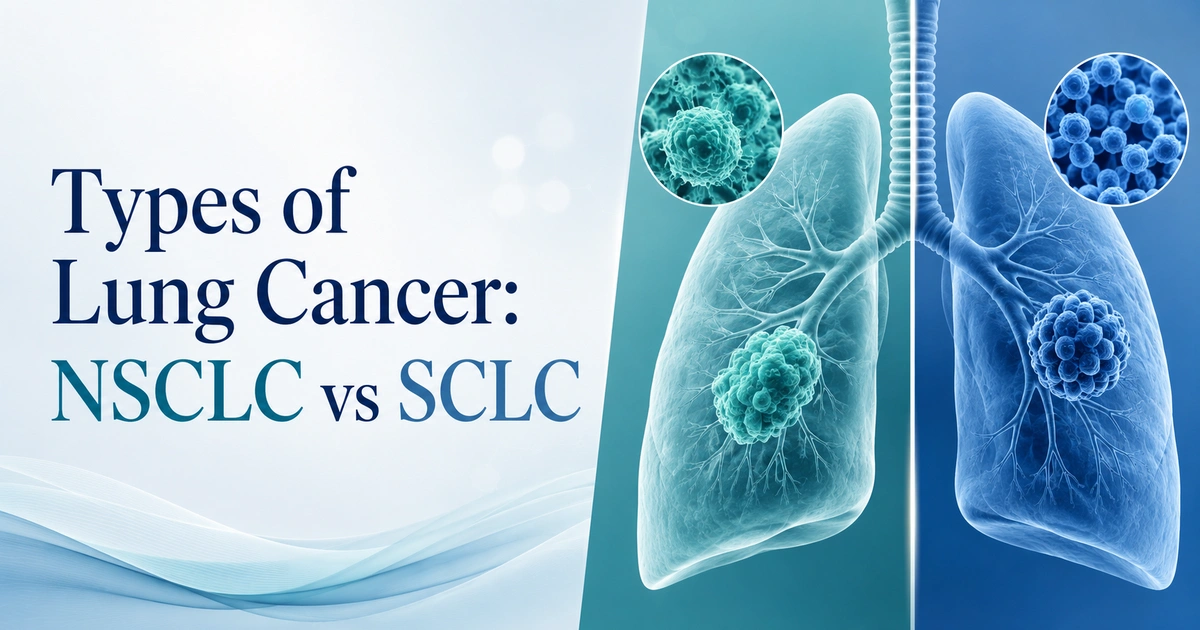
- Non-Small Cell Lung Cancer (NSCLC):
- Accounts for about 85% of all lung cancer cases.
- Typically grows and spreads more slowly than SCLC.
- Small Cell Lung Cancer (SCLC):
- Less common than NSCLC.
- Grows and spreads rapidly, making it a more aggressive form of lung cancer.
- Treatment Approach:
- Depends on the type of lung cancer (NSCLC or SCLC).
- Also determined by the stage of the cancer at diagnosis.
What Is Non-Small Cell Lung Cancer (NSCLC)?
NSCLC is the most common form of lung cancer and includes three main subtypes :
- Adenocarcinoma : the most common subtype, making up around 40 percent of all lung cancers. It develops in the outer regions of the lung and is more common in non-smokers and former light smokers.
- Squamous cell carcinoma : usually develops in the larger airways and is strongly linked to smoking. It can cause coughing, chest pain and coughing up blood.
- Large cell carcinoma : a less common subtype, making up 10 to 15 percent of NSCLC cases. It can develop anywhere in the lung and tends to grow and spread quickly.
Adenocarcinoma and large cell carcinoma are sometimes grouped together as “non-squamous NSCLC” to distinguish them from squamous cell carcinoma, since treatment choices can differ between the two groups.
Important : adenocarcinoma is not a separate disease from NSCLC. It is the most common subtype of NSCLC, diagnosed through the same biopsy and pathology process.
What Is Small Cell Lung Cancer (SCLC)?
SCLC accounts for about 10 to 15 percent of lung cancers. It is known for rapid cell growth and early spread to other organs, and it is strongly linked to smoking, being uncommon in non-smokers.
- Aggression : SCLC cells grow and spread quickly, often reaching the liver, brain or bones before diagnosis.
- Staging : limited stage affects one lung and possibly nearby lymph nodes, while extensive stage has spread to distant organs or tissue. Stage determines the treatment approach.
- Treatment challenges : because SCLC spreads early, surgery is rarely the first treatment. Chemotherapy, radiation therapy and immunotherapy are typically used together.
NSCLC vs SCLC: A Quick Comparison
| |
Non-Small Cell Lung Cancer (NSCLC) |
Small Cell Lung Cancer (SCLC) |
| Share of cases |
About 85 percent of lung cancers |
About 10 to 15 percent of lung cancers |
| Typical growth |
Grows and spreads more slowly |
Grows and spreads quickly, often before diagnosis |
| Common subtypes |
Adenocarcinoma, squamous cell carcinoma, large cell carcinoma |
Usually one subtype, sometimes called oat cell carcinoma |
| Strongest link to smoking |
Present, strongest in squamous cell carcinoma |
Very strong; uncommon in non-smokers |
| Role of surgery |
Often an option in early stages |
Rarely used, since it tends to have spread by diagnosis |
| Typical first-line treatment |
Surgery, radiation, chemotherapy, targeted therapy or immunotherapy depending on stage |
Chemotherapy and radiation, usually together, plus immunotherapy in some cases |
How Is Lung Cancer Diagnosed?
Doctors use a combination of imaging and tissue tests to confirm lung cancer and identify whether it is NSCLC or SCLC:
- Imaging : a CT scan is usually the first step, followed by a PET-CT (Positron Emission Tomography – Computed Tomography) scan to check whether the cancer has spread.
- Bronchoscopy : a thin, lighted tube is passed into the airway to view the tumour directly.
- Biopsy : a tissue sample is examined under a microscope. This pathology result, not imaging alone, is what confirms whether a cancer is NSCLC or SCLC and identifies the exact subtype.
See our PET-CT scan service for more on this imaging test.
Lung Cancer Treatment Options at Onco-Life
Our surgical oncology team offers surgical resection for eligible early-stage NSCLC patients. [Specific techniques such as minimally invasive or robotic-assisted surgery to be confirmed by the clinical team before publishing.]
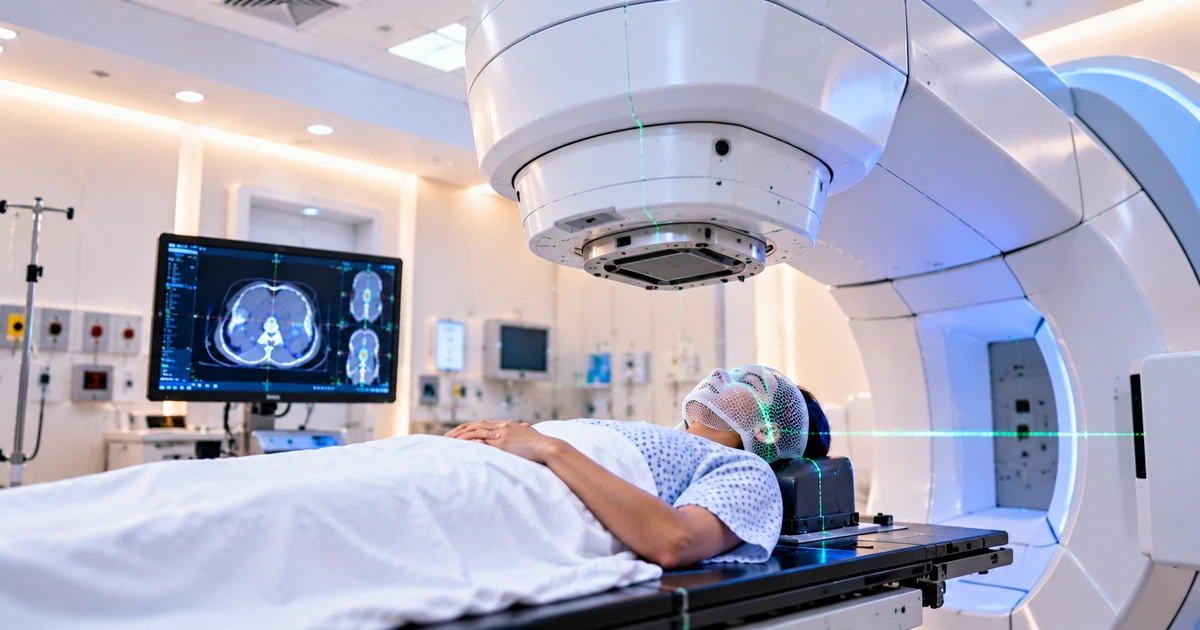
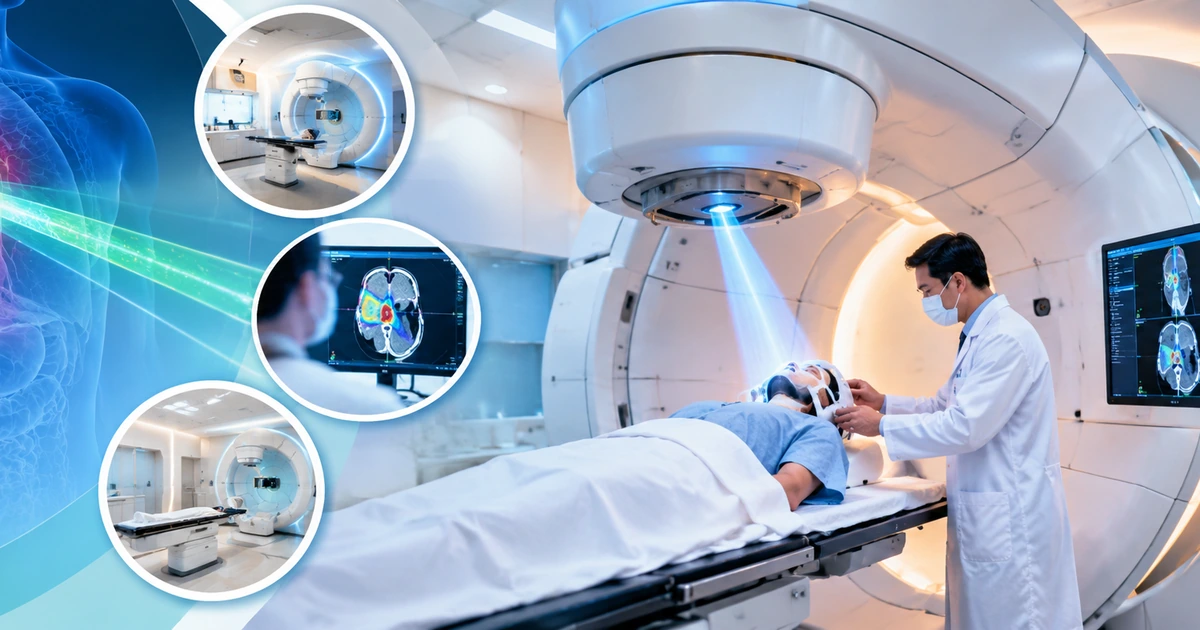
For radiation therapy in Pune, techniques such as IMRT (Intensity-Modulated Radiation Therapy) and SBRT (Stereotactic Body Radiation Therapy) target lung tumours while limiting harm to healthy tissue nearby. Our radiation oncologists in Pune use these techniques for both NSCLC and SCLC, often alongside chemotherapy.
Chemotherapy and immunotherapy remain important treatments for both NSCLC and SCLC. We offer chemotherapy in Pune combined with immunotherapy where appropriate, to help the immune system recognise and attack cancer cells.
Government health schemes including MJPJAY and PM-JAY are accepted for eligible patients at Onco-Life. Eligibility criteria apply; see our government health insurance schemes page and verify your eligibility before visiting.
Patients travelling from Mumbai and nearby areas can also consult our team through Oncologist Near Mumbai.
Supportive Care and Survivorship
Lung cancer care goes beyond medical treatment. Onco-Life’s supportive care includes nutritional counselling, pain management, psychological support and rehabilitation, tailored to each patient’s needs during and after treatment.
Speak to an Oncologist About Your Lung Cancer Diagnosis
Understanding whether a diagnosis is NSCLC or SCLC, and which stage it is at, is the first step toward the right treatment plan. Our lung cancer specialists in Pune are available for consultations and second opinions.
Disclaimer
The information provided in this article is for educational purposes only and does not constitute medical advice. Medical symptoms should always be evaluated by a qualified healthcare professional. While we strive for accuracy, online information cannot replace clinical judgment.
Frequently Asked Questions