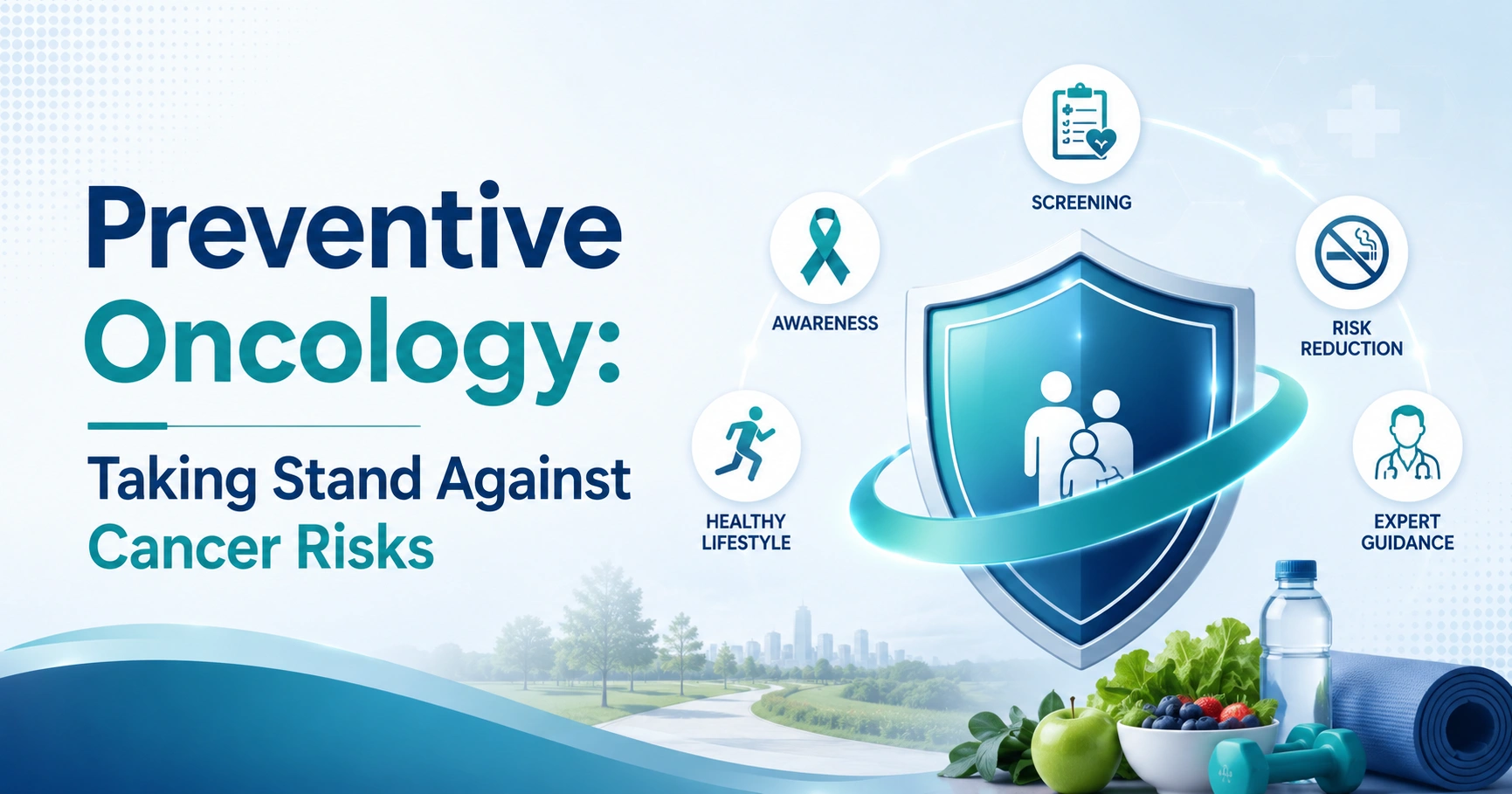
The diagnosis of cancer can be challenging, yet medical science has provided strong, evidence-based strategies that empower individuals to significantly reduce their lifetime risk. Rather than focusing on fear, modern oncology emphasizes proactive prevention, recognizing that many cancers are linked to modifiable lifestyle factors.
What is Preventive Oncology?
Preventive oncology encompasses all measures taken to reduce the incidence of cancer in healthy populations or to prevent the development of pre-malignant conditions. The focus is on implementing well-established public health and lifestyle changes that have demonstrable impacts on cancer rates [1].
1. Say ‘No’ to Tobacco
Tobacco use, in any form (smoking, chewing, or vaping), is the single most avoidable cause of cancer worldwide. Chemicals in tobacco smoke damage the DNA of body cells, interfering with the normal processes that control cell growth [2].
- Risk: Tobacco is linked to cancers of the lung, mouth, throat, voice box, esophagus, kidney, bladder, and pancreas [2].
- Secondhand Smoke: Exposure to secondhand smoke is equally harmful, increasing the risk of lung cancer in non-smokers [2].
- Action: Seeking medical help to quit tobacco is the most impactful preventive measure against cancer.
2. Maintain a Healthy Weight and Stay Physically Active
Maintaining a healthy body weight and integrating regular physical activity are crucial for cancer prevention.
- Weight Control: Excess body weight (overweight or obesity) is the second leading modifiable cause of cancer after tobacco use in many Western countries [3]. It is linked to an increased risk of at least 13 types of cancer, including postmenopausal breast, colon, endometrial, kidney, and liver cancers [4]. Excess fat tissue releases hormones and growth factors that can promote chronic inflammation and cell proliferation [4].
- Physical Activity: Regular physical activity helps control weight, promotes hormonal balance, and improves immune function. Adults are advised to engage in at least 150 to 300 minutes per week of moderate-intensity aerobic activity (or 75 to 150 minutes of vigorous-intensity activity) to reduce the risk of cancers such as breast and colorectal cancer [1].
3. Stick to a Healthy Diet
While no diet offers guaranteed immunity, adopting a healthy eating pattern can significantly reduce cancer risk [1].
- Focus on Plants: Consume a diet rich in fruits, vegetables, whole grains, and beans. These foods are high in fiber and antioxidants that may protect cells from damage [1].
- Limit Certain Foods: Limit consumption of red meat and highly processed meats (like bacon and sausage), as these are linked to an increased risk of colorectal cancer [1].
- Avoid Sugar and Processed Fats: Choose lower-calorie foods and limit intake of processed vegetable oils, added sugars, and refined carbohydrates [1].
4. Limit Alcohol Consumption
Alcohol consumption is an established cause of several cancers, including cancers of the mouth, throat, esophagus, liver, and breast [2]. The risk increases with the amount of alcohol consumed.
- Recommendation: For cancer prevention, it is best not to drink alcohol. For those who choose to drink, the limit is no more than two drinks per day for men and no more than one drink per day for women [1].
5. Prevent Infection Through Vaccination and Safe Practices
Certain viruses are recognized carcinogens (cancer-causing agents). Avoiding infection via vaccination and safe practices is a critical prevention strategy.
- Human Papillomavirus (HPV): This common sexually transmitted infection (STI) is a major cause of cervical, anal, vaginal, penile, and some head and neck cancers [5]. The HPV vaccine is highly effective in preventing the infections that cause approximately 90% of HPV-related cancers [5].
- Hepatitis B Virus (HBV): HBV infection can lead to chronic liver inflammation, which is a major risk factor for liver cancer (hepatocellular carcinoma) [6]. The Hepatitis B vaccine is recommended for infants and all unvaccinated adults at risk to prevent this chronic infection [6].
- Safe Sex: Limiting the number of sexual partners and using barrier protection can reduce the risk of acquiring STIs, including HPV and HBV.
6. Utilize Recommended Screening and Genetic Counseling
Beyond lifestyle, regular screening and genetic testing are integral parts of preventive oncology.
- Screening: Getting regular medical tests and screenings as recommended by health organizations (e.g., mammography for breast cancer, colonoscopy for colorectal cancer, Pap smears for cervical cancer) can detect cancer at its earliest, most curable stages [1].
- Genetic Counseling: Individuals with a strong family history of certain cancers may benefit from genetic testing to identify inherited gene mutations (e.g., BRCA1/2). This allows for intensive surveillance or prophylactic measures to rule out the chances of developing inherited cancers.
Once individuals are aware of preventive strategies and the importance of early detection, having access to the right healthcare facilities becomes equally important. Maharashtra is home to several well-equipped cancer care hospitals that support diagnosis, treatment, and ongoing care.
Disclaimer
The content of this blog is for informational purposes only and is not a substitute for professional medical advice, diagnosis, or treatment. Always seek the advice of your qualified healthcare provider with any questions you may have regarding a medical condition, risk factors, or a personalized screening schedule. Do not disregard professional medical advice or delay in seeking it based on information read here.
References
- American Cancer Society (ACS). (2024). The American Cancer Society Guideline for Diet and Physical Activity for Cancer Prevention. Contextual Link:
- Mayo Clinic. (2024). Cancer prevention: 7 tips to reduce your risk. Contextual Link:
- Cancer Research UK. (2024). How does obesity cause cancer? Contextual Link:
- National Cancer Institute (NCI). (2023). Obesity and Cancer Fact Sheet. Contextual Link:
- Centers for Disease Control and Prevention (CDC). (2023). Human Papillomavirus (HPV). Contextual Link:
- MD Anderson Cancer Center. (2024). Hepatitis and Cancer. Contextual Link: