Proton therapy for cancer is one of the most precise forms of radiation treatment. It targets tumours closely while sparing nearby healthy tissue, which matters most when cancer sits near the brain, spine, eyes or heart. This guide explains how proton therapy works, who it suits, where proton therapy in India is available and what it costs.
What Is Proton Therapy for Cancer? Radiation That Knows Where to Stop
Most patients first ask what is proton therapy and how it differs from standard radiotherapy. It is a form of radiation that uses protons, which are positively charged particles, instead of X-rays. Doctors also call it proton radiation therapy or proton beam therapy.
Like conventional radiation, it destroys cancer cells by damaging their DNA. The difference is control: doctors decide exactly how deep the dose travels. Physicist Robert R. Wilson first proposed protons for medical use in 1946, and the first hospital-based proton centres opened in the 1990s.
How Proton Beam Therapy Works: The Bragg Peak Advantage
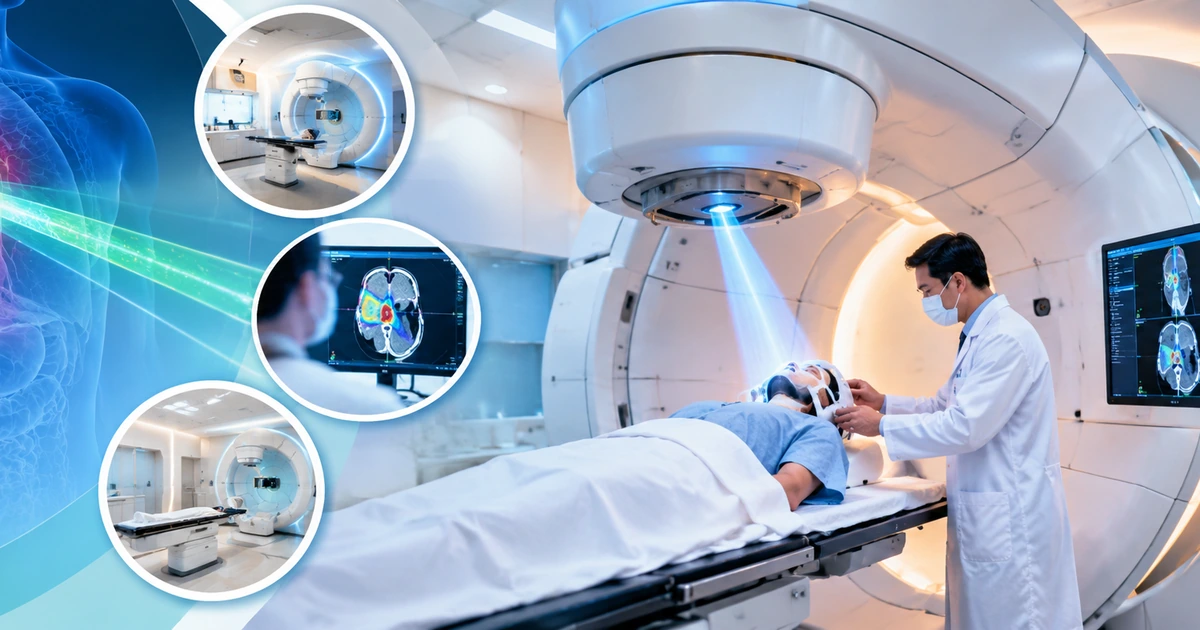
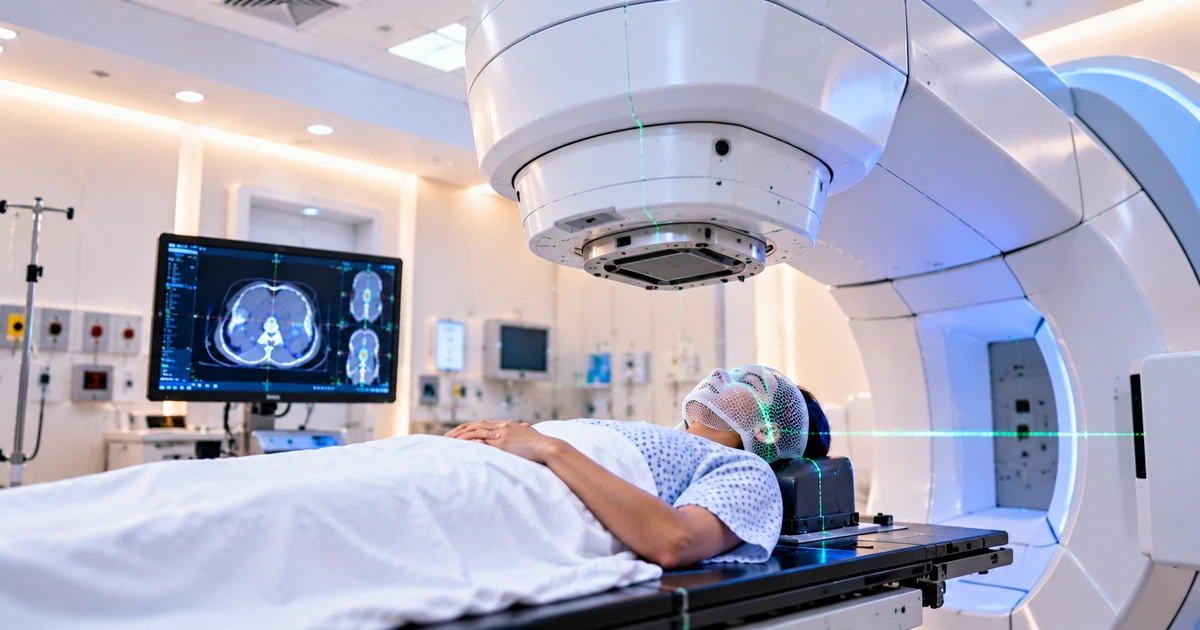
A cyclotron accelerates protons, and magnets shape them into a narrow beam. A rotating gantry aims it at the tumour from several angles.
Protons release most of their energy at a set depth, called the Bragg peak, and then stop. Doctors tune the beam so this peak falls inside the tumour. Pencil beam scanning and intensity-modulated proton therapy (IMPT) then shape the dose layer by layer.
| Feature |
Proton therapy |
X-ray radiation |
| Dose path |
Peaks in the tumour, almost no exit dose |
Passes through tissue before and after the tumour |
| Dose to healthy tissue |
Lower |
Higher |
Benefits of Proton Therapy
- Greater precision: The beam stops at the tumour, limiting damage to healthy tissue.
- Fewer side effects: Many patients have less fatigue, skin irritation and nausea.
- Safer for children: It lowers the risk of growth problems, learning difficulties and second cancers.
- Re-treatment option: It can treat areas that have already received radiation.
- Better quality of life: It helps protect the heart, lungs, brain and other vital organs.
What Types of Cancer Can Be Treated with Proton Therapy?
- Childhood cancers: medulloblastoma, retinoblastoma, Wilms’ tumour and Ewing sarcoma
- Brain and skull base tumours: gliomas, meningiomas and chordomas near the optic nerves or brainstem
- Head, neck and eye cancers: to protect swallowing, speech and vision
- Selected adult cancers: left-sided breast, lung, liver, oesophageal and prostate cancers close to the heart, bladder or rectum
- Sarcomas and recurrent cancers: bone and soft tissue tumours, and cancers returning in previously treated areas
Who Is Proton Cancer Treatment For? Matching the Beam to the Patient
Proton cancer treatment does not replace all radiotherapy. Global estimates suggest 15 to 20% of patients who need radiation could benefit from protons, mainly when a tumour sits near critical organs.
It may not suit widespread (metastatic) cancer, most leukaemias, tumours that move a lot with breathing, metal implants in the beam path, or patients unable to lie still. A multidisciplinary tumour board confirms eligibility.
Proton Therapy: Step-by-Step Procedure
- Consultation and scans: An oncologist reviews your reports, and CT, MRI or PET scans map the tumour.
- Simulation: In a session of about an hour, a custom mask or mould is made to keep you still. Small skin marks help align you each day, so they should not be washed off.
- Treatment planning: Doctors and physicists build a 3D plan that sets beam angles, energy and the number of sessions.
- Daily sessions: Most courses run five days a week for four to eight weeks. Each visit takes 15 to 30 minutes. You feel nothing and go home the same day.
- Monitoring and follow-up: Regular imaging tracks your response, and follow-up scans continue after treatment.
Side effects are usually mild and depend on the area treated: dry mouth for head and neck, scalp sensitivity or patchy hair loss for the brain, and nausea or urinary changes for the pelvis. Staying hydrated and eating protein-rich meals support recovery.
Proton Therapy Cost in India: What a Full Course Costs
Proton therapy cost in India usually ranges from ₹20 lakh to ₹50 lakh per course at private centres, with subsidised rates at government facilities. The same treatment in the US can cost ₹1 crore to ₹1.5 crore. Your final bill depends on:
- Cancer type, stage and number of sessions
- Added surgery, chemotherapy or imaging
- Room type and any hospital stay
- Other health conditions
Insurance coverage varies. Many insurers ask for proof of medical necessity and pre-authorisation, so check your sub-limits early.
Figures reflect published reports up to September 2026.
Proton Therapy Machine Cost in India: Why Treatment Is Priced Higher
Proton therapy machine cost in India exceeds ₹100 crore for a single unit, and one three-gantry public facility was reported at around ₹550 crore. Proton beam therapy machine cost covers the accelerator, beam lines, rotating gantries, imaging systems and a heavily shielded building. Because proton therapy machine cost is so high worldwide, only a few hospitals offer the treatment.
Frequently Asked Questions